Installation guide
 Owner’s manual
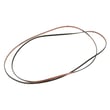


How to replace the push start button on a GE dryer?
On the GE GFD45ESSM1WW dryer, the Start/Pause control is part of the console control interface, and the exact “push start button” replacement method cannot be confirmed from the model-specific owner’s documentation. In many cases, the fix is replacing the Start/Pause switch or the entire control panel assembly rather than a snap-in button.
On this GE model family, “Start/Pause” may be a tactile button on a control panel, not a separate removable knob.
- Check whether the button cap is physically missing or broken
- Press Start/Pause and note if it clicks normally or feels stuck
- Verify the display wakes when you press Power
- Make sure the door is fully closed
- Check if Control Lock is on (often unlocked by holding eDry for 3 seconds)
For operating and control-lock details, use the GFD45ESSM1WW owner’s manual.
- Unplug the dryer or switch off the breaker.
- Wait 1 minute, then restore power.
- Try a normal cycle and press Start/Pause.
- If the dryer beeps or won’t respond, try unlocking controls (hold eDry 3 seconds).
- If the button still won’t start the dryer, the issue is typically in the door circuit, console, or control board.
If Start/Pause doesn’t respond but other buttons do, the console switch or control panel may be failing. If the dryer won’t start at all, the door switch is a common, model-compatible starting point.
| What you observe | More likely cause | What to check next |
|---|---|---|
| Start/Pause does nothing, other buttons work | Console switch/panel issue | Inspect console for damage, consider console-related parts list |
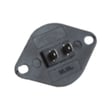
| Dryer won’t start and door feels fine | Door circuit problem | Test/inspect dryer door switch WE4M415 |
| Random beeps, no selections | Control lock or power reset needed | Unlock controls, reset power |
Replacing a “button” that is actually part of the control panel can lead to the wrong repair. Confirming whether the Start/Pause is a separate component helps you choose the correct GE replacement part and avoid repeat failures.
Last updated: January 2026
What are the parts of the dryer?
For the GE GFD45ESSM1WW dryer, the main parts include the drum and support system, the drive system (motor and belt), the heating and temperature-control components, the airflow and lint path, and the door and control components. Together, they tumble clothes, heat air, and exhaust moisture.
- Tumble system: drum, drum glides/bearings, rear bearing support; keeps the drum turning smoothly.
- Drive system: motor, belt, idler pulley/arm; spins the drum and maintains belt tension.
- Heating and temperature control: heating element (electric models), thermostats, thermistor; creates heat and helps prevent overheating.
- Airflow and lint handling: blower housing, exhaust duct, lint screen and seals; moves air through the drum and out the vent.
- Door and user interface: door switch, strike/strike plate, control knob/board; supports safe operation and cycle selection.
Here are examples of parts shown for the GFD45ESSM1WW in our parts list:
- Dryer drum belt WE03X29897
- Dryer idler pulley WE03X31620
- Dryer heating element WE11M10001
- Dryer door switch WE4M415
- Dryer heating element control thermistor WE4M398
| Symptom | Parts often involved | What to check first |
|---|---|---|
| Clothes take too long to dry | Lint screen, exhaust ducting, blower housing | Lint screen and vent restriction |
| Squealing or thumping noise | Belt, idler pulley, drum glides/bearings | Drum support wear and belt condition |
| Dryer will not start | Door switch, control, power supply | Door fully closed and breaker/fuses |
| No heat (electric) | Heating element, thermostats, thermistor | Airflow restriction and heat circuit |
Knowing the major dryer parts helps you narrow down symptoms faster and choose compatible replacement parts for your GE dryer. Many drying and overheating issues start with restricted venting, which also affects performance.
For cycle features, cleaning guidance, and troubleshooting tips specific to this dryer, use the GFD45ESSM1WW owner’s manual.
Last updated: January 2026
What brand of dryer has the least problems?
No single “least problems” dryer brand can be identified specifically for the GE GFD45ESSM1WW because reliability varies by model series, features (steam vs. non-steam), installation, and maintenance. In general, Whirlpool and LG are often rated among the more reliable full-size dryer brands, with GE and Maytag also commonly competitive.
Even the best brand can have issues if airflow, power, or gas supply is not right. For the GFD45ESSM1WW, we focus on the items that most often prevent repeat service calls.
- Clean the lint screen every load and keep the lint filter seated correctly.
- Keep venting to the outdoors and avoid plastic or crushed ducting.
- Do not overload; large, heavy loads increase wear on the drum support system.
- Level the dryer to reduce vibration and premature wear.
- Use the correct cycle and dryness level; sensor cycles reduce overdrying stress.
Brand rankings are broad averages; your day-to-day experience is usually driven by the exact model design and how it’s installed.
| What you’re comparing | What it tells you | What it can miss |
|---|---|---|
| Brand reliability rankings | General trend across many models | Big differences between model lines and years |
| Model-specific maintenance | How to reduce problems on your dryer | Doesn’t “change” the base design |
| Installation quality | Biggest driver of drying performance and heat issues | Often overlooked after purchase |
Most “dryer problems” customers report (long dry times, no heat, overheating, noise) are strongly tied to airflow and wear items. Keeping venting correct and the drum drive system healthy typically prevents the most common breakdown patterns.
- Use the venting and troubleshooting sections in the GFD45ESSM1WW owner’s manual to reduce long dry times and nuisance shutdowns.
- If you’re comparing brands because your dryer is noisy or slipping, worn drive components such as the dryer drum belt WE03X29897 can be a common root cause across many dryers.
Last updated: January 2026
What is the lifespan of a GE dryer?
A GE dryer like model GFD45ESSM1WW typically lasts 10 to 15 years with normal household use. Consistent lint-screen cleaning, proper venting, and avoiding overloads are the biggest factors that help this dryer reach the upper end of that range. See the maintenance and venting guidance in the GFD45ESSM1WW owner’s manual.
- Venting condition: crushed, long, or clogged ducting makes the dryer run hotter and longer
- Lint control: a blocked lint screen or lint buildup inside the cabinet restricts airflow
- Load habits: frequent overloading strains the drive motor, belt, and drum support parts
- Heat stress: repeated overheating can shorten the life of thermostats and heating components
- Installation quality: correct clearances and exhaust setup reduce vibration and heat issues
Use this quick schedule as a practical baseline:
| Task | How often | Why it matters |
|---|---|---|
| Clean lint screen | Every load | Maintains airflow and drying performance |
| Inspect outside vent hood flap | Monthly | Confirms exhaust air is leaving the home |
| Clean/inspect vent duct | At least yearly | Reduces dry time and heat buildup |
| Level the dryer | As needed | Reduces vibration and wear on moving parts |
These symptoms often point to wear in key systems (drive, airflow, heat, or controls):
- Dry times keep getting longer even after vent cleaning
- Loud squealing, thumping, or scraping from the drum area
- Intermittent heat or repeated “no heat” situations
- The drum stops turning but the motor hums
- Frequent shutdowns or inconsistent cycle behavior
A dryer that is struggling to move air or turn the drum usually uses more energy and puts extra stress on parts like the belt, idler, and motor. Addressing airflow and wear items early can extend the service life and improve drying results.
Last updated: January 2026
What is the most common problem with a GE electric dryer?
On the GE GFD45ESSM1WW, the most common service issue we see with GE electric dryers is a no-heat complaint, most often tied to a failed heating circuit component such as the heating element, a thermostat/thermistor, or an airflow restriction that overheats and trips safety devices. For operating and troubleshooting basics, use the GFD45ESSM1WW owner’s manual.
- Dryer runs but clothes stay cold or damp: heating circuit problem or poor venting
- Dryer takes too long to dry: restricted exhaust duct, lint buildup, or incorrect ducting
- Squealing or thumping noise: belt, idler pulley, drum glides, or bearing wear
- Stops mid-cycle or shuts off early: overheating from blocked airflow or sensor-related issues
- Won’t start: door switch, power supply issue, or control problem
- Confirm full power: electric dryers typically need both sides of the 240V supply; a tripped breaker can let the motor run but prevent heat.
- Clean airflow path: lint screen, lint housing, and the entire vent run to the outside.
- Check venting setup: use 4-inch metal ducting and keep the run as short and straight as possible (details are in the GFD45ESSM1WW installation instructions).
| Symptom | Likely area | Example compatible part for this model |
|---|---|---|
| Runs, no heat | Heating circuit | Dryer heating element WE11M10001 |
| Overheats, cycles heat oddly | Temperature sensing | Dryer heating element control thermistor WE4M398 |
| Squeals or drum won’t turn | Drive system | Dryer drum belt WE03X29897 |
A “no heat” problem is often electrical, but restricted venting can cause overheating, longer dry times, and repeat failures. Fixing airflow first can prevent replacing good parts and helps the dryer dry faster and more efficiently.
Last updated: January 2026
Where to find part number on GE dryer?
On the GE GFD45ESSM1WW dryer, we typically find the model and serial number label on the front panel behind the door (visible when you open the dryer door). That label is what you’ll use to identify the correct replacement parts for your exact dryer.
Check these common label locations in this order:
- Open the dryer door and look on the front frame (the area the door closes against)
- Look just inside the door opening on the front panel
- Check the door itself near the edge (less common, but possible)
- If the label is worn, use a flashlight and look for faint stamped/printed characters
For a quick reference to the label location and how GE lists model and serial information, see the GFD45ESSM1WW owner’s manual.
We recommend recording both numbers exactly as shown:
- Model number (example format: GFD45xxxx)
- Serial number (unique to your unit)
- Optional: any suffix letters after the model (they can affect part compatibility)
The model number narrows parts to the correct design series; the serial number can help confirm production variations when you’re matching components like a control board, door switch, or drum parts.
| What you’re looking for | What it’s used for | Example (format) |
|---|---|---|
| Model number | Ensures parts fit your exact dryer | GFD45ESSM1WW |
| Serial number | Helps confirm version/build details | Varies |
If the sticker is missing or unreadable, the next best option is to check your purchase paperwork or any registration confirmation that lists GFD45ESSM1WW.
Last updated: January 2026