Error Codes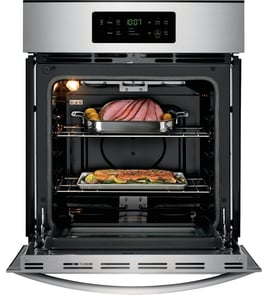



What is the disadvantage of a wall oven?
A wall oven like the Kenmore 6654098993 costs more to buy and install than a freestanding range, and repairs can take longer because the oven is built into cabinetry. You also need a separate cooktop, which adds cost and uses additional space.
- Higher total cost: wall oven plus cooktop, plus cabinetry work
- More complex installation: electrical hookup, mounting, and fit in the cabinet cutout
- Repairs can be harder: the oven may need to be pulled from the cabinet for service
- Less flexibility to move or replace: you are limited by the existing cutout size
- Heat and ventilation concerns: tight cabinetry can trap heat if airflow is restricted
| Feature | Wall oven | Freestanding range |
|---|---|---|
| Upfront cost | Typically higher | Typically lower |
| Installation | More involved | Usually simpler |
| Cooking setup | Requires separate cooktop | All-in-one |
| Service access | Often requires removal from cabinet | Easier access |
If you are choosing between a wall oven and a range, the biggest tradeoff is convenience and design versus total cost and serviceability. Wall ovens can be great for ergonomics and kitchen layout, but the built-in design makes installation and future replacement more dependent on cabinet dimensions.
- Confirm cabinet cutout and electrical requirements before ordering any replacement
- Keep airflow paths clear around the oven to prevent overheating issues
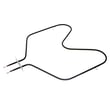
- If baking performance becomes uneven, check for a failing heating element such as the bake element WP308180
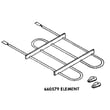
- If broil performance is weak, the range broil element WP660579 is a common wear item
- For fault codes and what they mean on Kenmore 665 models, use Kenmore 665 wall oven error codes
Last updated: January 2026
How to find wall oven model number?
For a Kenmore wall oven, we typically find the model number on the oven frame behind the door, on the door rim, or on an interior side panel. For your Kenmore model 6654098993, start by opening the door and checking the front frame first.
Check these spots in order (most common to least common):
- Front frame: Open the oven door and look along the frame around the opening.
- Door rim/edge: Look on the rim of the oven door itself (especially along the sides).
- Interior side panel: Look on the left or right interior wall near the front.
- Storage/warming drawer area (if equipped): Check the frame area behind the drawer.
- Lower oven frame (double ovens): Check the lower cavity frame as well.
Most Kenmore wall ovens use a paper or foil rating label that includes:
- Model number (example: 6654098993)
- Serial number
- Electrical rating (volts/amps)
- Sometimes a manufacturing code
- Use a flashlight and look for a white, silver, or gray sticker.
- Wipe grease or dust lightly with a damp cloth so the print is readable.
- Take a photo of the label so you can zoom in.
We use the exact model number to match the correct wall oven parts and diagrams, especially for common repairs like replacing a bake element WP308180 or diagnosing heating problems.
| If you see… | Use this for parts lookup | Why |
|---|---|---|
| A full model number like 6654098993 | Yes | Matches the correct parts list |
| Only partial digits (example: 665.4098) | No | Too broad; can pull wrong parts |
| Serial number only | No | Identifies production, not parts |
Last updated: January 2026
Are all 30 inch wall ovens the same size?
No. A “30-inch” wall oven is a size class, not an exact measurement. For Kenmore wall oven model 6654098993, the overall width and the cabinet cutout width can vary by brand, series, and whether it’s single, double, or a combo unit, so you always measure before ordering.
Most 30-inch electric wall ovens are designed to fit a cabinet cutout that is approximately 30 inches wide, but the real cutout and appliance dimensions commonly vary by fractions of an inch.
Typical differences you’ll see:
- Cutout width vs appliance frame width are not the same
- Trim/overlay can hide gaps, but only within limits
- Depth changes with handle style and ventilation
- Height changes a lot between single and double ovens
Use a tape measure and record all three cutout dimensions, then compare to the replacement oven’s required cutout.
- Measure cutout width at the front and back
- Measure cutout height on both sides
- Measure cutout depth to the back wall (and note any outlet or junction box)
- Confirm the oven is level; out-of-square cabinets cause fit issues
- Check for required clearances around the cutout for airflow
| What to measure | Where | Why it matters |
|---|---|---|
| Cutout width | Inside cabinet opening | Determines if the oven body fits |
| Cutout height | Inside cabinet opening | Single vs double oven fit |
| Cutout depth | Front of cabinet to back wall | Prevents pinched wiring and poor ventilation |
| Front overlay/trim | Front face around opening | Ensures gaps are covered |
Even small size differences can prevent the oven from sliding in, cause trim gaps, or create airflow problems that lead to overheating and nuisance shutoffs.
If you’re swapping ovens because of heating problems (not just a remodel), it can help to troubleshoot first:
- If bake is weak or uneven, the bake element is a common failure point (see bake element WP308180)
- If broil is not working, check the broil element circuit and connections
- If you see an error code, use Kenmore 665 wall oven error codes to narrow the issue
Last updated: January 2026