Error Codes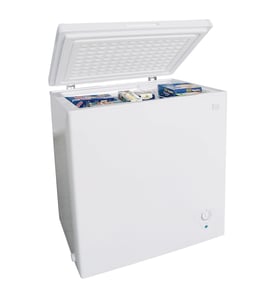





Can you replace the seals on a chest freezer?
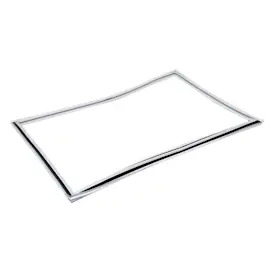
Yes. We replace the lid seal (gasket) on a Kirkland SCF0710KQ01 chest freezer when it is loose, cracked, or no longer sealing evenly; a new seal restores proper closure, reduces warm-air leaks, and helps the freezer hold temperature efficiently.
How to tell the seal needs replacement
- Frost buildup or sweating around the lid edge
- The lid feels “springy” or will not stay fully closed
- Visible cracks, flattening, or gaps in the gasket
- A paper strip pulls out easily when the lid is closed (poor grip)
- Longer run times or warmer-than-normal temperatures
Basic replacement approach (typical for chest freezers)
- Unplug the freezer.
- Remove the old gasket (some pull out of a channel; others are held by screws under the inner liner).
- Clean the sealing surface and channel with mild soap and water; dry fully.
- Install the new gasket evenly all the way around.
- Close the lid for several hours to help the gasket set into shape.
What to check before ordering a new seal
Gasket styles vary by lid design, so match the mounting and size before you order.
| What to match | What to look for |
|---|---|
| Mounting style | Push-in channel vs. screw-mounted under liner |
| Lid perimeter | Measure around the lid edge |
| Corner shape | Square vs. rounded corners |
| Hinge and latch areas | No bunching or gaps near hardware |
Helpful tip
If the new gasket arrives wavy from packaging, gently warming it with a hair dryer on low helps it relax so it seats flat.
Why it matters
A leaking lid seal pulls humid room air into the freezer. That adds frost, increases compressor run time, and can cause temperature swings that affect food quality.
If it is not the seal
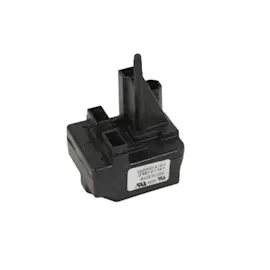
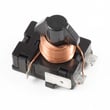
If the lid is sealing but temperatures still drift warm, check the temperature control and start components. Common parts we stock for SCF0710KQ01 include the roper freezer compressor start relay 4356716 and the terminal cover WP2162358.
Last updated: February 2026
How much meat will a 7 cubic foot chest freezer hold?
A 7 cubic foot chest freezer (like the Kirkland SCF0710KQ01) typically holds about 200 pounds of packaged meat when it’s packed efficiently. For easier access and better air circulation, plan closer to 180 to 200 pounds, especially if you have bulky or bone-in cuts.
Quick capacity guide (rule of thumb)
Use these ranges to estimate how much meat fits based on how tightly it’s packed and the shape of the packages:
- 5 to 6 cu. ft.: about 180 lb (tight packing)
- 6 to 7 cu. ft.: about 200 lb
- 7 to 8 cu. ft.: about 220 lb (fits better, less “brick stacking”)
- 8 to 10 cu. ft.: best if you store lots of bone-in cuts or want easier organization
What changes the real-world number
Even with the same cubic footage, the usable capacity varies based on what you freeze and how you store it:
- Package shape: flat, uniform packages stack tighter than irregular bundles
- Bone-in cuts: take more space per pound than boneless cuts
- Air gaps: baskets, dividers, and uneven stacking reduce usable space
- Access needs: leaving “grab space” near the top lowers the max pounds but makes it easier to use
- Long-term storage: labeling and grouping by type (steaks, roasts, ground) usually means less tight packing
Practical planning table
| If you want to store... | Plan on this freezer size |
|---|---|
| Around 180 lb and you don’t mind tight packing | 5 to 6 cu. ft. |
| Around 200 lb with average packing | 6 to 7 cu. ft. |
| Around 220 lb with easier stacking | 7 to 8 cu. ft. |
| Lots of bone-in cuts and easy organization | 8 to 10 cu. ft. |
Why it matters
Overpacking a chest freezer makes it harder to find items and can slow temperature recovery after the lid is opened. Planning a little extra space helps keep food organized and consistently frozen.
If you’re also repairing or maintaining your freezer, we list model-matched replacement parts for SCF0710KQ01, including the baskt-wire 8210434A used for organizing items.
Last updated: February 2026
Is it worth repairing a chest freezer?
Yes; repairing your Kirkland SCF0710KQ01 chest freezer is worth it when the failure is limited to a common, replaceable electrical part and the cabinet and lid seal area are in good shape. In those cases, the repair cost stays well below replacing the freezer.
Quick way we decide: repair vs replace
Use a simple cost, condition, and symptom check.
- Repair it when it will not start, clicks, or runs intermittently and the issue points to start components or wiring.
- Repair it when the freezer is structurally sound (no major rust-through, lid closes squarely).
- Replace it when the cabinet is badly corroded, the lid seal surface is damaged, or the unit has chronic temperature problems.
- Replace it when multiple major parts are needed and the total approaches the price of a comparable new chest freezer.
Repairs that are usually worth it on SCF0710KQ01
These fixes commonly restore normal operation without major teardown.
| Symptom | Likely area | Example part you can replace |
|---|---|---|
| Clicking, will not start, starts then stops | Compressor start circuit | Roper freezer compressor start relay 4356716 and overload 2264602 |
| Exposed or damaged start device cover | Electrical protection | Terminal cover WP2162358 |
Before you buy parts (fast checks)
These checks prevent ordering parts you do not need.
- Verify the outlet has power (try a lamp or meter).
- Confirm the control is set colder; allow several hours for temperature change.
- Make sure the freezer has airflow clearance around the cabinet.
- Listen for repeated clicking near the compressor area (often start circuit).
- If you plan to test components, use safe meter practices from how to use a multimeter to test electrical parts video.
Why it matters
A targeted repair keeps food safely frozen, avoids the cost and hassle of replacement, and often improves reliability when the root cause is a worn start component or a loose electrical connection.
Last updated: February 2026
What are the parts of a chest freezer?
A Kirkland chest freezer like model SCF0710KQ01 is built around a sealed refrigeration system (compressor, condenser, evaporator, and refrigerant tubing) plus temperature controls, wiring, and cabinet components that keep cold air in and heat out.
Main parts you will find in most chest freezers
- Compressor: pumps refrigerant through the sealed system
- Condenser: releases heat from the refrigerant (often in the outer skin or coil area)
- Evaporator: absorbs heat from inside the freezer to create cooling
- Capillary tube or metering device: controls refrigerant flow into the evaporator
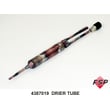
- Filter drier: removes moisture/contaminants from refrigerant (example: drier tube W10843121)
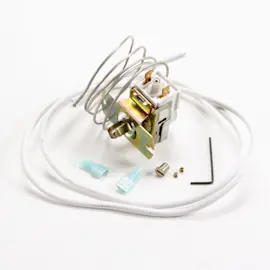
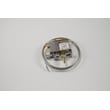
- Thermostat/temperature control: senses temperature and cycles cooling (example: thermostat)
- Start components: help the compressor start and protect it (example: roper freezer compressor start relay 4356716 and overload)
- Wiring and harnesses: deliver power and signals (example: cabinet harness)
- Lid gasket and cabinet insulation: reduce air leaks and heat gain
- Interior basket and hardware: storage and mounting parts (example: baskt-wire 8210434A)
How these parts work together (quick overview)
| System area | What it does | Common symptoms when it fails |
|---|---|---|
| Sealed system (compressor, condenser, evaporator, tubing) | Moves heat out of the freezer | Warm temps, long run times, poor freezing |
| Controls (thermostat/control box) | Turns cooling on/off based on temperature | Too warm, too cold, won’t cycle |
| Start/protection (relay/overload/cover) | Starts compressor and prevents damage | Clicking, humming, compressor won’t start |
| Cabinet (lid, insulation, basket) | Holds cold air and organizes storage | Frost buildup, temperature swings, poor efficiency |
Why it matters
Knowing the major chest freezer parts helps you narrow down whether you have a cooling system issue (sealed system or compressor), a control problem (thermostat/control box), or an electrical start issue (relay/overload). That makes it easier to choose the right replacement part and avoid unnecessary repairs.
Parts on this model that match common “core components”
For SCF0710KQ01, we commonly see customers replace or inspect items like:
- Roper freezer compressor start relay 4356716
- Terminal cover WP2162358
- Drier tube W10843121
- Control box W10682894
Last updated: February 2026