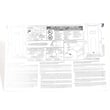
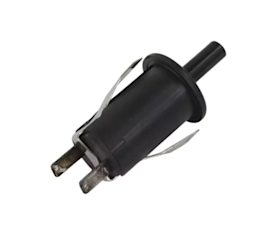
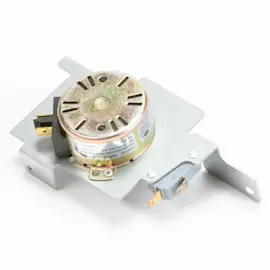
Installation guide
 Owner’s manual
 Error Codes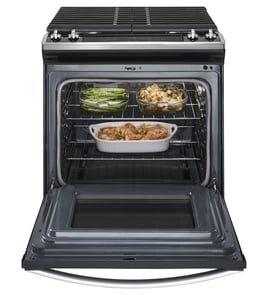



Does a gas stove need a pressure regulator?
Yes. On the Frigidaire PLGF390DCB gas range, a pressure regulator is required because the range is designed to run at a specific manifold pressure; operating without the regulator can cause improper burner flames, poor oven performance, and unsafe gas flow.
What the regulator does on PLGF390DCB
The installation instructions specify that this range is pre-set for 4 inches water column (W.C.) manifold pressure on natural gas, and the convertible pressure regulator must be connected in series with the gas supply line. For LP/Propane conversion, the regulator is converted to 10 inches W.C. manifold pressure. See the PLGF390DCB installation guide.
When you should not operate the range
Do not use the range if any of these apply:
- The regulator is missing, bypassed, or installed backwards
- You smell gas or suspect a leak
- Burner flames are unusually large, lifting, or mostly yellow
- The oven burner will not ignite reliably or takes a long time to light
- The gas supply pressure is outside the regulator limits listed in the installation instructions
Key pressure and connection specs (quick reference)
| Item | Natural gas | LP/Propane |
|---|---|---|
| Manifold pressure (regulated) | 4" W.C. | 10" W.C. |
| Maximum inlet pressure to regulator | 14" W.C. | 14" W.C. |
| Minimum inlet pressure (example) | 5" W.C. | 11" W.C. |
If you suspect a regulator or gas supply problem
We recommend these safe, practical checks:
- Confirm the manual shut-off valve is fully open and accessible
- Use a liquid leak detector on joints and fittings; never use a flame
- Verify the regulator is installed in the gas line as shown in the installation instructions
- If the oven has ignition problems, inspect the oven igniter; a weak igniter can prevent the gas valve from opening fully (see igniter 5303935066)
Why it matters
Correct gas pressure is what keeps burner flames stable and heat output predictable. The regulator protects the range from high inlet pressure and helps the bake burner and surface burners operate efficiently and consistently.
Last updated: January 2026
How to calibrate a Frigidaire gas range?
To calibrate the oven temperature on your Frigidaire PLGF390DCB gas range, use the oven control’s temperature adjustment feature to offset the displayed set temperature up or down. The exact button sequence varies by control style, so follow the steps in the PLGF390DCB owner’s manual.
Before you start
- Let the range cool completely.
- Remove any foil, liners, or oversized pans that can block airflow.
- Place an oven thermometer in the center of the middle rack position.
- Preheat fully; most ovens need 15 to 20 minutes to stabilize.
- Keep the door closed during the test to avoid false readings.
Calibration steps (typical Frigidaire procedure)
Most Frigidaire electronic controls use a built-in “Adjusting oven temperature” setting:
- Set the oven to Bake at 350°F.
- Let it cycle for 20 minutes after preheat.
- Compare the thermometer reading to the set temperature.
- Enter the oven temperature adjustment mode (see the PLGF390DCB owner’s manual).
- Apply an offset (for example, if the oven averages 25°F low, increase the offset by 25°F).
- Re-test to confirm the new average temperature.
How much should I adjust?
Use the average of several readings, not a single momentary peak.
| What you observe | What it usually means | What to do |
|---|---|---|
| Oven averages low | Calibration offset is needed | Increase the offset in small steps (10°F to 20°F) |
| Oven averages high | Calibration offset is needed | Decrease the offset in small steps (10°F to 20°F) |
| Temperature swings widely | Normal cycling or airflow issue | Re-test with door closed; verify rack position and pan size |
When calibration will not fix the problem
If the oven will not heat, takes a very long time to ignite, or the flame is weak, calibration is not the root cause. On the PLGF390DCB, common heat-related repair suspects include:
- Weak or failing oven igniter (often causes delayed ignition or low heat)
- Gas supply or pressure issue
- Burner orifice or burner tube restriction
- Temperature sensor problem
If you suspect ignition trouble, the igniter 5303935066 is a common replacement part for this model.
Why it matters
Proper calibration helps baking and roasting results match the set temperature, reduces undercooking or overbrowning, and prevents unnecessary part replacement when the oven is simply offset.
Last updated: January 2026
Where is the igniter on my Frigidaire gas stove?
On your Frigidaire PLGF390DCB gas range, each surface burner has its own spark electrode (igniter) positioned beside the burner head under the cap. The oven uses a glow-bar igniter mounted at the oven burner, under the oven bottom panel area. Use the PLGF390DCB installation guide for model-specific safety notes.
Where to look
Surface burner igniter (spark electrode)
- Remove the grate.
- Lift off the burner cap.
- Look for a small ceramic post with a metal tip next to the burner head.
- The electrode must sit correctly in its slot/opening to spark.
Oven igniter (glow-bar)
- Located at the oven burner, typically beneath the oven bottom panel.
- When you set BAKE, it glows like a light bulb.
- The burner lights after about 30 to 60 seconds in normal operation.
Safety and access basics
- Shut off power at the breaker before touching igniter wiring.
- Shut off the gas supply valve before disassembly.
- Do not attempt to remove the cooktop on this model; it is not removable.
- Keep spills and cleaners out of the gas orifice holder opening.
Symptom-to-location guide
| What you notice | Most likely area | Common cause |
|---|---|---|
| Clicking but no flame on one top burner | Surface electrode area | Wet/dirty electrode, misaligned cap/head |
| No clicking on any top burner | Surface ignition circuit | Power, switch, or wiring issue |
| Oven will not light and igniter does not glow | Oven igniter circuit | Failed igniter or wiring |
Related parts (when replacement is needed)
If the oven will not ignite, the most common replacement is the oven burner igniter 5303935066.
Why it matters
Igniters control safe gas ignition. A misaligned surface electrode prevents sparking, and a weak oven igniter can keep the oven gas valve from opening, causing a no-heat condition.
Last updated: January 2026
What does F10 mean on my Frigidaire gas stove?
On a Frigidaire PLGF390DCB gas range, the F10 error means the oven control is sensing an overheating condition (runaway oven) or a problem in the oven temperature sensor circuit. A reset can clear it briefly, but the underlying cause needs to be corrected.
What to do right away
- Press Cancel/Off and let the oven cool completely.
- Reset power: unplug the range or turn the breaker off for 1 to 2 minutes, then restore power.
- If F10 returns, stop using Bake/Broil until the issue is diagnosed.
- If you smell gas, turn off the gas supply valve and do not operate the range.
Most common causes
- Oven temperature sensor (probe) out of range
- Loose, corroded, or damaged wiring between the sensor and control
- Oven control problem misreading temperature feedback
- Gas valve not regulating heat correctly
Parts often involved on PLGF390DCB
| What you notice | What to check | Model-matched part example |
|---|---|---|
| F10 comes back quickly after reset | Sensor circuit and connections | Probe 316490001 |
| Ignition seems weak or delayed | Burner ignition operation | Igniter 5303935066 |
| Heat seems stuck on or erratic | Gas flow regulation | Range oven gas valve 316404900 |
Why it matters
An overheating fault can cause excessive smoking, poor baking results, and unsafe oven temperatures. Fixing the sensor, wiring, or heat control issue prevents repeat F10 errors.
For operating guidance and control behavior, follow the PLGF390DCB owner’s manual.
Last updated: January 2026