


Is there a way to bypass the lid lock on a Maytag washer?
We don’t recommend bypassing the lid lock or lid switch on a Maytag MAV5057AWW washer because it’s a critical safety device; defeating it can lead to injury and can also cause new problems like no-spin, no-drain, or intermittent operation. Instead, fix the root cause by checking the lid switch parts and related wiring.
What to check first (safe, fast steps)
- Unplug the washer before inspecting anything under the console or top panel.
- Confirm the lid closes fully and isn’t bent or misaligned.
- Look for a broken or missing lid strike or actuator that presses the switch.
- Check for a loose harness connection at the lid switch.
- If the washer fills but will not agitate or spin, suspect the lid switch circuit first.
Parts that commonly solve “lid won’t lock” or “won’t run with lid closed”
For the MAV5057AWW, these parts on our list are commonly involved in lid-closed detection issues:
Quick symptom-to-part guide
| Symptom | Most likely area | What usually fixes it |
|---|---|---|
| Won’t start or stops when lid is moved | Lid switch circuit | Lid switch or plunger/actuator |
| Fills but won’t spin | Lid switch not proving closed | Lid switch, plunger, or wiring check |
| Intermittent operation | Loose connection or worn actuator | Reseat connector; replace worn part |
Why it matters
The lid lock or lid switch prevents the basket from spinning with the lid open. Keeping it working correctly protects you and helps the washer complete cycles normally.
If you need troubleshooting help
Use a Maytag washer troubleshooting flow to narrow the cause before replacing parts; start with lid-closed detection and then move to drive components only if the lid switch checks out. A good next step is how to troubleshoot Maytag centennial washer problems.
Last updated: February 2026
What is the average lifespan of a Maytag MAV5057AWW washer?
A Maytag MAV5057AWW top-load washer typically lasts 10 to 13 years with normal household use. With consistent maintenance (proper loading, good drainage, and timely part replacement), it commonly reaches the upper end of that range.
Typical lifespan and what affects it
A washer’s life is mostly determined by how hard it works and how well key wear items hold up.
- Load size and frequency: frequent heavy loads shorten life
- Drain performance: slow draining strains the pump and drive system
- Spin vibration: out-of-balance loads wear suspension and drive parts faster
- Water quality: sediment can affect fill and drain components
- Maintenance habits: cleaning, leveling, and hose checks extend service life
Quick guide: what “normal use” looks like
| Usage pattern | What it means | Typical outcome |
|---|---|---|
| Light | 1 to 3 loads per week | Often reaches 12 to 13 years |
| Average | 4 to 7 loads per week | Commonly 10 to 12 years |
| Heavy | Multiple loads per day | Often closer to 8 to 10 years |
Parts that commonly determine end-of-life
If your MAV5057AWW starts slipping, not spinning, or leaving clothes wet, these are common wear points to check first.
- Drive system wear: washer drive belt WP22003483
- Drain issues or leaks: washer drain hose WP22003410
- Lid safety no-spin symptoms: lid switch 12001908 and washer lid switch plunger WP22002754
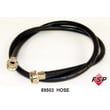
- Fill hose aging or bulging: inlet hose WP89503
Why it matters
Knowing the expected lifespan helps you decide whether to repair or replace. If your washer is near 10 to 13 years old, a simple fix (belt, lid switch, hose) often makes sense, while repeated major drive or leak repairs can signal it is nearing the end of its service life.
Last updated: February 2026
What is the most common problem with a Maytag washer?
The most common Maytag washer problem we see is a no-drain or no-spin condition. On the Maytag MAV5057AWW, this is usually tied to a lid switch issue, a draining restriction (hose or pump area), or a worn drive system such as the belt.
Quick checks first (no tools)
- Make sure the lid closes firmly and the lid strike/plunger is intact.
- Reduce load size; an overloaded tub can prevent proper spin.
- Verify the drain hose is not kinked, crushed, or shoved too far down the standpipe.
- Listen for the drain pump sound during drain; a loud hum with little water movement points to a blockage.
- If the washer drains but will not spin, watch for a slipping or squealing drive belt.
Parts that commonly fix no-spin or no-drain on MAV5057AWW
If your symptoms match, these are common replacement parts for this model:
- Lid switch 12001908 (lid safety circuit; a failure can stop spin)
- Washer lid switch plunger WP22002754 (broken/missing plunger can mimic a bad switch)
- Washer drain hose WP22003410 (splits, clogs, or poor routing can slow draining)
- Washer drive belt WP22003483 (slipping or broken belt can stop agitation/spin)
Symptom-to-likely-cause guide
| Symptom | Most likely cause | What to look for |
|---|---|---|
| Won’t spin, but fills and agitates | Lid switch system | No “click” at lid close; intermittent operation |
| Won’t drain, water left in tub | Drain restriction | Kinked hose, clog at hose or pump inlet |
| Drains slowly, then stops | Partial clog | Coins, lint, small socks in drain path |
| Spins weakly or squeals | Drive belt wear | Glazing, cracking, rubber dust under cabinet |
Why it matters
A washer that cannot drain or spin leaves clothes soaking wet and can strain the drive motor, belt, and pump over time. Fixing the root cause early helps prevent bigger repairs and repeat failures.
Helpful DIY guidance
For broader Maytag troubleshooting steps that often apply to top-load washers, use our how to troubleshoot Maytag centennial washer problems guide to narrow symptoms before ordering parts.
Last updated: February 2026
What is the capacity of the MAV5057AWW?
The Maytag MAV5057AWW washer’s exact tub capacity is not a fixed, published spec in the parts information used for repairs; for practical loading, most Maytag top-load agitator washers of this style run about 3.2 to 3.6 cu. ft. Use load size and water coverage as your day-to-day guide.
How to size loads correctly (works even without an exact cu. ft.)
- Load items loosely; don’t pack or compress laundry.
- Keep the top of the load below the tub rim so items can circulate.
- For bulky items (blankets, comforters), wash one at a time.
- If the washer bangs or won’t spin out, pause and redistribute the load.
- Use the correct detergent amount; too much can reduce rinsing and spin performance.
Quick load guide for this washer type
| Load type | Typical “good” load | What to watch for |
|---|---|---|
| Everyday mixed | A basket of shirts, underwear, light pants | Clothes should move freely during agitation |
| Towels/jeans | Medium load of heavy items | Rebalance if the tub thumps in spin |
| Bedding | Sheets and a light blanket | Bulky items that trap water can prevent spin-out |
Why it matters
Overloading is the fastest way to get poor cleaning, out-of-balance spinning, and extra wear on drive components. If you’re seeing slipping or weak spin under heavier loads, inspect the drive system.
Parts that commonly affect spin with heavy loads
Last updated: February 2026


