Owner’s manual
 Error Codes



Are GE side-by-side refrigerators good?
Yes. GE side-by-side refrigerators like model PSS26NSTDSS are a solid choice when you want easy access to both fresh food and frozen items, plus common conveniences like an in-door ice and water dispenser. Overall performance depends most on proper setup, cleaning, and keeping airflow and temperatures stable (see the owner's manual).
What “good” usually means for a side-by-side
We judge side-by-side refrigerators on day-to-day usability and reliability factors that matter most in real kitchens:
- Consistent temperatures in both compartments
- Strong airflow (fans and dampers working correctly)
- Dependable ice maker and water dispensing
- Reasonable noise level from fans and compressor
- Easy-to-clean shelves, bins, and door surfaces
Strengths and tradeoffs (quick comparison)
| Area | Typical strength | Typical tradeoff |
|---|---|---|
| Organization | Tall, narrow shelving makes items easy to see | Wide platters and pizza boxes can be tight |
| Convenience | In-door ice and water is common | More moving parts to maintain |
| Cooling | Good compartment separation | Airflow issues show up faster if vents are blocked |
How to keep your GE PSS26NSTDSS performing its best
A “good refrigerator” stays good longer with a few habits that prevent common problems.
- Clean the interior with a mild baking soda solution (about 1 tbsp per 1 quart of water)
- Avoid washing plastic refrigerator parts in the dishwasher
- Do not clean cold glass shelves with hot water (temperature shock can break glass)
- When moving the refrigerator, pull it straight out and push it straight back in to avoid floor damage
- When pushing it back, do not roll over the power cord or the icemaker supply line
Why it matters
Most complaints we see with side-by-sides are not about the design itself; they come from airflow restrictions, water line issues, or cleaning and handling mistakes that lead to noise, slow ice production, leaks, or temperature swings.
Last updated: February 2026
Does anyone make a 30 inch side-by-side refrigerator?
Yes. 30-inch-wide side-by-side refrigerators exist, but they are much less common than 33-inch and 36-inch models. If you are replacing a GE PSS26NSTDSS, we recommend measuring your cabinet opening carefully because many side-by-sides need about 33 to 36 inches of width.
What to measure before you buy
Use a tape measure and confirm these items before choosing any 30-inch side-by-side:
- Cabinet opening width (wall to wall at the front and back)
- Height to the lowest cabinet or soffit
- Depth to the front of surrounding cabinets (include door swing clearance)
- Door removal path from entryway to kitchen
- Water line location if you have an ice maker or dispenser
For GE side-by-side installations, our owner's manual includes guidance on moving the refrigerator and notes that if an entrance is less than 38 inches wide, the doors must be removed.
Fit and installation expectations (typical)
Most 30-inch side-by-side units are designed for tighter kitchens, so capacity and features can differ from full-size models.
| Size class | Typical width | Typical capacity | Common tradeoff |
|---|---|---|---|
| Compact side-by-side | ~30 in. | ~10 to 16 cu. ft. | Less storage, smaller freezer |
| Standard side-by-side | ~33 to 36 in. | ~20 to 28 cu. ft. | Needs more cabinet space |
Why it matters
A “30-inch” refrigerator still needs clearance for leveling, airflow, and door swing. If the opening is tight, you can end up with doors that do not open fully, poor ventilation, or a unit that cannot be moved into place without removing doors.
If you are replacing parts instead of replacing the refrigerator
If your GE PSS26NSTDSS is not cooling, leaking, or not making ice, replacing a failed part is often the fastest path back to normal operation. Common examples for this model include the refrigerator water filter MWFP and the refrigerator water valve WR57X33326.
Last updated: February 2026
How wide is a 25.6 cubic foot refrigerator?
Most 25.6 cu. ft. refrigerators are about 35 to 36 inches wide. For the GE PSS26NSTDSS side-by-side, the installation instructions show a 36-inch (91.4 cm) cabinet width for the 25-inch-depth class, which is the typical width you plan around for this size. See the owner's manual for the exact dimensions and required clearances.
Typical width ranges by style
Widths vary more by door style than by capacity; use this as a planning guide.
- Side-by-side (like PSS26NSTDSS): usually 35 3/4 to 36 inches wide
- French door: usually 35 3/4 to 36 inches wide
- Top freezer: often 28 to 33 inches wide
- Bottom freezer: often 29 to 33 inches wide
What else to measure (not just the cabinet width)
When you are checking fit, we recommend measuring these items in addition to the “box” width.
- Door swing clearance (space needed for doors to open fully)
- Handle depth (handles can add noticeable depth into the walkway)
- Entryway width (doorways and tight turns during delivery)
- Required air gaps for ventilation (sides, top, and back)
- Floor clearance and leveling range (rollers/leveling legs)
Quick planning table
| What you are planning for | Typical value for this size class | Why it matters |
|---|---|---|
| Cabinet opening width | ~36 in. | Determines whether the refrigerator will physically fit |
| Side clearance | ~1/8 in. each side | Helps prevent rubbing and improves airflow |
| Top clearance | ~1 in. | Helps with airflow and easier installation |
| Back clearance | ~1/2 to 1 in. | Room for cords, water line, and airflow |
Why it matters
A refrigerator that is “36 inches wide” on paper can still bind on cabinets or fail to ventilate if clearances are too tight. Planning for the full opening, door swing, and airflow helps prevent cooling problems and makes installation smoother.
Last updated: February 2026
What is the most common problem with a GE refrigerator?
The most common GE refrigerator complaint is not cooling properly (fresh food warm, freezer warming, or temperatures swinging). On your GE PSS26NSTDSS side-by-side, the most frequent root causes are airflow problems (fan or damper), defrost system issues, or a temperature-sensing/control problem; the owner's manual also covers control settings and basic checks.
Most common symptoms and what they usually point to
- Refrigerator not cooling or uneven temps: evaporator fan not moving air, damper stuck, dirty condenser area
- Ice maker not working or slow ice: water supply off, filter restricted, door left open, temps not cold enough
- Water dispenser slow: clogged filter or a water supply/valve issue
- Strange noises: fan motor, condenser fan, or normal ice maker cycling
- Water leaks: defrost drain issue, water line connection, or reservoir/valve problem
Quick checks we recommend first (no tools)
- Confirm the controls are set correctly (see the owner's manual).
- Make sure doors fully close and nothing is holding them open.
- If ice maker is on, confirm the water supply is connected and turned on.
- Replace the water filter if flow is slow or cubes are small or hollow.
- Listen for a fan running inside the freezer; no airflow often equals poor cooling.
Common parts that fix “not cooling” and dispenser issues on PSS26NSTDSS
| Symptom | Likely system | Example part on this model |
|---|---|---|
| Warm fresh food, freezer OK-ish | Airflow/damper | Refrigerator air damper assembly WR60X10229 |
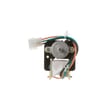
| Warm temps, weak airflow | Evaporator fan | Rca refrigerator evaporator fan motor WR60X10185 |
| Frost buildup, warming over time | Defrost system | Refrigerator defrost heater WR51X10055 or refrigerator defrost thermostat WR50X10068 |
| Temps swing or read wrong | Temperature sensing | GE profile refrigerator temperature sensor WR55X10025 |
| Slow water, small/hollow ice | Filtration/water supply | GE refrigerator water filter MWFP |
Why it matters
Cooling problems can quickly lead to food spoilage and can also cause secondary issues like slow ice production. Fixing airflow, defrost, or sensing problems early helps the compressor run less and keeps temperatures stable.
Last updated: February 2026