 Installation guide
 Owner’s manual



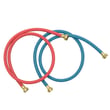
How to unclog drain hose on Kenmore washer?
To unclog the drain hose on your Kenmore washer model 11022352512, we recommend disconnecting the hose, clearing the blockage from both ends, then reinstalling it correctly so it cannot kink or siphon. Use the drain-hose placement rules in the 11022352512 installation guide to prevent repeat clogs.
Safe steps to clear the clog
- Unplug the washer.
- Turn off both water faucets.
- Place towels and a shallow pan under the hose connection.
- Remove the drain hose from the home drain (standpipe or laundry tub) first.
- Disconnect the hose from the washer drain port and check the elbow end for lint, coins, or small socks.
- Flush the hose with hot water; for buildup, soak the hose end in hot water plus vinegar, then flush again.
Reinstall it the right way (prevents future clogs)
The installation instructions for this washer call out a few details that matter:
- Use the drain hose form when draining into a standpipe or laundry tub.
- Keep about 4.5 in. (114 mm) of drain hose inside the standpipe.
- Do not force excess hose down into the standpipe or lay the hose on the bottom of the laundry tub.
- Secure the hose so it cannot fall out or kink.
Quick placement checklist
| Setup | What “right” looks like | What causes clogs/backup |
|---|---|---|
| Standpipe | 4.5 in. inserted, hose form used | Hose shoved too deep, kinked hose |
| Laundry tub | Hose over tub edge, hose form used | Hose laying in water at tub bottom |
When the hose or pump is the real problem
If the hose is clear but the washer still drains slowly, check these common causes:
- Drain hose is kinked behind the washer
- Suds overload from too much detergent
- Debris in the drain pump
- Weak or jammed pump impeller
If you find the pump is clogged or not running, the correct replacement for this model is the pump assembly, drain W11399437.
Why it matters
A partially blocked drain hose can trigger draining errors, leave water in the tub, and strain the drain pump. Correct hose routing and standpipe depth help the washer drain fast and reduce repeat service issues.
Last updated: February 2026
How to hard reset kenmore washer?
For Kenmore washer model 11022352512, the most reliable “hard reset” is a power reset: unplug the washer (or switch off the breaker) for 1 minute, then restore power and start a cycle. This clears many temporary control glitches without changing normal settings.
Hard reset steps (power reset)
- Press Power/Cancel to stop the washer if it is running.
- Unplug the washer from the grounded outlet (or turn OFF the breaker).
- Wait 60 seconds.
- Plug back into a grounded 3-prong outlet (no adapter, no extension cord).
- Select a normal cycle and press Start.
For electrical and restart guidance specific to this washer, follow the 11022352512 owner's manual.
If the washer still acts “stuck” after a reset
A reset will not fix a mechanical issue (off-balance, draining problem, lid not locking). Check these common causes next:
- Off-balance or vibration: confirm the washer is level and all feet are firmly on the floor.
- Drain problem: verify the drain hose is installed correctly and not kinked.
- No fill or slow fill: confirm both water faucets are fully open and inlet hoses are not restricted.
- Lid won’t lock: a failed lid lock can prevent starting or spinning.
If you suspect the lid is not locking, the model-specific replacement is the washer lid lock W11307244.
Quick reference: reset vs. fix
| What you do | What it helps | What it will not fix |
|---|---|---|
| Power reset (unplug 1 minute) | Frozen controls, minor glitches | Broken parts, leaks, repeated error codes |
| Leveling and installation checks | Shaking, walking, off-balance | Control board failures |
| Drain and hose checks | Not draining, long drain | Pump motor that has failed |
Why it matters
A power reset is the fastest safe first step because it restores the control to a clean start. If the same symptom returns right away, we treat it as an installation, load-balance, or part failure issue and troubleshoot from there.
Last updated: February 2026
What is the average lifespan of a Kenmore washer?
A Kenmore washer typically lasts 10 to 15 years under normal household use. For your Kenmore model 11022352512, regular maintenance (especially using HE detergent and keeping the washer clean) helps you reach the upper end of that range; heavy use and overloading shorten it.
Typical lifespan by washer type
Most Kenmore washers fall into these real-world ranges:
| Washer type | Typical lifespan | Notes |
|---|---|---|
| Top-load (agitator or HE top-load) | 10 to 15 years | Often repairable; wear parts add up over time |
| Front-load | 10 to 14 years | More sensitive to drainage, door seal, and bearing wear |
| Compact/portable | 8 to 12 years | Smaller components, often higher vibration |
What usually fails first (and what it looks like)
These are the most common age-related issues we see as washers approach the 10+ year mark:
- Drain problems: slow drain, standing water, or a cycle that stops mid-drain (often tied to the drain pump or drain hose)
- Spin and agitation issues: weak spin, no agitation, or unusual noises (belt, pulley, actuator, gear case)
- Out-of-balance shaking: tub bangs or walks (suspension components)
- Lid won’t lock or won’t start: intermittent start, clicking, or lid lock errors
- Water fill issues: slow fill or no fill (inlet valve screens/valve)
Maintenance that extends life on model 11022352512
We recommend following the care steps in the 11022352512 owner's manual and focusing on these habits:
- Use HE (high efficiency) detergent only; too many suds strain the drive and drain system
- Avoid overloading; heavy loads accelerate wear on the drive system and suspension
- Run periodic cleaning cycles (or a hot wash with washer cleaner) to reduce residue buildup
- Check pockets and remove coins, screws, and small items that can damage the pump
- Level the washer and confirm the drain hose is installed correctly (see the 11022352512 installation guide)
Repair vs. replace: a quick rule of thumb
A simple way we evaluate it:
- Repair makes sense when the washer is under ~10 years old and the issue is a single, common part.
- Replacement makes sense when the washer is 10 to 15+ years old and needs multiple major parts (drive system plus tub or control).
Why it matters
Knowing the typical 10 to 15-year lifespan helps you plan: you can invest in maintenance and targeted repairs early, then avoid sinking money into multiple major failures as the washer nears end-of-life.
Last updated: February 2026
How to identify a Kenmore washer model?
Your Kenmore washer model number is printed on the appliance’s model and serial tag. For Kenmore model 11022352512, you’ll typically find that tag under the lid on the top panel area (top-load) or on the back of the cabinet; once you match the full model number, you can choose the correct parts and instructions.
Where to look on a Kenmore washer
Check these common locations first:
- Under the lid: along the rim of the tub opening or underside of the lid (top-load washers)
- Back panel: near the power cord entry or upper rear cabinet
- Control console area: behind the console or on the cabinet near the controls
- Inside the cabinet opening: around the top frame (some designs)
What the model number looks like (and what to write down)
For Kenmore washers, the model number often starts with 110 and is usually 11 characters (or longer). Record:
- Full model number (example: 11022352512)
- Serial number (helps with production date and revisions)
- Any suffixes or extra digits/letters on the tag
Quick checklist
| What you see on the tag | What it means | What to do with it |
|---|---|---|
| Model number (ex: 11022352512) | Identifies the exact washer design | Use it to match parts and diagrams |
| Serial number | Identifies the specific unit built | Keep it for service history |
| Electrical ratings | Voltage/amps info | Useful for troubleshooting and safe setup |
Why it matters
Kenmore washers can look similar across multiple series, but internal parts (like the lid lock, actuator, or drive system) can differ by model. Using the exact model number helps us match the right replacement part the first time and avoid returns.
Helpful next steps after you find it
- Compare the tag to the model shown in the 11022352512 owner’s manual
- If you’re installing or moving the washer, follow the leveling and hookup steps in the 11022352512 installation guide
- When ordering parts, match by model number first, then confirm the part name and ID
Last updated: February 2026
Does my Kenmore top load washer have a filter?
Yes. Kenmore top-load washers like model 11022352512 typically do not have a lint filter you remove and rinse like a dishwasher filter; instead, they rely on the wash action and drain pump to move lint out with the water. For exact maintenance steps for your washer, follow the 11022352512 use and care guide.
What “filter” means on this washer
Most owners are looking for one of these:
- Lint filter screen you pull out and clean (uncommon on modern HE top-loaders)
- Drain pump clean-out (more common on front-loaders than top-loaders)
- Inlet valve screens at the hose connections (common on most washers)
- Tub cleaning routine that prevents residue and odor buildup
The manual for this Kenmore HE top-load design focuses on routine washer cleaning (including using the Clean Washer cycle) rather than a removable lint filter.
What you can clean and check (safe DIY)
Before any checks, unplug the washer and turn off both water supply valves.
- Run the Clean Washer cycle monthly (or about every 30 loads) to reduce residue and odor.
- Leave the lid open between loads to help the tub dry out.
- Check and clean the inlet hose screens at the back of the washer if fill is slow.
- Inspect the drain hose for kinks or clogs; replace if damaged.
- If the washer will not drain, check for a drain restriction; a failed pump is also possible.
If you suspect a drain problem, the pump assembly, drain W11399437 is the model-matched drain pump part commonly involved.
Quick symptom guide
| Symptom | Most common cause | What to do first |
|---|---|---|
| Musty odor | Detergent and soil residue | Run Clean Washer cycle; use HE detergent correctly |
| Slow fill | Clogged inlet screens | Clean screens; verify water valves fully open |
| Won’t drain | Drain hose restriction or pump issue | Check hose; then evaluate drain pump |
| Excess suds | Too much detergent or non-HE detergent | Switch to HE; reduce amount |
Why it matters
On HE top-load washers, “filter maintenance” is mostly about preventing buildup that causes odor, poor rinsing, and drain issues. Keeping the washer clean and the water inlet screens clear does more than a removable lint filter would on this design.
Last updated: February 2026
What is the capacity of Kenmore model 11022352512?
Kenmore model 11022352512 is a top-loading high efficiency washer; its exact tub capacity (in cubic feet) is listed in the product specifications section of the 11022352512 owner's manual. For washers in this Kenmore 110 high efficiency top-load design, capacity is typically in the 3.0 to 4.0 cu. ft. range.
Where to find the exact capacity
Check these spots first because they give the model-specific number for 11022352512:
- Specifications section in the 11022352512 owner's manual
- The model and serial tag (often under the lid or on the rim of the opening)
- Any included product literature that lists “capacity” or “cu. ft.”
Why capacity matters (and what it affects)
Capacity is more than a number; it helps you choose the right cycle and load size so the washer can clean well and spin out water properly.
- Prevents overloading that can cause poor agitation and rinsing
- Helps reduce out-of-balance spinning and vibration
- Guides detergent dosing (especially for HE detergent)
- Helps you compare replacement options accurately
Quick load-size guide (practical use)
Use this as a simple way to “translate” capacity into everyday loading:
| Load type | How full the basket should look | Common examples |
|---|---|---|
| Small | About 1/3 full | A few shirts, light items |
| Medium | About 1/2 full | Mixed daily laundry |
| Large | About 3/4 full | Towels, jeans |
| Bulky | Loosely filled, not packed | Bedding, jackets |
Tips to get the best performance on this HE top-load washer
- Use HE detergent only (this is called out in the manual)
- Load items loosely; do not pack them down
- Balance heavy items around the basket to reduce vibration
- If the washer struggles to spin, inspect common drive components like the drive belt W11239857 and washer actuator W10913953
Last updated: February 2026
Is Kenmore Elite high end?
Yes. Kenmore Elite is Kenmore’s higher-end line, typically offering upgraded features, styling, and performance compared with standard Kenmore models; the exact “high end” experience depends on the specific appliance and feature set on your Kenmore washer model 11022352512. For feature details and cycle options, use the 11022352512 owner’s manual.
What “high end” usually means for Kenmore Elite
Kenmore Elite models are generally positioned above base and mid-tier Kenmore units in areas like convenience features and build choices.
Common upgrades include:
- More cycle and option selections (specialty fabric cycles, extra rinse, deep fill options)
- Higher spin performance for better water extraction
- Quieter operation features (improved suspension and vibration control)
- More advanced controls (digital displays or expanded indicator lights)
- Better fit-and-finish (console design, lid/trim materials)
How to judge “high end” for your washer (11022352512)
The most accurate way to evaluate your specific washer is to compare what it does in daily use: cleaning, spinning, noise, and reliability.
| What to compare | What to look for | Why it matters |
|---|---|---|
| Cleaning performance | Soil removal on normal and bulky loads | Determines real-world results |
| Spin/drain performance | Clothes come out less wet, drains consistently | Shorter dry times, fewer drain issues |
| Noise/vibration | Smooth spin, minimal shaking | Protects floors and reduces wear |
| Controls/features | Cycles you actually use, clear status indicators | Convenience and consistency |
Parts that influence “premium” performance
If your washer is noisy, shakes, or struggles to spin, restoring key drive and suspension components often brings performance back to what you expect from a higher-end machine.
Parts commonly tied to smooth operation include:
- Damper asm-v W11130362 (helps control tub movement)
- Drive belt W11239857 (transfers motor power for agitation and spin)
- Washer lid lock W11307244 (helps the washer run and spin safely)
Why it matters
“High end” is most noticeable when the washer cleans well while staying stable and quiet. Keeping the washer level and installed correctly also protects the suspension and drive system; the 11022352512 installation guide walks through leveling and setup.
Last updated: February 2026
Is it worth repairing a Kenmore washing machine?
Yes, repairing a Kenmore washer is worth it when the fix restores reliable operation for less than the cost of replacement, especially on a solid platform like Kenmore model 11022352512. We focus first on the failure type (drive, drain, lid lock, or suspension) because that determines cost and long-term value.
A practical repair-or-replace checklist
- Repair it if the washer otherwise runs normally and the problem is isolated (won’t drain, won’t spin, won’t start, excessive shaking).
- Repair it if the issue is a common wear item (belt, actuator, lid lock, drain pump).
- Repair it if the tub and cabinet are in good shape (no severe rust, no major structural damage).
- Consider replacing if multiple major systems are failing (drive system plus control plus tub leaks).
- Consider replacing if the repair requires repeated teardown and you have recurring symptoms after prior repairs.
Common “worth repairing” failures on this model
For Kenmore top-load high efficiency washers like 11022352512, these are frequent, straightforward repairs:
| Symptom | Likely area | Example part for this model |
|---|---|---|
| Won’t spin or makes squealing/burning rubber smell | Belt and pulley drive | Drive belt W11239857 |
| Won’t drain or leaves water in tub | Drain system | Pump assembly, drain W11399437 |
| Lid won’t lock, won’t start, stops mid-cycle | Lid lock circuit | Washer lid lock W11307244 |
| Loud banging, off-balance, “walking” | Suspension/damping | Damper asm-v W11130362 |
What to check before spending money
- Confirm the symptom and any error display steps in the 11022352512 owner’s manual.
- Verify installation basics that affect performance (leveling, drain hose routing, inlet hose connection) using the 11022352512 installation guide.
- If the washer pumps out water before finishing a cycle, make sure the lid is closed and not left open for extended periods during operation (a common interruption cause).
Why it matters
A targeted repair prevents repeat breakdowns and avoids replacing a washer for a single failed component. On a high-efficiency top-load design, fixing the correct subsystem (drain, drive, lid lock, or suspension) is what makes the repair last.
Last updated: February 2026





