Owner’s manual
 Error Codes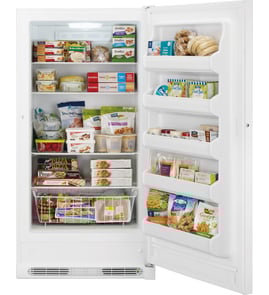


How many cubic feet is my upright freezer?
The exact cubic-foot capacity for Kenmore Elite model 25328093802 is listed on the product rating label and in the 25328093802 owner's manual. If you do not have that label handy, you can estimate capacity by measuring the interior and converting to cubic feet.
Where to find the exact capacity (fastest)
Check these common spots on an upright freezer:
- Inside the cabinet on a side wall near the front
- On the back wall inside the freezer compartment
- Behind the toe grille or lower front panel area
- On the rear exterior panel
The label typically lists capacity in cubic feet, electrical ratings, and the full model number.
How to estimate cubic feet from measurements
If you want a quick estimate, measure the usable interior (not the outside cabinet):
- Width (left to right)
- Depth (front to back)
- Height (bottom to top)
Then use this conversion:
| What to do | Formula |
|---|---|
| Convert cubic inches to cubic feet | (W x D x H in inches) ÷ 1,728 |
| Convert cubic centimeters to cubic feet | (W x D x H in cm) ÷ 28,316 |
Tips for more accurate measuring
- Measure to the inside liner, not the door gasket.
- Subtract space taken by thick insulation, shelves, and the evaporator cover if they reduce usable volume.
- Use the largest “box” area; ignore small molded pockets.
Why it matters
Capacity helps you plan safe loading and freezing performance. The manual notes a common guideline when freezing fresh food: freeze only about 3 pounds of fresh food per cubic foot at one time, then distribute packages evenly for good airflow.
Last updated: January 2026
Where to find model number on upright freezer?
On the Kenmore Elite upright freezer model 25328093802, the model and serial number plate is typically on the upper left wall inside the freezer compartment. We recommend confirming the exact location and recording both numbers using the owner's manual.
Common label locations on upright freezers
If you do not see the plate right away, check these spots next (in order):
- Upper left interior wall (most common for upright models)
- Interior side wall near the front opening
- Ceiling area inside the cabinet (some designs)
- Behind the lower kick plate or base panel
- Back exterior panel near the power cord
What the model/serial plate looks like
Most plates are a small sticker or metal tag with a printed grid of information.
| What you need | What it’s used for | Example format |
|---|---|---|
| Model number | Matching parts and diagrams | 253. or 970. prefix families |
| Serial number | Date and production tracking | Letters and numbers |
| Purchase date (optional) | Warranty and records | Month/day/year |
Why it matters
Using the exact model number (including every digit) ensures we match the correct Kenmore parts for your freezer, especially for items like the electronic control, door gasket, and defrost components.
Quick tips before you search
- Open the door fully and use a flashlight to scan the upper left interior wall
- Wipe condensation or frost off the liner so the print is readable
- Take a clear photo of the plate so you can zoom in later
Last updated: January 2026
What is the most common problem on a freezer?
The most common freezer problem is temperature trouble caused by warm air getting in or airflow being restricted, which leads to long run times, frost buildup, or food softening. On Kenmore model 25328093802, the owner's manual troubleshooting guide focuses heavily on door sealing, temperature control settings, and how often the door is opened.
Most common symptoms we see (and what they usually mean)
- Freezer runs too much or too long: door left slightly open, control set too cold, or warm food loaded recently
- Frost or moisture inside the cabinet: humid conditions, frequent door openings, or the door not seating properly
- Freezer too warm: control set too warm, door opened too often, or the door not sealing
- Door will not close: freezer not level or floor is uneven, which can twist the cabinet and misalign the door
- Outside walls feel warm: normal during compressor operation (heat transfer)
Quick checks that fix many “common freezer problems”
- Confirm the temperature control is not set to OFF, then allow several hours for temperatures to stabilize after any adjustment.
- Check the door seal and door alignment:
- Look for gaps at the corners
- Clean the gasket and mating surface
- Make sure shelves and bins are not blocking closure
- Level the freezer so the cabinet stays square and the door closes consistently.
- Reduce door-open time and avoid repeated openings during humid weather.
Parts that commonly relate to frost and temperature complaints
If you confirm the door is sealing and the control is set correctly but frost or warming continues, defrost-system parts are common suspects.
| Symptom | Common area to inspect | Example part for this model |
|---|---|---|
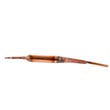
| Heavy frost, warming over time | Defrost system | Defrost heater 216730700 |
| Frost returns quickly after manual defrost | Defrost thermostat | Refrigeration appliance defrost bi-metal thermostat 297216600 |
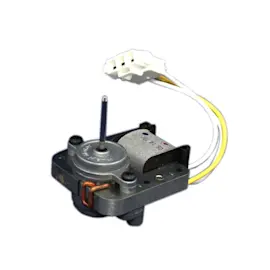
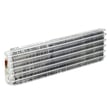
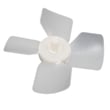
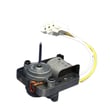
| Warm temps, weak airflow | Evaporator fan | Freezer evaporator fan motor 297309000 |
Why it matters
Most “freezer problems” start small (a slightly open door, a dirty gasket, frequent openings) but they force the compressor to run longer, increase frost buildup, and make temperatures unstable. Fixing airflow and sealing issues early helps protect food and reduces wear on major components.
Last updated: January 2026
Why is my Kenmore Elite freezer not freezing?
If your Kenmore Elite upright freezer model 25328093802 is running but not freezing, the most common causes are an incorrect temperature control setting, a door that is not sealing, or restricted airflow from heavy frost or blocked vents. Start with the quick checks below before testing parts.
Quick checks (fastest fixes first)
- Make sure the temperature control is not set to OFF.
- Confirm the freezer is plugged in firmly and the outlet has power (a tripped breaker can mimic a cooling failure).
- Keep door openings to a minimum for several hours to let temperatures recover.
- Check that the door closes easily and fully; a slightly open door can stop proper freezing.
- Look for heavy frost on the back wall or inside panel; this often points to a defrost problem.
Airflow and door seal problems
Poor airflow and air leaks are top reasons an upright freezer warms up.
- Blocked airflow: Overpacked shelves can block cold air circulation. Leave space around interior vents.
- Door not sealing: A dirty, warped, or torn gasket lets warm, moist air in, which causes frost and weak cooling.
- Not level: If the cabinet is not level, the door can misalign and not seal correctly.
| Symptom | What it usually means | What to do |
|---|---|---|
| Frost buildup, warmer temps | Defrost system not clearing ice | Inspect defrost components and airflow |
| Runs a lot, still warm | Air leak or restricted airflow | Check gasket, door closure, loading |
| Door pops open or won’t shut | Leveling or hinge alignment issue | Level the freezer so the door closes easily |
Likely parts to check if frost is building up
If you see heavy frost and the freezer gradually stops freezing, the defrost system is a prime suspect.
Why it matters
When warm air leaks in or frost blocks the evaporator area, the freezer cannot move heat out efficiently. That leads to longer run times, temperature swings, and food that softens instead of staying solid.
For model-specific operating and temperature control guidance, follow the 25328093802 owner's manual.
Last updated: January 2026