Owner’s manual
 Error Codes
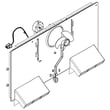


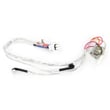
Is GE Cafe considered high end?
Yes. GE Café is generally considered a high-end, “attainable luxury” line within the GE family, positioned above standard GE models and typically alongside or above GE Profile in styling and features, while GE Monogram is the more ultra-premium tier. For your GE GDE25ESKJRSS refrigerator, the GDE25ESKJRSS owner's manual covers shared operation and care guidance used across GE, GE Profile, and GE Café bottom-freezer models.
GE groups many bottom-freezer refrigerators under shared platforms, but the brand tier usually affects finishes, design options, and feature sets more than basic refrigeration fundamentals.
- GE: core features and value-focused configurations
- GE Profile: upgraded features and more advanced controls in many models
- GE Café: premium styling, pro-inspired design cues, and higher-end options
- GE Monogram: luxury tier with the most premium positioning
High-end is usually about the overall package, not just one component.
| What you notice | More common in GE Café | Why it matters |
|---|---|---|
| Design and finishes | Yes | Impacts kitchen look and resale appeal |
| Feature set | Often | Convenience, temperature management, dispenser options |
| Price point | Yes | Higher upfront cost for styling and features |
| Service parts | Similar categories | Many repairs still use standard components like sensors, fans, and controls |
Even if your model is not branded Café, many maintenance items and troubleshooting steps are the same across GE bottom-freezer platforms.
- Use the manual’s control and feature sections to compare day-to-day operation
- Expect similar wear items across lines (filters, fans, sensors, door gaskets)
- For water and ice performance, filter condition is a common differentiator
- If you need a filter for this model, the GE refrigerator water filter XWFE is a listed replacement option
Knowing the GE tier helps set expectations: GE Café is typically chosen for premium design and feature experience, while core cooling performance still depends on correct settings, airflow, and routine maintenance.
Last updated: February 2026
How to remove bottom grille on GE refrigerator?
On the GE GDE25ESKJRSS bottom-mount refrigerator, the bottom grille (base grille) typically comes off by releasing its retaining tabs or removing any securing screws, then pulling the grille straight out from the front. We recommend raising the front leveling legs slightly first so the grille clears the floor and frame; see the GDE25ESKJRSS owner's manual for safe moving and access guidance.
- Unplug the refrigerator if your hands will be near wiring or the condenser fan area.
- If you need to pull the unit forward, raise the front leveling legs first.
- Pull the refrigerator straight out (not sideways) to avoid floor damage.
- Watch the power cord and water supply line so you do not roll over or pinch them.
- If you shut off the water supply, turn off the icemaker.
- Open both fresh food doors so you can see the full top edge of the grille.
- Look along the grille for fasteners; if you see screws, remove them with a Phillips screwdriver.
- If there are no screws, grip the grille at both ends and pull straight outward to pop it free from the clips.
- If it feels stuck, press along the top edge to release the tabs one section at a time, then pull forward.
- Set the grille aside on a non-scratching surface.
- Line up the tabs/clips with the slots in the cabinet frame.
- Push the grille straight in until it seats evenly.
- Reinstall any screws (snug, not over-tight).
| What you see | What it usually means | What to do |
|---|---|---|
| Phillips screws at the ends/top | Grille is screw-secured | Remove screws, then pull grille forward |
| No screws, grille flexes slightly | Grille is clip-secured | Pull straight out; release tabs along the top edge |
| Grille won’t budge | Leveling legs too low or tabs bound | Raise leveling legs slightly; pull straight out evenly |
The bottom grille is the access point for cleaning around the condenser area and checking airflow. Keeping that area clear helps the compressor run efficiently and can reduce warm-temperature complaints.
Last updated: February 2026
What is the most common problem with a GE refrigerator?
The most common problem we see with GE refrigerators, including the GE GDE25ESKJRSS bottom-mount refrigerator, is a cooling complaint (fresh food too warm, freezer not holding temp, or both). In many cases, the root cause is restricted airflow or a failed cooling component such as a fan motor, temperature sensor, or a defrost-system part.
- Make sure air vents inside the refrigerator and freezer are not blocked by food packages.
- Clean dust from the condenser area (restricted heat release can cause warm temps and long run times).
- Confirm the doors close fully and the gaskets seal all the way around.
- Verify the temperature settings are at normal targets (about 37°F fresh food, 0°F freezer).
- After moving the refrigerator, push it straight back in and avoid rolling over the power cord or water line (the owner's manual covers safe moving and leveling steps).
If basic airflow and cleaning do not help, these parts are frequent culprits on bottom-mount designs:
| Symptom | Common cause | Example part on this model |
|---|---|---|
| Warm refrigerator section, freezer OK | Weak/no evaporator airflow | Refrigerator evaporator fan motor WR60X32614 |
| Temps swing up and down | Bad temperature feedback | GE profile refrigerator temperature sensor WR55X10025 |
| Frost buildup, warm temps over time | Defrost system not clearing ice | Refrigerator defrost heater WR51X10108 or refrigerator defrost bi-metal thermostat WR50X10069 |
A refrigerator that is not cooling correctly often runs longer than normal, which can lead to food spoilage and extra wear on the sealed system (compressor and related components). Catching airflow, sensor, fan, or defrost issues early usually prevents bigger failures.
- You hear repeated clicking near the compressor area and the unit will not start cooling.
- The freezer evaporator is packed in solid ice shortly after a manual defrost.
- You see water leaking and temperatures are rising at the same time.
For model-specific operating tips and safe handling during leveling or repositioning, use the owner's manual.
Last updated: February 2026