Owner’s manual
 Error Codes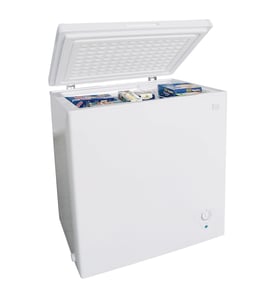
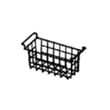



How do I tell what size my freezer is?
Freezer “size” usually means storage capacity in cubic feet. For your Kenmore chest freezer model 11117662910, we recommend calculating capacity by measuring the inside width, depth, and height of the storage area, then converting that volume to cubic feet; see the owner's manual for model-specific details and diagrams.
Measure and calculate cubic feet
- Unplug the freezer and remove baskets so you can measure the usable interior space.
- Measure the interior:
- Width (left to right)
- Depth (front to back)
- Height (bottom to the underside of the lid seal line)
- Multiply:
width x depth x heightto get cubic inches. - Convert to cubic feet:
cubic inches ÷ 1,728 = cubic feet.
Quick conversion table
| Measurement unit | Use this formula | Result |
|---|---|---|
| Inches | (W x D x H) ÷ 1,728 | Cubic feet |
| Centimeters | (W x D x H) ÷ 28,316.8 | Cubic feet |
Tips to get an accurate number
- Measure the interior liner, not the outside cabinet.
- Ignore small “dead space” around the compressor hump; measure the main usable cavity.
- If the freezer has a step or hump, measure in sections and add them together.
- Keep the lid open briefly; warm air adds frost and moisture over time.
Why it matters
Capacity helps you choose the right freezer for your household and also helps when buying accessories (like baskets) and planning airflow around the unit. Your manual also calls for 4 inches of clearance on all sides for proper circulation, which affects where a larger-capacity freezer can be placed.
Last updated: February 2026
What can cause a chest freezer to stop working?
On the Kenmore 11117662910 chest freezer, the most common reasons it stops working are loss of power to the unit, the temperature control being set to OFF, a loose plug, a tripped breaker or blown fuse, or an outlet issue (including GFCI). Use the owner's manual troubleshooting steps to pinpoint the cause.
Quick checks we recommend first
- Confirm the freezer is firmly plugged into the wall outlet.
- Check the house breaker or fuse for the circuit.
- If the outlet is GFCI-protected, reset the GFCI and test again.
- Make sure the temperature control is not set to OFF.
- Keep the lid closed while troubleshooting to protect food temperature.
What the symptoms usually mean
| What you notice | Likely cause | What to do next |
|---|---|---|
| No lights, no sound | Power outage, tripped breaker, blown fuse | Check house power and reset breaker/fuse |
| Runs sometimes, then stops | Outlet/GFCI nuisance trip, loose plug | Try a different outlet on a non-GFCI circuit |
| Runs a lot but not cold enough | Lid not sealing, warm food load, frequent openings | Reduce openings; verify lid closes and seals |
| Frost or moisture around lid | Freezer not level; lid misaligned | Level the cabinet so the lid seals evenly |
Installation and lid-seal issues that can look like “stopped working”
If the freezer is not level, the lid can sit crooked and not seal. That can cause cooling problems, frost buildup, and moisture that make it seem like the freezer is failing even when it is running.
- Place the freezer on a solid, level floor.
- Shim under the foot pads if needed.
- Recheck that the lid closes squarely all the way around.
Why it matters
A chest freezer can keep food frozen for about 24 hours during a power failure if you keep the lid closed. Fast troubleshooting helps protect food quality and prevents unnecessary part replacement.
Last updated: February 2026
Is it cheaper to run a chest freezer or upright freezer?
Chest freezers are typically cheaper to run than upright freezers because the top-opening design holds cold air in better when you open the lid. For Kenmore chest freezer model 11117662910, that same design advantage helps reduce run time compared with many uprights.
Why chest freezers usually cost less to operate
When you open an upright freezer door, cold air spills out easily. With a chest freezer, cold air tends to stay in the cabinet, so the compressor usually does not need to run as long to recover.
Common efficiency factors that favor chest freezers:
- Less cold-air loss during loading and unloading
- Often better overall air sealing due to the lid design
- More stable internal temperatures when the lid stays closed
- Fewer warm-air exchanges in everyday use
What affects your actual electricity cost
Even within the same freezer type, operating cost depends heavily on how the freezer is used and where it is installed.
Key cost drivers:
- Room temperature (hot garages and utility rooms increase run time)
- How often the lid is opened and how long it stays open
- Amount of warm food added (warm loads make the freezer run longer)
- Temperature control setting (colder settings increase run time)
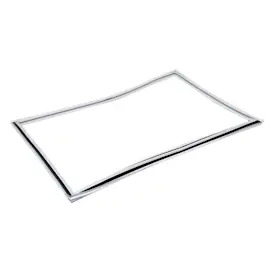
- Lid gasket condition (a dirty, cracked, or poorly fitting gasket causes longer run times)
Quick comparison
| Factor | Chest freezer | Upright freezer |
|---|---|---|
| Cold air loss when opened | Lower | Higher |
| Typical operating cost | Lower | Higher |
| Organization/access | Harder | Easier |
| Footprint | Often larger | Often smaller |
Why it matters
Lower run time usually means lower energy use and steadier food temperatures. It also reduces wear on cooling components, especially if the freezer is in a warm space or gets opened frequently.
For operating tips and temperature control guidance specific to your Kenmore freezer, use the owner's manual.
Last updated: February 2026
Is there a reset button on chest freezers?
Most chest freezers, including Kenmore model 11117662910, do not have a dedicated reset button. The practical “reset” is a power reset: unplug the freezer (or switch off the breaker) for about 30 seconds, then restore power and let temperatures stabilize.
How to power reset your Kenmore 11117662910
- Turn the temperature control to a normal setting (the recommended setting is typically mid-range).
- Unplug the freezer from the outlet (or turn the circuit breaker OFF).
- Wait 30 seconds.
- Restore power.
- Keep the lid closed and allow several hours for the temperature to stabilize.
For control and indicator details, follow the operating instructions in the 11117662910 owner's manual.
What to check if it still will not run or the light is off
The manual notes the green Power On light should glow when the freezer has electrical power (even if the temperature control is set to OFF). If the freezer is not cooling or appears dead after a reset, check these common causes:
- Outlet has no power (test with a lamp or small appliance)
- Tripped breaker or blown fuse
- Power cord not fully seated
- Temperature control set too warm or set to OFF
- Lid not sealing well (can cause cooling and moisture problems)
Quick symptom guide
| Symptom | Most likely issue | Best next step |
|---|---|---|
| Power On light is OFF | No power to freezer or failed light | Verify outlet and breaker, then reset power |
| Light is ON but not cold enough | Control setting, lid seal, warm load | Set closer to colder, keep lid closed, wait several hours |
| Runs a lot, frost/moisture | Lid not sealing or freezer not level | Level the cabinet and confirm lid alignment |
Why it matters
A power reset clears minor control glitches and restores normal operation after brief outages. If the freezer is not level, the lid can misalign and not seal properly, which leads to cooling, frost, and moisture problems.
Last updated: February 2026
Where is the model number on a Kenmore chest freezer?
On Kenmore chest freezer model 11117662910, the model and serial number information is typically on the left exterior wall of the cabinet (often on a serial plate). This location is called out in the owner's manual for Kenmore chest models.
Most common places to check
Look for a sticker or metal serial plate in these spots:
- Left exterior wall of the freezer cabinet (most common for chest models)
- Near the back, close to the compressor area (exterior)
- Along the lower side panel where the cabinet meets the floor
- Under the lid edge on the cabinet rim (less common)
What the label looks like
The model/serial label is usually a small plate or sticker that includes:
- Model number (for this page: 11117662910)
- Serial number
- Electrical ratings (volts/amps)
- Manufacturing information
| Item on label | Why you need it |
|---|---|
| Model number | Ensures diagrams and replacement parts match your exact freezer |
| Serial number | Helps identify production details when looking up documentation |
Tips for reading it clearly
- Wipe dust off gently; use mild soap and water.
- Take a photo and zoom in to read small print.
- Write the model and serial numbers down for future parts lookups.
Why it matters
Kenmore chest freezers often share similar cabinet designs across sizes, so the model number is what keeps you matched to the correct parts list, wiring information, and use and care instructions.
Last updated: February 2026