Error Codes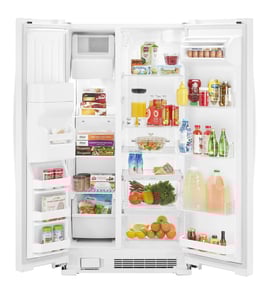




Are GE side by side refrigerators good?
Yes. GE side-by-side refrigerators like model GSS23GGPFCWW are a strong everyday choice because they keep frequently used items at eye level and typically deliver steady cooling with convenient ice and water features. Long-term satisfaction comes from maintaining airflow, seals, and the water system.
What “good” means in real use
A “good” side-by-side consistently holds safe temperatures, makes ice reliably, and avoids recurring dispenser or airflow issues.
- Fresh food stays near 37°F; freezer stays near 0°F
- Air vents stay clear so cold air circulates evenly
- Doors seal tightly to prevent frost and temperature swings
- Water filter stays current for good flow and taste
Common strengths and tradeoffs
| Strengths many owners like | Tradeoffs to expect |
|---|---|
| Easy access to both compartments | Freezer can feel narrow for wide items |
| Lots of door storage and adjustable shelves | Ice/auger systems can be louder |
| Built-in dispenser convenience | Filter condition affects flow and ice output |
Parts that most affect performance on GSS23GGPFCWW
If cooling or dispensing is the deciding factor, these model-matched parts are the usual difference-makers:
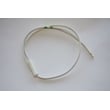
- Temperature stability: GE profile refrigerator temperature sensor WR55X10025
- Airflow and cooling: refrigerator evaporator fan motor WR60X10307
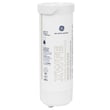
- Water taste and flow: GE refrigerator water filter XWFE
Helpful how-to guidance
Why it matters
Stable temperatures and strong airflow protect food quality and reduce energy waste. A restricted filter or weak fan can also make the ice maker and dispenser seem “bad” even when the refrigerator is otherwise in good shape.
Last updated: February 2026
How to find GE appliance parts?
To find the right replacement parts for your GE GSS23GGPFCWW side-by-side refrigerator, match parts by the full model number first, then narrow by the system you’re repairing (water and ice, cooling, controls, or doors). Using the model-based parts list helps ensure fit and compatibility.
Step-by-step: find the correct part for model GSS23GGPFCWW
- Locate the model number on the refrigerator’s ID tag (commonly inside the fresh food compartment).
- Use the model-specific parts list for GE GSS23GGPFCWW and choose the section that matches the symptom.
- Confirm the part name and part ID before ordering (controls, fans, icemaker, filter parts can look similar).
- If you’re troubleshooting first, check for any displayed error codes and match them to the likely system.
- Compare your old part to the listing photos and description before installing.
Common parts customers replace on this model
If you’re not sure where to start, these are frequent “first checks” for cooling and water and ice issues:
| Symptom | Common system | Example part to check |
|---|---|---|
| Warm refrigerator or freezer | Airflow/cooling | Refrigerator evaporator fan motor WR60X10307 |
| Water tastes/flows poorly | Filtration | GE refrigerator water filter XWFE |
| No ice or poor ice production | Ice maker/dispenser | Icemaker WR30X39277 |
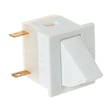
| Door alarm or light issues | Door switch | Refrigerator door switch WR23X31507 |
Why it matters
GE refrigerators often use multiple similar-looking components across different revisions. Matching by the exact model number (GSS23GGPFCWW) and then selecting the correct part ID reduces returns and prevents repeat failures.
Helpful troubleshooting resources
- Use GE refrigerator error codes to identify the system involved before ordering parts.
- If the issue is water taste, slow dispensing, or a filter warning, follow how to replace the water filter in a GE refrigerator.
Last updated: March 2026
What is the disadvantage of a side-by-side fridge?
A side-by-side refrigerator like the GE GSS23GGPFCWW trades wide shelf space for narrow, tall compartments; that makes it harder to fit and see large fresh-food items (pizza boxes, party trays, wide produce bins) and can make organization feel more cramped than a French door layout.
Common disadvantages (and what you can do)
- Narrow shelves: wide platters and large containers may not fit without rearranging.
- More bending and reaching: fresh-food items can end up spread across multiple shelves.
- Less “full-width” storage: fewer options for wide deli trays and sheet pans.
- Freezer organization can be tricky: tall, narrow sections can hide items behind each other.
- Ice maker and dispenser space tradeoff: in-door ice can reduce usable freezer door bin space.
Quick comparison: side-by-side vs. French door
| Feature | Side-by-side (like GSS23GGPFCWW) | French door |
|---|---|---|
| Fresh-food shelf width | Narrower | Wider |
| Freezer access | Eye-level, vertical | Pull-out drawer |
| Best for | Frozen-food access, tight kitchens | Fresh-food storage, wide items |
Tips to reduce the downsides
- Keep “daily use” items at eye level; group by category (dairy, drinks, leftovers).
- Use clear bins to prevent items getting lost in the back.
- Store wide items diagonally when possible; use smaller containers for leftovers.
- If cooling seems uneven top-to-bottom, check airflow and avoid blocking vents.
- If you notice temperature swings, a failing sensor can contribute; the GE profile refrigerator temperature sensor WR55X10025 is a common temperature-sensing component used in this model’s cooling system.
Why it matters
Most side-by-side complaints come down to usable space, not total capacity. If you regularly store wide fresh-food items, the layout can feel limiting even when the refrigerator is working perfectly.
Last updated: February 2026
What is the most common problem with a GE refrigerator?
The most common GE refrigerator complaint is not cooling properly (fresh food warm, freezer warming, or temperatures swinging). On model GSS23GGPFCWW, the usual causes are airflow problems, a failing fan, a bad temperature sensor, or a defrost issue that lets frost block the evaporator.
Quick checks we recommend first
- Confirm the controls are set correctly (typical targets: 37°F fresh food, 0°F freezer).
- Make sure vents inside both compartments are not blocked by food packages.
- Listen for the evaporator fan running when the doors are closed (a door switch must be pressed).
- Check for heavy frost on the freezer back wall (often points to a defrost problem).
- Clean dust from the condenser area and verify the condenser fan runs.
- Verify both doors seal fully and close without popping back open.
Common problems and the parts that often relate
| Symptom | What it usually means | Parts commonly involved on GSS23GGPFCWW |
|---|---|---|
| Warm fridge, freezer OK | Poor airflow from freezer to fridge | Air damper, evaporator fan |
| Warm freezer and fridge | Cooling system not moving heat | Condenser fan, compressor start components |
| Frost buildup, weak cooling | Defrost system not clearing frost | Defrost heater, sensors/control |
| Water dispenser slow or no water | Filter restriction or air in line | Water filter, reservoir/bypass |
If you suspect a sensor issue, the temperature sensor is a common, straightforward starting point: GE profile refrigerator temperature sensor WR55X10025.
Why it matters
A refrigerator that is even 5 to 10 degrees too warm can spoil food faster and make the compressor run longer. Catching airflow, fan, or defrost problems early helps prevent bigger cooling-system strain.
Helpful DIY guides
Last updated: February 2026