Owner’s manual
 Error Codes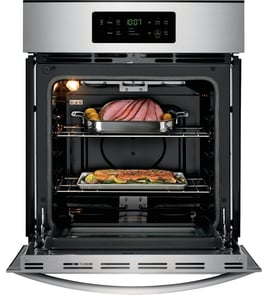
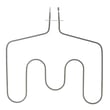



How to find wall oven model number?
For Kenmore wall oven model 91141089991, the model and serial number label is located on the front frame behind the oven door. Open the door fully and look along the frame where the door closes against the oven.
Where to look first (fastest checks)
- Open the oven door and inspect the front frame behind the door (most common location for this model).
- Check the left and right vertical frame rails near the latch area.
- Look along the bottom frame lip just inside the door opening.
- Wipe the area with a damp cloth; grease can hide the printed label.
If you still do not see it
If the label is missing or unreadable, these are the next most common places on built-in electric wall ovens:
- On the oven cavity rim (around the opening) near a corner
- On an interior side panel just inside the cavity
- On paperwork that came with the unit (use and care guide)
What the label usually includes
| Item on label | Why you need it |
|---|---|
| Model number | Ensures you get the correct parts and diagrams |
| Serial number | Helps match production details and revisions |
| Electrical ratings | Useful for installation and service checks |
Why it matters
Using the exact model number prevents ordering the wrong bake element, temperature sensor, door hinge, or control parts. Even small model-number differences can change wiring, mounting, and fit.
For the exact label location wording and other identification tips, use the 91141089991 owner's manual.
Last updated: January 2026
Are electric wall ovens 110 or 220?
Most electric wall ovens, including Kenmore model 91141089991, are designed to run on a 240-volt (often called 220-volt) circuit, not a standard 120-volt (110-volt) household outlet. The exact electrical requirements for your installation are listed in the 91141089991 owner's manual.
What to expect for power and wiring
Most built-in electric wall ovens use a dedicated double-pole breaker and hardwired connection (or a junction box connection), because they need higher wattage for bake and broil heating.
Common setup details:
- 240V supply (two hot legs) for heating performance
- Dedicated circuit (no other appliances on the same breaker)
- Double-pole breaker in the home electrical panel
- Hardwired connection is common for wall ovens
- Grounding is required for safety
Quick comparison: 120V vs 240V appliances
| Item | Typical voltage | Typical use |
|---|---|---|
| Standard wall outlet | 120V (110V) | Small appliances, microwaves (some) |
| Electric wall oven | 240V (220V) | Bake and broil elements, self-clean heat |
How to confirm what your oven is actually using
We recommend verifying the oven’s rating information and your home circuit before replacing parts or scheduling installation.
Check these items:
- The model and serial tag location (often on the front frame behind the oven door)
- The electrical rating listed on the tag (volts and amps)
- Your breaker size and whether it is double-pole
- The wiring type in the junction box (copper/aluminum, gauge)
Why it matters
Using the correct voltage and circuit protects the control board, heating elements, and safety systems. A wall oven on the wrong supply can heat poorly, trip breakers, or damage components.
Last updated: January 2026
Are all 30 inch wall ovens the same size?
No. “30-inch” wall ovens are grouped by a nominal width, but the exact cabinet cutout width, overall width, height, and depth vary by brand and model. For Kenmore model 91141089991, use the cutout and clearance dimensions listed in the 91141089991 owner's manual before ordering a replacement oven.
What “30-inch” usually means (and what it does not)
Manufacturers use “30-inch” as a category, not a guaranteed measurement. Differences show up in the trim, door design, and how the oven mounts in the cabinet.
- Overall width can vary slightly from one 30-inch wall oven to another
- Cutout width is often close to 28 1/2 to 29 1/2 inches, but not identical across models
- Height and depth also vary, especially between single, double, and combo units
- Electrical junction box location and conduit length can differ
- Venting and clearance requirements are model-specific
How to measure for a replacement wall oven
Measure the cabinet opening and compare it to the replacement oven’s required cutout.
- Cutout width: inside left to inside right of the cabinet opening
- Cutout height: inside bottom support to inside top of opening
- Cutout depth: front of cabinet to back wall (account for wiring)
- Front clearance: door swing and handle clearance
- Power supply: verify the circuit and connection location match the new unit
Quick comparison: “overall size” vs “cutout size”
| Measurement type | What it describes | Why it matters |
|---|---|---|
| Overall width/height/depth | The oven’s exterior dimensions | Determines fit with surrounding cabinets and trim |
| Cutout dimensions | The cabinet opening required | Determines whether the oven can be installed safely |
| Clearance requirements | Space around oven for heat and airflow | Prevents overheating and cabinet damage |
Why it matters
A wall oven that is “30-inch” can still be the wrong fit if the cutout is too small, the trim does not cover gaps, or the electrical hookup does not align. Confirming the exact cutout specs first prevents return hassles and installation delays.
Last updated: January 2026
What is the best electric wall oven to buy?
If you’re shopping for a new electric wall oven, the “best” choice depends on your cutout size (most are 30-inch), whether you want single or double ovens, and which features you’ll actually use. Your Kenmore 91141089991 is a 30-inch self-cleaning single electric built-in wall oven, so matching those basics is the best starting point; see the 91141089991 owner's manual for the model style and features.
How to choose the best wall oven for your kitchen
Use these criteria to narrow down brands and models quickly:
- Size and fit: confirm 30-inch vs 27-inch and verify cabinet cutout dimensions
- Single vs double oven: double ovens add flexibility but cost more and need more vertical space
- Cleaning type: self-cleaning vs manual clean
- Cooking performance: convection (true convection is a plus), preheat speed, even baking
- Controls: knobs vs touch controls, Wi-Fi features, and ease of use
- Serviceability: parts availability (heating elements, temperature sensor, cooling fan)
Feature comparison (quick checklist)
| What you care about | What to look for | Why it helps |
|---|---|---|
| Even baking | Convection fan and good insulation | More consistent results across racks |
| Easy cleanup | Self-clean cycle | Less scrubbing after spills |
| Accurate temps | Reliable temperature sensor and calibration option | Better baking and roasting |
| Long-term reliability | Strong parts support and common replacement parts | Easier, cheaper repairs |
Why it matters (especially if you’re replacing an older Kenmore)
Wall ovens are built-in appliances; a “great” oven that doesn’t fit your cabinet cutout becomes an expensive remodel. Starting with the same format as the Kenmore 91141089991 (30-inch, single, self-cleaning) keeps installation simple and helps you compare features like convection and control style apples-to-apples.
If you’re deciding whether to replace or repair
If your current oven has heating or temperature issues, repair is often practical when the cabinet fit is good and the rest of the oven is in solid shape. Common repair paths include replacing the temperature sensor or a heating element.
- For temperature problems, consider the g.e. wall oven temperature sensor WB23X5340
- For broil issues, the range broil element WB44K5017 is a common fix
- For bake issues, the g.e. range bake element WB44T10018 is often the first part to check
Last updated: January 2026