
Where is the model number on a Delta table saw?
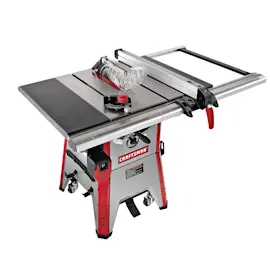
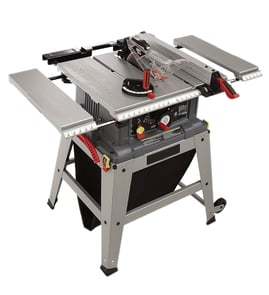
On the Delta 34-440 (10" contractor saw), the model number is usually on an ID tag or data plate attached to the saw’s cabinet or base, most often on the rear of the cabinet near the top edge. It can be partially hidden by fence rails or extension hardware.
Common places to check on a Delta 34-440
Look for a metal tag or sticker with the model and serial information in these spots:
- Back of the cabinet, high on the panel (you may need to crouch to read it)
- Inside the cabinet on a side wall (check through the motor access opening)
- Near the switch box area or power cord entry point
- On the stand/base frame (especially if the cabinet was swapped)
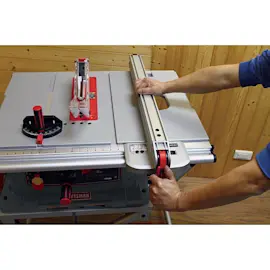
- Under the extension wing or behind fence rails (Biesemeyer-style rails can block the view)
Quick steps to find it faster
- Unplug the saw and remove the throat plate so you can safely reach around the cabinet.
- Use a flashlight and take a phone photo of the back panel; zoom in to read the tag.
- If rails cover the tag, check for a second tag inside the cabinet or on the stand.
- Wipe dust off the tag with a dry rag; avoid solvents that can erase printed labels.
What the tag typically includes
| Item on tag | What it’s used for | Example (format) |
|---|---|---|
| Model number | Matching diagrams and parts | 34-440 |
| Serial number | Identifying production run | Letters/numbers |
| Electrical rating | Verifying power requirements | Volts/amps/Hz |
Why it matters
We use the full model identification (and sometimes the serial range) to match the correct Delta table saw parts and diagrams, especially when there were running changes across production ranges like “90C12580 thru 95H98459.” If the tag is hard to read, a clear photo usually solves it.
For more help confirming the correct model number format before ordering, use how to find your appliance model number (and what it means for parts).
Last updated: February 2026
How much horsepower does a Delta 34-440 have?
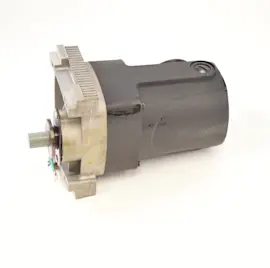
The Delta 34-440 is a 10-inch contractor saw, and most saws in this class are typically in the 1 to 2 HP range (often marketed as “developed” horsepower). For the exact horsepower rating of your specific 34-440 version, match the motor nameplate data to the correct parts listing using how to find your appliance model number (and what it means for parts).
How to identify the horsepower on your saw
Use the motor’s data plate because it reflects the motor actually installed on your Delta 34-440.
- Unplug the saw before inspecting the motor
- Find the motor nameplate (usually on the motor housing)
- Record voltage (V), amps (A), phase, and RPM
- Look for an explicit HP marking (some plates list HP directly)
- If HP is not listed, use amps and voltage to estimate (see below)
Quick horsepower estimate (when HP is not printed)
If the nameplate lists volts and amps but not HP, you can estimate input power and then account for motor efficiency.
| Nameplate info | What it suggests | What you can expect in use |
|---|---|---|
| 120V, ~12A to 15A | Common contractor-saw motor size | Good general ripping and crosscutting with sharp blades |
| 240V, ~6A to 8A | Same power delivered at higher voltage | Smoother starts, less voltage drop on long runs |
Rule of thumb: a 120V motor drawing 12A to 15A is commonly in the neighborhood of about 1.5 to 2 HP class performance once real-world losses are considered.
Why it matters
Horsepower affects how confidently your Delta 34-440 can maintain blade speed in thick hardwood, how slow you need to feed stock, and whether upgrading to a thin-kerf blade or switching to 240V operation will improve cut quality.
Tips to get the most from the power you have
- Use a sharp 10-inch carbide blade matched to the cut (rip vs. crosscut)
- Keep the belt properly tensioned and aligned (belt slip mimics low horsepower)
- Clean pitch from the blade and check arbor bearings for drag
- Use proper extension cord gauge (undersized cords reduce power)
- Feed stock steadily; forcing the cut increases bog-down and burning
Last updated: February 2026
What table saw can cut a 4x4?
A 10-inch table saw can cut a 4x4 in one pass when the blade height and cutting capacity allow roughly 3-1/2 inches of depth at 90 degrees. For your Delta 34-440 10" contractor saw, confirm the maximum depth-of-cut and blade setup before attempting the cut.
What to look for in a saw that cuts a 4x4
To cut a standard 4x4 (actual size about 3-1/2 inches), we focus on these basics:
- Blade size: 10-inch blades are the most common for 4x4 one-pass cuts
- Max depth of cut at 90 degrees: needs to be at least 3-1/2 inches
- Arbor and flange condition: worn parts can cause wobble and reduce effective cut
- Fence alignment: prevents binding and kickback risk
- Motor power and belt condition (contractor saws): slipping belts reduce cutting performance
Quick setup checklist before you cut
Use this checklist on the Delta 34-440 before making the cut:
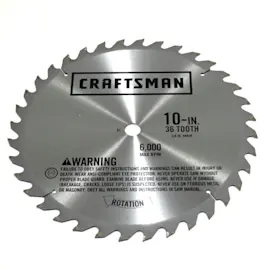
- Install a sharp, full-kerf rip blade (typically 24T to 30T) for construction lumber
- Raise the blade to full height, then verify you have clearance above the workpiece
- Set the fence parallel to the blade and miter slot
- Use a riving knife or splitter and blade guard if your saw is equipped
- Support long stock with outfeed support; keep the 4x4 flat to the table
One-pass vs two-pass: what changes
If your saw cannot reach full depth at 90 degrees, you can still cut a 4x4 safely using two passes.
| Method | When it works best | What you do |
|---|---|---|
| One-pass rip | Saw depth at 90 degrees is 3-1/2 inches or more | Set blade height, rip once |
| Two-pass rip | Saw depth is less than 3-1/2 inches | Rip halfway, flip end-for-end, rip again |
| Alternative tool | Stock is twisted, wet, or hard to control | Use a miter saw, circular saw, or band saw |
Why it matters
A 4x4 cut pushes the limits of blade height and feed pressure. When the blade is too low or the fence is out of alignment, the wood can bind and increase kickback risk. Verifying depth-of-cut and setup protects the saw and improves cut quality.
For help confirming you have the correct model information before ordering parts or comparing specs, use how to find your appliance model number (and what it means for parts).
Last updated: February 2026
How many HP is needed for a table saw?
For a Delta 34-440 10-inch contractor saw, a 1.5 HP to 3 HP motor covers the normal range you will see on this model family and is enough for most ripping and crosscutting. For frequent thick hardwood ripping and faster feed rates, target the upper end of that range.
Quick HP guide by the work you do
- 1 to 1.5 HP: light-duty cuts, plywood, softwoods, slower feed rates
- 1.5 to 2 HP: best all-around range for most contractor-style 10-inch saw work
- 2 to 3 HP: frequent hardwood ripping, thicker stock, better torque under load
- 5 HP to 7.5 HP: cabinet saw production work and long duty cycles
What changes how much HP you actually need
- Blade sharpness and quality: a sharp rip blade reduces load dramatically
- Material and thickness: 8/4 hardwood needs more torque than plywood
- Feed rate: steady, moderate feed prevents bogging and burning
- Belt and pulley condition: slipping belts reduce power at the arbor
- Electrical supply: low voltage and undersized extension cords reduce motor output
Typical match-up: HP vs. electrical setup
| Motor size | Common voltage | Typical use case |
|---|---|---|
| 1 to 2 HP | 120V | Contractor saws, general woodworking |
| 2 to 3 HP | 120V or 240V | Heavy ripping, thicker hardwood, higher torque |
| 5 HP+ | 240V | Production cabinet saw work |
Why it matters
Correct horsepower helps the blade hold speed under load, which improves cut quality and reduces stalling, breaker trips, and wear on belts, bearings, and the arbor.
If you are matching a replacement motor or electrical parts, confirm the exact identification tag information for your specific unit using how to find your appliance model number (and what it means for parts).
Last updated: February 2026