 Owner’s manual


What is the capacity of the gtw460asj8ww?
The GE GTW460ASJ8WW washer has an approximate capacity of 4.2 cu. ft. Capacity is a sizing guideline for typical loads; actual usable space can vary a bit depending on cycle selection, load type, and how loosely items are loaded.
How to use that capacity in real life
We recommend loading the GTW460ASJ8WW loosely and evenly around the basket so the agitator can move items properly.
- Load items loosely; do not pack them down
- Keep the load below the top row of basket holes for best wash action
- For bulky items (comforters, pillows), use the Bulky Items cycle when available
- If the water level seems low, that can be normal for a high-efficiency top-load washer
- If clothes end up wetter than normal, redistribute and run Drain & Spin
Quick capacity guide (rule-of-thumb)
These examples help translate 4.2 cu. ft. into everyday laundry planning.
| Load type | Typical examples | Best practice |
|---|---|---|
| Small | A few shirts, underwear, light items | Use appropriate load size or Precise Fill (if equipped) |
| Medium | Mixed daily laundry | Load evenly around the basket |
| Large | Towels or sheets | Wash towels/sheets separately for better balance |
Where to confirm cycle and loading recommendations
For model-specific loading examples, cycle details, and options like Deep Fill or Deep Rinse, use the GTW460ASJ8WW owner’s manual.
Why it matters
Choosing the right load size for a 4.2 cu. ft. washer helps prevent out-of-balance spinning, improves cleaning performance, and reduces wear on key components like the suspension system and drive parts.
Last updated: January 2026
What is the life expectancy of a GE washing machine?
GE does not publish a model-specific “life expectancy” for the GE GTW460ASJ8WW, so we can’t quote an official number for this exact washer. In general, washer lifespan varies widely based on load size, detergent use, installation (leveling), and how quickly small problems are corrected.
What we can confirm for GTW460ASJ8WW
The GTW460ASJ8WW is a high-efficiency top-load washer that uses automatic load sensing and can run with a lower water level than older washers; that’s normal operation. For model-specific use and care steps, follow the GTW460ASJ8WW owner’s manual.
Habits that typically help a washer last longer
- Load items loosely and distribute them evenly around the basket
- Use High Efficiency (HE) detergent and measure carefully to avoid oversudsing
- Keep the washer level to reduce vibration and stress on suspension components
- Leave the lid open after washing so moisture can evaporate
- Replace water supply hoses about every 5 years (a common preventive step)
When “wear and tear” starts to show up
These symptoms don’t prove a single failed part, but they are common reasons customers start troubleshooting or repairing a washer.
| Symptom you notice | What it can mean (examples) | What to check first |
|---|---|---|
| Won’t drain or drains slowly | Kinked drain hose, drain restriction, pump issue | Drain hose routing, standpipe height, pockets for debris |
| Burning rubber smell, weak agitation/spin | Overload, belt slip, pulley/clutch issues | Reduce load size, check for rubbing or debris under unit |
| Frequent out-of-balance spins | Uneven load, washer not level, suspension wear | Rebalance load, verify leveling legs |
Parts that may be involved (only after basic checks)
If your troubleshooting points to a specific repair, these are examples of compatible parts for this model:
- Washer drive belt WH01X27538 (drives the tub/agitator system; a worn belt can slip)
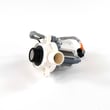
- Washer drain pump assembly WH23X28418 (moves water out during drain and spin)
Why it matters
“Life expectancy” is mostly about how fast normal wear adds up. Correct loading, HE detergent use, and a stable, level installation help reduce vibration, oversudsing, and strain that can lead to repairs.
Last updated: January 2026
What is the most common problem with GE washers?
For the GE GTW460ASJ8WW washer, we can’t name one single “most common” problem from model-specific documentation because the troubleshooting information doesn’t rank failures by frequency. What we can do is point you to the most common symptom categories this model is designed to help you diagnose: draining, spinning/balance, filling, and lid-lock or power interruptions.
What GTW460ASJ8WW troubleshooting covers
The troubleshooting section groups problems by symptoms you can observe during a cycle.
- Clothes too wet or Spin light blinking: the load may be out of balance; the washer may reduce spin speed
- Water won’t drain: drain hose routing, kinks, or standpipe height can prevent proper draining
- Fill light flashing or slow fill: water supply valves, hose connections, or clogged inlet screens
- Washer won’t operate: lid open/lock conditions, power supply issues, or a control reset may be needed
For the exact symptom chart and step-by-step “what to do” guidance, use the GTW460ASJ8WW owner’s manual.
Quick checks we recommend before replacing parts
These are safe, high-success checks that match the type of “first steps” listed in the manual.
- Redistribute the load evenly; then run Drain & Spin if clothes are still wet
- Confirm both hot and cold faucets are fully open
- Inspect the drain hose: not kinked, not crushed, and not pushed too far into the standpipe
- If fill is slow, turn off water and clean the inlet hose screens
- Unplug the washer for 2 minutes to reset the electronics; then restart the cycle
When parts inspection becomes relevant
If the symptom repeats after the checks above, a component in that system may need inspection or replacement. For GTW460ASJ8WW-COMPATIBLE options, examples include:
| Symptom area | Parts you may end up checking | Example compatible part |
|---|---|---|
| Won’t drain or drains poorly | Drain components and hoses | Washer drain pump assembly WH23X28418 |
| Won’t spin or has weak spin | Drive components | Washer drive belt WH01X27538 |
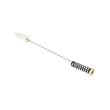
| Excessive shaking or frequent imbalance | Suspension components | Washer suspension rod and spring assembly WH16X26911 |
Why it matters
On the GTW460ASJ8WW, the washer may pause, drain automatically, or reduce spin speed when it detects an imbalance or a drain/fill issue. Fixing the underlying cause helps cycles finish normally and improves how dry clothes come out.
Last updated: January 2026


