Owner’s manual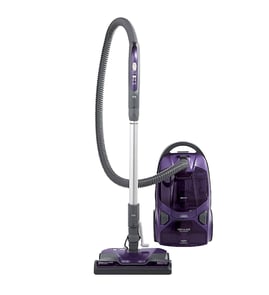

What are the disadvantages of a canister vacuum?
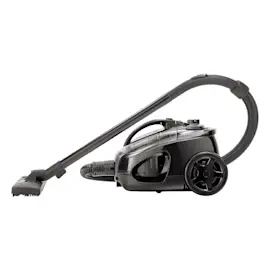
Canister vacuums (including the Hoover SH10000) trade strong above-floor cleaning and reach for a few everyday drawbacks: they take more space to store, can feel less convenient on stairs, and the canister can bump furniture as you pull it behind you. For model-specific use and care details, use the SH10000 owner's manual.
- Bulkier storage footprint: you store a canister body plus hose, wand, and floor tool.
- More to maneuver: you pull the canister while steering the power nozzle or floor brush.
- Stairs can be awkward: you often carry the canister in one hand and the handle/hose in the other.
- Canister “bump” risk: the body can scuff baseboards or tap chair legs as it follows you.
- More setup steps: swapping tools (crevice tool, dusting brush, upholstery tool) can slow quick cleanups.
- Smaller dirt capacity on some models: smaller bags or bins can mean more frequent emptying or bag changes.
| Feature | Canister vacuum | Upright vacuum |
|---|---|---|
| Storage | Usually needs more space | Usually simpler to park/store |
| Stairs | Often harder to carry/manage | Often easier as one unit |
| Above-floor cleaning | Typically excellent with hose/wand | Often good, sometimes shorter reach |
| Furniture contact | Canister may bump items | Less trailing contact |
- Use a shorter hose loop when moving room to room so the canister tracks closer.
- Lift the canister by its carry handle on stairs (not by the hose).
- Keep the floor nozzle path clear; avoid dragging the canister around tight table legs.
- Empty the bin or change the bag before it’s packed full to keep airflow strong.
- Store tools together so you are not hunting for attachments; the SH10000 owner's manual shows the intended storage and tool use.
Most “canister vacuum problems” people report are really usability issues: storage, handling, and workflow. If your home has lots of stairs or tight spaces, these disadvantages affect comfort and speed more than raw suction.
If you decide you need a different tool set or replacement items for your Hoover SH10000, we list model-matched options on the parts page and you can also search by model on Sears PartsDirect.
Last updated: February 2026
What are the most common issues with SH10000?
The most common issues we see with the Hoover SH10000 canister vacuum are loss of suction, the vacuum not turning on, unusual noise, and power head brush problems (brush roll not spinning). These symptoms are usually caused by clogs, dirty filters, worn belts, or a tripped thermal protector.
- Not suctioning well: clogged hose, full bag/bin, dirty filter, or a leak at a gasket or connection
- Won’t turn on: power cord/plug issue, bad switch, loose wiring, or thermal overload tripped
- Shuts off during use: overheating from restricted airflow, dirty filters, or a blockage
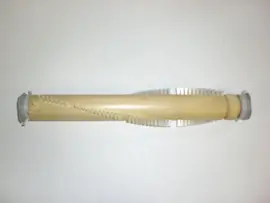
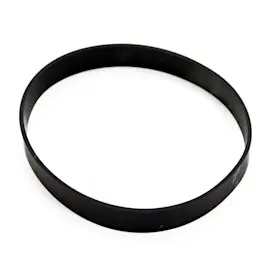
- Brush roll not spinning (power head): worn/broken belt, jammed brush roll, or a seized brush roll bearing
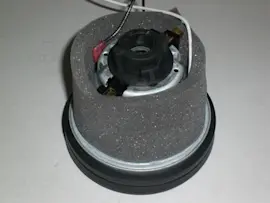
- Loud or high-pitched noise: debris in the fan area, cracked hose, or a failing suction motor
- Unplug the vacuum.
- Check the hose, wand, and power head airway for clogs.
- Inspect and clean or replace filters as your maintenance schedule requires.
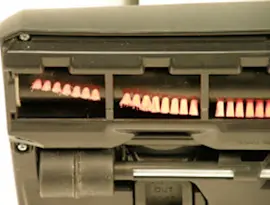
- If your SH10000 has a power head, check the brush roll area for string, hair, or carpet fibers.
- Reset after overheating: let it cool 30 to 60 minutes, then restore airflow and try again.
| Symptom | Most likely cause | Best first step |
|---|---|---|
| Weak suction | Clog or dirty filter | Clear blockage; service filters |
| No power | Cord, switch, or thermal trip | Cool down; check cord and switch |
| Stops mid-clean | Overheating from restriction | Remove clogs; clean filters |
| Brush not spinning | Belt worn or brush jam | Clear brush; inspect belt |
A canister vacuum like the Hoover SH10000 depends on steady airflow for both cleaning performance and motor cooling. Keeping the airflow path clear prevents overheating, protects the suction motor, and helps the power head clean effectively.
- Use the SH10000 owner’s manual for model-specific maintenance intervals, filter locations, and troubleshooting steps.
- For step-by-step repair help by symptom, start with our vacuum symptoms landing page.
Last updated: March 2026
What is the best canister vacuum in real simple?
Real Simple has named the Miele Classic C1 Turbo Team as its best overall canister vacuum; it is highlighted for strong suction, easy handling, and solid performance on multiple floor types. For your Hoover SH10000 canister vacuum, we recommend using the SH10000 owner's manual to match the right tools, filters, and maintenance steps to keep performance at its best.
A “best overall” list is helpful, but your results depend most on airflow, brush action, and sealing on your current vacuum.
- Keep the bag or dirt container from overfilling (restricted airflow reduces suction fast)
- Clear clogs in the hose, wand, and floor nozzle after any sudden suction drop
- Clean or replace filters on schedule (dirty filters mimic a weak motor)
- Check the power head for hair wrap and belt wear if the brush is not agitating carpet
- Inspect gaskets and connections for air leaks (whistling often indicates a leak)
| Symptom | Most likely cause | What we do first |
|---|---|---|
| Weak suction | Clog, full bag/bin, dirty filter | Check airflow path and filters |
| Brush not spinning | Belt issue, jammed brush roll | Clean brush roll, inspect belt |
| Shuts off during use | Overheat from blockage or dirty filter | Clear clogs, let it cool, recheck |
| Dust smell | Dirty filter or debris in hose | Clean filters and remove debris |
Canister vacuums clean best when airflow stays high and the power head can agitate carpet. Routine filter care and clog checks usually restore performance faster than replacing major components.
For step-by-step repair help that applies to most canister vacuums, use our vacuum repair-guides landing page. If you need to look up diagrams or search by model for replacement items, start with the parts list for SH10000 or search on Sears PartsDirect.
Last updated: February 2026