Installation guide
 Owner’s manual
 Error Codes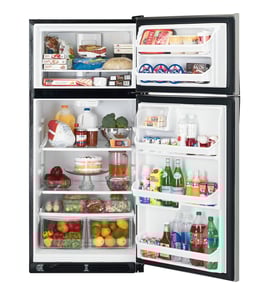




Is Frigidaire Professional high end?
Frigidaire Professional is a premium line within the Frigidaire brand; it’s positioned as “high end” for mainstream appliances because it typically adds upgraded design, stronger cooking performance features, and more finish options than standard Frigidaire models. For your Frigidaire FFTR1513LW3 refrigerator, the “Professional” label does not apply.
When shoppers call a line “high end,” they usually mean a step up in at least a few of these areas:
- More robust feature set (more modes, sensors, or controls)
- Higher-grade fit and finish (handles, trim, interior lighting)
- Better temperature management and consistency
- Quieter operation and improved airflow design
- More configuration options (sizes, finishes, matching suites)
Here’s a simple way to think about brand tiers when comparing appliances:
| Tier | Typical positioning | What you usually get |
|---|---|---|
| Mainstream | Value-focused | Core features, fewer upgrades |
| Premium mainstream (like “Professional” lines) | Step-up | More features and styling upgrades |
| Luxury | Highest tier | Pro-style build, specialty features, higher price |
For parts ordering and troubleshooting, the model number matters more than the product line name. With FFTR1513LW3, we recommend matching parts by the exact model and symptom, then confirming installation steps in the documentation.
- Use the model number FFTR1513LW3 when searching parts
- Confirm clearances and leveling so doors seal correctly
- Set controls and allow 24 hours between adjustments
- Avoid moving the refrigerator by the handles
For model-specific setup details (leveling, clearances, door sealing), follow the FFTR1513LW3 installation guide.
Last updated: January 2026
What is the upper part of a fridge called?
On the Frigidaire FFTR1513LW3 top-mount refrigerator, the upper section is the freezer compartment. It’s the insulated area designed to keep foods frozen and, on some setups, it also supports ice making when an icemaker is installed and turned on.
- Freezer shelves or a wire rack for frozen foods
- A freezer door gasket that seals cold air in
- An evaporator area behind an interior panel (where cooling happens)
- Airflow paths that send some cold air down to the fresh food section
- On some models, an icemaker and signal arm (if equipped)
| Section | Common name | Typical temperature | Main purpose |
|---|---|---|---|
| Upper compartment | Freezer | 0°F | Long-term frozen storage |
| Lower compartment | Fresh food (refrigerator) | 37°F to 40°F | Everyday refrigerated storage |
Knowing the correct name helps when you’re looking up parts, troubleshooting cooling issues, or following setup steps like leveling and control adjustments in the documentation.
During installation, we recommend confirming the freezer door seals fully to the cabinet and the freezer door is level across the top. Those checks help prevent warm air leaks that can cause frost buildup and temperature swings. See the FFTR1513LW3 installation guide for the door-seal and leveling checklist.
Last updated: January 2026
What is the difference between top mount and bottom mount refrigerators?
A top-mount refrigerator like the Frigidaire FFTR1513LW3 has the freezer on top and the fresh-food section below; a bottom-mount flips that layout so the refrigerator compartment sits at eye level. In most homes, top-mount models also cost less and use simpler hardware.
| Feature | Top mount (top freezer) | Bottom mount (bottom freezer) |
|---|---|---|
| Freezer location | Upper compartment | Lower drawer/door |
| Most-used items (fresh food) | Lower, requires more bending | Higher, easier access |
| Typical price | Lower | Higher |
| Common maintenance focus | Door seals, airflow, basic controls | Drawer slides, door alignment, airflow |
- If you use fresh food most often, bottom-mount designs reduce bending because shelves are higher.
- If you use frozen food often, top-mount designs keep the freezer at eye level.
- Top-mount units typically have a simpler door and hinge setup, which can make basic adjustments more straightforward.
- Either style needs good airflow and tight door sealing to hold temperature.
The FFTR1513LW3 installation checklist calls out a few items that directly affect performance and energy use. We recommend verifying these basics using the FFTR1513LW3 installation guide:
- Door seals close completely to the cabinet on all sides.
- Refrigerator is level side-to-side and tilted about 1/4 inch (6 mm) front-to-back.
- Freezer door is level across the top.
- Controls are set and then left alone for 24 hours before making more changes.
Choosing top mount vs. bottom mount is mostly about ergonomics and budget. Once installed, both styles rely on the same fundamentals: tight gaskets, correct leveling, and stable temperature control for consistent cooling and fewer frost or moisture issues.
Last updated: January 2026
What is the most common problem with a Frigidaire refrigerator?
The most common Frigidaire refrigerator complaint is not cooling properly (fresh food section warm, freezer not freezing, or both). On the Frigidaire FFTR1513LW3 top-mount refrigerator, the most frequent root causes are airflow problems (frost buildup or a failed evaporator fan) and temperature control issues. See the FFTR1513LW3 owner’s manual for normal settings and operating checks.
- Refrigerator warm, freezer cold: restricted airflow from the freezer to fresh food (damper issue, frost buildup, blocked vents).
- Both sections warm: cooling system not running correctly (compressor start components, condenser airflow, control issue).
- Freezer frosting up: defrost system problem or door not sealing.
- Runs constantly: warm room, dirty condenser area, door not sealing, or temperature set too cold.
- Noisy or intermittent cooling: evaporator fan problem or ice buildup contacting the fan.
Use these steps before replacing parts:
- Confirm the unit is level and slightly tilted 1/4 inch (6 mm) front to back so doors close reliably.
- Make sure door seals completely on all sides and nothing is holding the door open.
- Set controls to a normal range and wait 24 hours after changes before adjusting again.
- Verify vents are not blocked by food packages (especially in the freezer).
- If the refrigerator has an icemaker and the water line is not connected, keep the icemaker OFF.
If the quick checks do not help, these model-matched parts are commonly involved:
| Problem pattern | Likely area | Example model-matched part |
|---|---|---|
| Warm temps, weak airflow | Evaporator fan system | Refrigerator evaporator fan motor 241854301 |
| Fan runs but airflow is poor/noisy | Fan blade or ice interference | Refrigerator evaporator fan blade 5308000010 |
| Temps swing, won’t regulate well | Temperature control | Refrigerator temperature control thermostat 241537103 |
A refrigerator that is not cooling correctly can lead to food spoilage and can also force the compressor to run longer than normal. Fixing airflow, door sealing, and control settings early helps protect the cooling system and improves efficiency.
For deeper troubleshooting steps by symptom, use how to fix your evaporator cooling fan and, if your model displays codes, Frigidaire refrigerator error codes.
Last updated: January 2026