Owner’s manual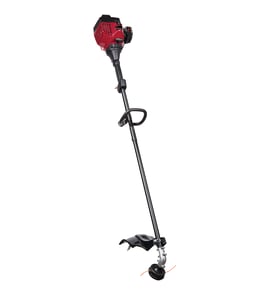





Will the .095 trimmer line fit?
Yes, .095-inch trimmer line often fits many gas line trimmer heads, but on Craftsman model 316711193 it depends on the cutting head’s maximum line diameter. The quickest way to confirm is to match the line size listed for your head in the 316711193 owner's manual.
How to confirm .095 line fitment on model 316711193
Check these items before buying or loading line:
- Look for a max line diameter marking on the cutting head (often molded into the cover or spool).
- Compare the manual’s specified line diameter to 0.095 in (2.4 mm).
- Verify the head type (bump-feed vs. fixed line) because capacity and routing differ.
- If the head is worn, confirm the eyelets are not ovaled out (thicker line can bind).
- If you recently replaced the head, confirm it is the correct style for this trimmer.
What happens if the line is too thick
Using line that exceeds the head’s rating commonly causes feeding and cutting issues:
- Line will not advance smoothly (bump-feed jams)
- Engine bogs down under load
- Excess vibration and faster clutch wear
- Uneven cutting and frequent line breakage
Quick size guidance (typical)
Most consumer gas trimmers are designed around .080 to .095 line, but some heads are limited to .080 or .085.
| Line diameter | Typical use | Common result if oversized for the head |
|---|---|---|
| .080 in | Light to medium trimming | Usually feeds easiest |
| .095 in | Medium to heavier trimming | Can jam if head is rated smaller |
Why it matters
Correct line diameter protects the cutting head, reduces jams, and helps the engine maintain RPM so you get cleaner cuts with less wear on the drive system.
Last updated: January 2026
How to replace a line trimmer head?
To replace the trimmer head on your Craftsman gas line trimmer model 316711193, you typically lock the shaft, unthread the old head (often reverse-threaded), then thread the new head on securely and reload the cutting line. Use the 316711193 owner's manual for the exact lock-point and thread direction.
Before you start (safety and setup)
- Shut the engine off and let it cool completely.
- Disconnect the spark plug wire to prevent accidental starting.
- Wear gloves and eye protection; the cutting head area can be sharp.
- Clean grass and debris from the debris shield and head area.
- Set the trimmer on a flat surface so the shaft and head are supported.
Steps to replace the trimmer head
- Lock the shaft/gearbox: Many heads have a small alignment hole in the gearbox or head area. Rotate the head until the hole lines up, then insert a screwdriver, nail, or locking pin to keep the shaft from turning.
- Remove the old head: Turn the head to unthread it. Many gas trimmers use left-hand (reverse) threads, so loosening can be the opposite of what you expect.
- Inspect related parts: Check the thrust washer, spacer, and the debris shield for cracks or missing hardware.
- Install the new head: Thread the replacement head on by hand first to avoid cross-threading, then snug it firmly while the shaft is still locked.
- Reload line and test: Install the correct diameter cutting line and verify bump-feed (if equipped) works smoothly.
Quick reference: which way do I turn it?
| What you are doing | Common direction on many gas trimmers | What to do if it will not budge |
|---|---|---|
| Remove old head | Clockwise (reverse-thread) | Re-lock shaft, add penetrating oil, use steady pressure |
| Install new head | Counterclockwise | Start threads by hand, back off and retry if it binds |
When the “head problem” is really a line or cover issue
If the head is intact but line will not feed or the cover is damaged, replacing the cover or line is often the faster fix.
Why it matters
A properly installed trimmer head keeps the cutting line centered and reduces vibration, which helps protect the drive shaft, clutch, and gearbox from premature wear.
Last updated: January 2026
How to replace line on Craftsman gas trimmer?
To replace the cutting line on your Craftsman gas line trimmer model 316711193, we remove the spool from the cutting head, wind new trimmer line in the correct direction without overlapping, then reinstall the spool and feed the line through the eyelets so it advances smoothly.
Before you start
- Shut the engine off and let the muffler cool completely.
- Disconnect the spark plug wire to prevent accidental starting.
- Wear gloves and eye protection; trimmer line ends can snap back.
- Clean grass and debris from the cutting head area.
Steps to reload the cutting line (typical bump-head style)
- Remove the cutting head cover: Press the locking tabs (or remove the fasteners, depending on head style) and lift off the cover.
- Remove the spool: Pull the spool straight out and note how the old line is routed through the eyelets.
- Cut new line: Most heads use two equal lengths of line. A common starting point is 10 to 20 feet per side (or follow the exact length listed in the 316711193 owner’s manual).
- Wind the line:
- Anchor the line in the spool slot/hole.
- Wind in the direction of the spool arrow.
- Keep the wraps tight and do not overlap; overlapping is what causes tangles and feed problems.
- Thread the line: Feed each line end through the eyelets in the head.
- Reinstall spool and cover: Seat the spool fully, reinstall the cover, then pull both line ends evenly to set the line.
Quick checks if the line keeps tangling or will not feed
- Line is wound the wrong direction (rewind to match the spool arrow).
- Wraps overlap or are loose (rewind with tight, level wraps).
- Line diameter is too large for the head (use the size specified in the manual).
- Debris is packed inside the head (clean and inspect).
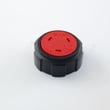
- Cover is cracked or not locking fully; replace the line trimmer cutting head cover 753-06765 if it will not secure the spool.
Line reload reference table
| What you do | What it prevents | What you will notice |
|---|---|---|
| Wind tight, level wraps | Jams and tangles | Smooth bump-feed |
| Match winding direction arrow | Reverse bind-up | Line advances evenly |
| Use correct line diameter | Overload and poor feed | Better cutting and less stalling |
Why it matters
Correct winding and the right line size reduce spool bind-up, improve bump-feed performance, and help protect the drive system from sudden stalls when the head jams.
Last updated: January 2026