Owner’s manual
 Error Codes




What is the average lifespan of a Samsung dryer?
A Samsung dryer typically lasts 10 to 15 years. For your Samsung DVG50R8500V, consistent airflow maintenance (lint filter and venting) and avoiding overloads are the biggest factors that keep the drum, motor, and heating system running closer to the high end of that range. See the DVG50R8500V owner’s manual for model-specific care and cleaning steps.
- Airflow restriction (lint screen, blower housing, duct, exterior hood)
- Overloading (extra strain on the drum belt, rollers, and motor)
- Heat stress from poor venting (can trip safety thermostats)
- Moisture and corrosion in laundry areas
- Infrequent cleaning (lint buildup inside the cabinet)
- Clean the lint filter every load.
- Inspect and clean the vent duct and outside hood regularly; use 4-inch rigid metal duct where possible.
- Keep loads to a reasonable size so clothes tumble freely.
- If dry times suddenly increase, fix airflow first before replacing parts.
- Address unusual noises early (thumping, squealing) to prevent secondary damage.
| What you notice | Usually normal | Often a lifespan-shortening issue |
|---|---|---|
| Drying time | Consistent cycle-to-cycle | Getting longer over weeks (vent restriction) |
| Heat | Warm, steady drying | Overheating or no heat (airflow or heat system fault) |
| Sound | Low, steady tumble | Squeal/thump (belt or roller wear) |
| Starts/runs | Reliable start | Intermittent start or stops mid-cycle (electrical/control) |
Most “early failures” are really airflow and heat-management problems. When venting is restricted, the dryer runs hotter and longer, which accelerates wear on thermostats, sensors, the blower wheel, and the drive system.
Last updated: February 2026
How to find part number for Samsung dryer?
For your Samsung dryer model DVG50R8500V, we find the correct part number by matching the dryer’s model number from the rating label, then using the parts list for that exact model. On most Samsung front-load dryers, the model/serial label is on the front frame behind the door; a second label is often on the back.
- Open the dryer door and check the front frame area behind the door opening
- If the label is worn or missing, check the rear panel of the dryer
- Write the model number exactly as shown (for this unit: DVG50R8500V)
- Keep the serial number too; it can help confirm production variations
- Use the model number to cross-check diagrams and part descriptions
We use the model number to pull the correct diagrams and parts list, then match by part name, location, and symptom.
| What you have | What we use it for | Example |
|---|---|---|
| Model number | Selects the correct parts breakdown | DVG50R8500V |
| Symptom | Narrows the likely part category | No heat, won’t start, long dry times |
| Part name/location | Confirms the exact replacement | Thermistor, door switch, belt |
If you already know the failed component, these are examples of manufacturer part numbers used on this model:
- Temperature sensing: dryer thermistor DC32-00007A
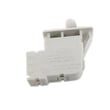
- Door not detecting closed: dryer door switch DC64-00828B
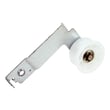
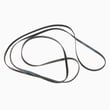
- Drum not turning: Samsung dryer drum belt 6602-001655
Samsung dryers can have similar-looking parts across different models, but mounting points, wiring connectors, and revisions can differ. Using the exact model number and the DVG50R8500V owner’s manual helps prevent ordering the wrong part and speeds up the repair.
Last updated: February 2026
Is it worth replacing a heating element in a Samsung dryer?
Yes, replacing the heater in a Samsung dryer is usually worth it when the dryer is otherwise in good shape because the repair cost is typically far less than replacing the whole appliance. For Samsung model DVG50R8500V, confirm the heat system and safety checks in the DVG50R8500V owner's manual before buying parts.
Replacing the heater (or gas heat components) makes sense when the dryer:
- Tumbles normally but produces little or no heat
- Dries very slowly even with a clean lint filter
- Has no unusual grinding or squealing from the drum
- Has a solid cabinet, door, and control panel with no other major issues
- Has good airflow through the exhaust duct (restricted venting can mimic a heat failure)
Many “no heat” complaints are caused by airflow or a safety device opening due to overheating. Use the troubleshooting and checkpoints in the manual to narrow it down.
- Clean the lint filter and confirm strong airflow at the outside vent hood
- Verify the exhaust duct meets typical requirements (4-inch ducting, minimal elbows, short run)
- Check for an “information code” and follow the steps in the manual
- Inspect for a crushed or kinked vent behind the dryer
- If the dryer overheated, test heat safety parts such as the thermal cut-off and high-limit thermostat
| Symptom | Common cause | Example part for this model |
|---|---|---|
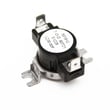
| No heat, dryer runs | Safety device opened from overheating | Dryer thermal cut-off thermostat DC47-00016A |
| Overheats, shuts heat off early | High-limit thermostat issue or restricted vent | Dryer high-limit thermostat DC47-00017A |
| Heat cycles erratically, poor temp sensing | Temperature sensor problem | Dryer thermistor DC32-00007A |
On DVG50R8500V, the heater rating depends on whether you have the electric or gas version (the manual lists both). Correct diagnosis prevents repeat failures because a blocked vent can overheat the dryer and take out the new heater or safety parts again.
Last updated: February 2026