Installation guide
 Owner’s manual
 Error Codes





What is the life expectancy of a GE washing machine?
GE washing machines typically last 10 to 14 years. For your GE GTWN4250M1WS top-load washer, consistent maintenance, correct loading, and a solid, level installation have the biggest impact on whether you land closer to 10 years or push beyond 14; see the owner's manual for model-specific care guidance.
Typical lifespan and what changes it
A washer’s service life is mostly driven by how hard it works and how well it is maintained.
- Loads per week: more cycles usually means faster wear on bearings, seals, and the drive system
- Overloading: stresses the suspension, drive pulley, and tub components
- Water quality: hard water and sediment can shorten valve and pump life
- Installation and leveling: reduces vibration and out-of-balance wear
- Routine cleaning: helps prevent odor, residue buildup, and drain issues
Quick maintenance checklist (helps you reach the high end)
- Keep loads balanced; mix items and avoid washing one heavy item alone.
- Use the right amount of HE detergent; too much can cause residue and odors.
- Leave the lid open between loads to help the tub dry.
- Periodically run a hot wash cycle (or cleaning cycle if your model has one).
- Confirm your supply water pressure is in a normal range; the installation guidance for this washer calls for 20 to 150 psi.
Parts that commonly limit washer life
When a washer starts getting noisy, leaking, or failing to spin or drain, these parts are often involved:
| Symptom | Commonly related part | Example part for GTWN4250M1WS |
|---|---|---|
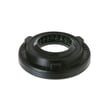
| Water leaking under washer | Tub seal | Washer tub seal WH02X10383 |
| Loud roar during spin | Tub bearing | Tub bearing WH2X1198 |
| Won’t drain or drains slowly | Drain pump | Washer drain pump assembly WH23X10030 |
| Won’t start or stops when lid opens | Lid switch | Washer lid switch assembly WH12X10334 |
Why it matters
Knowing the typical 10 to 14 year lifespan helps you decide whether to repair or replace. If your GTWN4250M1WS is within that range, replacing a wear part (like a drain pump, lid switch, or tub seal) can often restore reliable performance and prevent secondary damage.
You can order replacement parts from the parts list for this model, or search by model number on Sears PartsDirect.
Last updated: February 2026
What is the difference between 4.5 cu ft and 5.0 cu ft washer?
A 5.0 cu. ft. washer holds about 0.5 cu. ft. more than a 4.5 cu. ft. washer, which means fewer loads and easier washing of bulky items. For a GE top-load washer like model GTWN4250M1WS, that extra space mainly helps with comforters, towels, and large mixed loads.
What the capacity difference means in real use
That 0.5 cu. ft. increase is roughly an 11% jump in tub volume, so you typically gain more room to circulate water and detergent around bulky fabrics.
Common benefits of 5.0 cu. ft. vs 4.5 cu. ft.:
- Fits bulky items (comforters, blankets, large bath towels) with less stuffing
- Handles larger family loads with fewer cycles per week
- Reduces tangling because items have more room to move
- Often improves rinse performance on big loads (less tightly packed)
- Can shorten laundry day because you run fewer total loads
Quick comparison
| Feature | 4.5 cu. ft. washer | 5.0 cu. ft. washer |
|---|---|---|
| Capacity difference | Baseline | About 0.5 cu. ft. more |
| Best for | Most everyday family loads | Bulky items and fewer loads |
| Typical tradeoff | May need 2 loads for bulky bedding | Larger footprint and higher water use on big cycles |
Why it matters (especially for top-load washers)
In a top-load washer, overfilling the basket can reduce wash action and rinsing because clothes cannot circulate well. Choosing the right capacity helps prevent poor cleaning, excess vibration during spin, and out-of-balance loads.
Installation and space considerations
Before choosing a larger-capacity washer, we recommend confirming your laundry space and hookups. The GTWN4250M1WS installation requirements include key limits such as:
- Water pressure: 20 to 150 psi
- Drain standpipe height: at least 30 inches and no more than 6 feet above the washer base
- Minimum clearances for alcove/closet installs (example minimums): 0 inches sides, 2 inches front, 3 inches rear
For the exact clearance and hookup requirements, use the installation guide.
If you are shopping parts or planning a repair
Capacity does not change which replacement parts you need for GTWN4250M1WS, but a smooth-running washer does. If you are dealing with leaking, noise, or vibration, common related parts for this model include the washer tub seal WH02X10383 and washer suspension rod and spring assembly WH16X10057. You can order parts from the list for this model, or search by model number on Sears PartsDirect.
Last updated: February 2026
Is GE profile considered high end?
Yes. GE Profile is GE’s higher-end mainstream line; it typically offers more features and upgraded controls than standard GE models, without being a true luxury tier. Your GE GTWN4250M1WS washer is not a GE Profile model, so its exact features are best confirmed in the owner's manual.
Where GE Profile fits in GE’s lineup
GE generally separates product families by feature level and styling.
| GE family | Typical positioning | Common differences you’ll notice |
|---|---|---|
| GE | Core, value-focused | Essential cycles and options, simpler controls |
| GE Profile | Premium mainstream | More cycle options, more convenience features, upgraded interface |
| Luxury-tier collections | Design and premium features | Specialty features, higher price, design-forward styling |
What this means for GTWN4250M1WS owners
Because GTWN4250M1WS is a standard GE top-load washer model (not Profile), “high end” should be judged by what it actually has: cycle selections, water level options, spin performance, and noise control.
Check these items on your washer and in the manual:
- Cycle and option list (extra rinse, soak, deep fill, etc.)
- Water temperature selections and how they’re controlled
- Spin speed behavior and out-of-balance handling
- Control type (dial vs. electronic) and any diagnostic indicators
- Capacity and load-sensing behavior
Why it matters
Knowing the product tier helps set expectations for performance, noise, and repair complexity. For example, a no-start or stop-mid-cycle symptom on many top-load washers often traces back to the lid safety circuit, including the washer lid switch assembly WH12X10334.
Installation factors that affect “premium” performance
Even a well-featured washer can feel “low end” if it is not installed correctly. The GTWN4250M1WS installation requirements call for firm flooring, proper leveling, and correct drain setup; follow the steps in the installation guide.
You can order replacement parts for GTWN4250M1WS from the parts list for this model, or search by model number on Sears PartsDirect.
Last updated: February 2026