 Owner’s manual
 Error Codes
What model number is the Kenmore 1581345381?
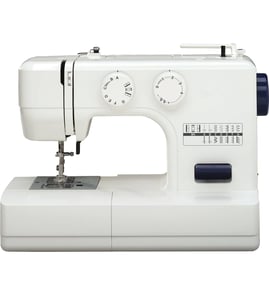
The model number for this Kenmore mechanical sewing machine is 1581345381. You’ll also find the model number printed on the machine’s nomenclature plate on the back of the sewing machine, which is the number you should use when looking up parts and accessories in the owner's manual.
Where to find the model number on the machine
The model number is shown on the nomenclature plate on the back of the machine. Use that exact number when ordering parts or checking compatibility.
- Look on the back of the sewing machine for the nomenclature plate
- Copy the model number exactly, including all digits
- Use the model number when referencing a parts list or accessories
- Keep the model number handy for maintenance tasks like oiling and setup
Why the exact model number matters
Kenmore sewing machines can look similar across model families, but parts and accessories (presser feet, bobbins, needle threaders, and other attachments) can vary by model number.
| What you’re doing | Use this identifier | Why it helps |
|---|---|---|
| Ordering a replacement part | Model number 1581345381 | Matches the correct parts list |
| Checking included accessories | Model number 1581345381 | Confirms what came with your machine |
| Looking up setup and maintenance | Model number 1581345381 | Ensures the right instructions |
Quick tip for parts and accessories
When you’re ordering repair parts, we recommend writing down these details first so you can match items correctly:
- Model number
- Part number (if listed)
- Part description
- Name of item (example: presser foot, bobbin, spool pin)
Why it matters
Using the correct model number prevents ordering the wrong Kenmore sewing machine parts and keeps your machine running smoothly with the right accessories and maintenance steps.
Last updated: February 2026
How to determine the value of an old sewing machine?
The value of an older sewing machine like the Kenmore 1581345381 depends most on condition, whether it sews smoothly, and whether key accessories are included. Most common vintage mechanical machines sell for modest amounts, while clean, fully working machines with original attachments bring more.
What drives value the most
- Working condition: stitches form correctly, motor runs, and the machine does not bind or lock up
- Completeness: original presser feet, bobbins, extension table, manuals, and accessories
- Cosmetic condition: paint, decals, rust, and corrosion
- Service history: recently cleaned and adjusted machines typically sell faster
- Local demand: prices vary by region and by how many similar machines are listed nearby
Quick value checklist you can do at home
Use the same “good habits” we recommend for sewing setup to judge how usable the machine is.
- Install a new needle and confirm it is straight and seated correctly
- Thread the top and bobbin correctly and pull thread tails to the rear before starting
- Sew a test seam on doubled scrap fabric; adjust stitch length and tension as needed
- Listen for knocking, grinding, or hesitation when running at a slow, even speed
- Check that the presser foot pressure and feed action move fabric consistently
For model-specific controls, threading, and parts identification, use the owner's manual.
Typical pricing ranges (what you’ll usually see)
These ranges reflect common resale patterns for vintage mechanical sewing machines.
| Condition | What it usually means | Typical range (USD) |
|---|---|---|
| As-is / not sewing | Needs repair, missing parts | $20 to $75 |
| Working | Sews basic stitches, normal wear | $75 to $200 |
| Clean, serviced, complete | Smooth operation, accessories included | $150 to $350 |
| Collector interest | Unusual variant, exceptional condition | $300+ |
Why it matters
A sewing machine’s resale value is mostly tied to how reliably it can sew today. A machine that threads easily, forms balanced stitches, and runs smoothly is more valuable than a similar model that is incomplete or needs service.
Last updated: February 2026
What year was the Kenmore sewing machine model 1581345381 made?
The Kenmore sewing machine model 1581345381 was made around 1991. In the documentation for this machine family, the manual shows a 6/91 print date, which aligns with when this model was being sold and supported.
How we date this model
The most reliable “year made” clue for Kenmore sewing machines is often the documentation and identification plate information.
- The manual for this machine family lists Part No. 69548 with a 6/91 date.
- The model number is shown on the nomenclature plate on the back of the sewing machine.
- Kenmore mechanical machines were commonly supported with manuals printed close to the production and sales window.
Reference: check the date and model identification details in the owner's manual.
Where to confirm on the machine
Use these quick checks to match your machine to the documentation:
- Look for the model number plate on the back of the machine.
- Confirm the machine’s major features match the manual (for example, light/power switch, stitch selector, reverse stitch lever, and extension table/free-arm setup).
- If your machine came in a cabinet or case, confirm the machine itself (not the cabinet) carries the model ID.
What “made in 1991” means in practice
Kenmore sewing machines can have parts and manuals that span multiple close model variants. Here is how to interpret the date:
| What you find | What it usually indicates |
|---|---|
| Manual date like 6/91 | Documentation printed for that production era |
| Same model number on the back plate | Strong match to the correct parts and instructions |
| Different model family listed in the manual | You may have a closely related variant; match by features and ID plate |
Why it matters
Knowing the approximate year helps us match the right parts list, accessories (like bobbins and needle systems), and setup steps (power requirements, oiling points, and threading path) so the machine stitches correctly and avoids timing and feed issues.
Last updated: February 2026
Is it worth repairing an old sewing machine?
Yes, repairing an older Kenmore sewing machine like model 1581345381 is usually worth it when the machine is mechanically sound and the fix is basic (cleaning, oiling, tension, needle plate, or power connection). It is especially worthwhile if you like the stitch quality and metal-frame durability.
Quick way to decide
- Repair it if it runs, stitches are mostly consistent, and problems are maintenance-related (lint, oiling, needle, tension).
- Repair it if you use it regularly and want a dependable mechanical machine.
- Repair it if the issue matches common fixes in the troubleshooting section of the owner's manual.
- Skip major repair if the machine has severe internal damage (bent parts, repeated jamming after cleaning) and the repair cost approaches the price of a replacement.
- Skip major repair if you cannot get the specific replacement parts you need for this model.
What “repair” often means on this model
The manual for Kenmore 1581345381 emphasizes routine care and common performance corrections, including cleaning the feed dogs and shuttle, oiling, and checking performance problems.
Common, low-cost fixes
| Symptom | Often caused by | Typical fix |
|---|---|---|
| Fabric not moving | Feed cover plate on, feed dog down, low presser-foot pressure | Remove cover plate, raise feed dogs, increase presser-foot pressure |
| Jamming or knocking | Thread caught in shuttle, lint buildup | Clean bobbin area and shuttle, rethread |
| Poor stitches or thread issues | Wrong needle size, bent needle, tension too tight | Replace needle, match needle to fabric, adjust tension |
| Won’t run | Switch off, cord unplugged | Check plug and power switch |
Why it matters
A well-maintained mechanical sewing machine can sew smoothly for decades. Basic maintenance (cleaning lint, correct needle and thread, proper threading, and oiling) prevents jams, protects the shuttle area, and keeps stitch quality consistent.
Best next steps before spending money
- Follow the oiling and cleaning schedule in the owner's manual.
- Install a new, correct-size needle and rethread top and bobbin.
- Test on doubled scrap fabric and adjust stitch length and tension.
- If the machine still jams or knocks, clean the bobbin case and shuttle area thoroughly.
Last updated: February 2026
When did Kenmore stop making sewing machines?
Kenmore sewing machines, including the Kenmore model 1581345381, have been discontinued for many years. Kenmore was a brand label sold through Sears, and the machines were built by outside manufacturers; today, support is mainly through model-based parts lookup and the 1581345381 owner's manual.
What “stopped making” means for Kenmore
Kenmore did not operate a single sewing-machine factory; production depended on the supplier and model family. As a result, there is not one universal “stop date” that applies to every Kenmore sewing machine.
Key points that help set expectations:
- Kenmore sewing machines were produced by multiple manufacturers over time.
- 158-series machines are widely recognized as vintage mechanical models.
- Later Kenmore machines often appear in other families (for example, 385-series).
- Discontinued models can still be maintained with cleaning, oiling, and correct setup.
How to identify your exact model (and why it matters)
For model 1581345381, use the model number from the machine’s nomenclature plate (typically on the back) when matching parts and instructions in the 1581345381 owner's manual.
| Task | Why the exact model matters | Examples |
|---|---|---|
| Ordering parts | Prevents mismatches | Bobbin case, needle plate, foot control |
| Maintenance | Targets correct service points | Shuttle area cleaning and oiling |
| Troubleshooting | Narrows the mechanism involved | Feed dogs not moving, machine locks up |
Practical care for a discontinued mechanical machine
These basics keep many mechanical Kenmore machines sewing reliably:
- Clean lint from the shuttle area and around the feed dogs.
- Oil only with sewing machine oil, using small amounts at specified points.
- Turn the light/power switch on; the machine will not run otherwise.
- Sew on scrap fabric after oiling to absorb excess oil.
Related troubleshooting help
Why it matters
Once a model is discontinued, the best results come from accurate model identification, manual-based maintenance, and symptom-driven troubleshooting.
Last updated: February 2026