Error Codes



How to identify a Kenmore washer model?
Your Kenmore washer model number is printed on the appliance’s model and serial tag. For Kenmore washers, we most often see it under the lid on top-load models or around the door opening on front-load models; it commonly starts with 110 (like 1102644182) and is what we use to match the correct parts.
Where to look on a Kenmore washer
Check these common tag locations first:
- Top-load washer: under the lid, along the rim of the tub opening
- Front-load washer: inside the door opening, on the cabinet frame
- Back panel: near the power cord entry or along the rear cabinet
- Side of the cabinet: sometimes near the bottom edge
- Behind the control panel area: less common, but possible
What the model number looks like (and why it matters)
Kenmore model numbers are usually a string of numbers (sometimes with a dot) and often begin with a 3-digit prefix such as 110. Using the exact model number prevents ordering a similar-looking part that does not fit.
Quick check table
| What you see | What it means | What to do next |
|---|---|---|
| Model number (example: 1102644182) | Identifies the exact washer design | Use it to select matching parts |
| Serial number | Identifies the production unit | Keep it for service history |
| Partial number or missing digits | Not enough to guarantee fit | Re-check the tag and write it down exactly |
If the tag is hard to read
Try these steps to make the label readable:
- Wipe the tag with a damp cloth and a drop of dish soap; dry it fully
- Use a flashlight at an angle to highlight faint printing
- Take a close-up photo and zoom in
- Copy the number exactly, including any dots or extra digits
Why it matters
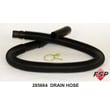
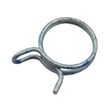
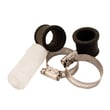
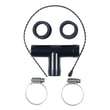
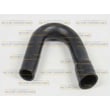
Kenmore washers can share similar cabinets and controls across different series, but internal components (like the drain hose connection style or clamps) can vary. The correct model number helps us match parts such as the drain hose 285664 or clamp WP285655 to your exact washer.
Last updated: February 2026
Is it worth repairing a Kenmore washing machine?
Yes, repairing a Kenmore washer is worth it when the machine is otherwise in good shape and the fix is a common wear item (drain hose, clamps, suspension) rather than a major drive or control failure; for model 1102644182, many leak and drain repairs are straightforward and cost-effective.
Quick way to decide (repair vs. replace)
We use these practical checkpoints to make the call:
- Age and condition: If the tub, cabinet, and wiring are solid, repairs usually pay off.
- Symptom type: Leaks, draining issues, and vibration are typically repair-friendly.
- Repair cost vs. replacement: If the repair is under about 50% of the cost of a comparable new washer, repair is usually the better value.
- Downtime: If you can fix it in one visit with available parts, repair wins.
- Repeat failures: Frequent breakdowns point toward replacement.
Common repairs that are usually “worth it”
These are high-success, lower-risk repairs we see often on Kenmore washers:
| Problem you notice | Likely area | Typical fix type |
|---|---|---|
| Water on floor | Drain path or hose connections | Replace hose, connector, or clamp |
| Won’t drain or drains slowly | Drain hose or installation issue | Clear/replace hose, correct standpipe setup |
| Shaking or banging | Suspension support | Replace suspension components |
Model-matched parts that often solve these issues include the drain hose 285664 and a securing clamp WP285655.
Why it matters
A targeted repair can restore safe draining and stable spinning, which prevents secondary damage (water leaks, out-of-balance wear, and premature component failure). Spending a little on the right part often avoids spending a lot on a new washer.
If you want the fastest “yes/no” answer
Use this simple rule:
- Repair if it’s leaking, not draining, or vibrating and the washer otherwise runs normally.
- Replace if it has repeated electrical failures, severe mechanical noise, or multiple major issues at once.
For troubleshooting symptoms that show up as codes on some Kenmore washers, use our Kenmore 110 vmax top load washer error codes guide to narrow the problem before buying parts.
Last updated: February 2026
What is the average lifespan of a Kenmore washer?
A Kenmore washer typically lasts 10 to 15 years with normal household use and basic care; for Kenmore model 1102644182, keeping loads balanced, using the right detergent amount, and fixing small leaks early helps you reach the high end of that range.
Typical lifespan and what affects it
Most washer life depends more on use and maintenance than brand name alone.
- Load size and balance: chronic overloading and off-balance spinning shortens life
- Water quality: hard water can increase buildup and wear on valves and hoses
- Drain performance: slow draining strains the pump and can trigger error conditions
- Vibration control: worn suspension parts increase tub movement and stress
- Leak prevention: small hose leaks can become cabinet, bearing, or motor damage
Common wear items to watch on model 1102644182
These parts do not set the washer’s lifespan by themselves, but replacing them at the right time prevents bigger failures.
| Symptom you notice | Likely area to inspect | Example part for this model |
|---|---|---|
| Water on floor during drain | Drain hose and connections | Drain hose 285664 |
| Hose slips or seeps at a joint | Hose clamp | Clamp WP285655 |
| Excessive shaking or banging | Suspension system | Suspension W10764578 |
Maintenance that extends washer life
We recommend these habits for Kenmore washers like model 1102644182.
- Keep loads evenly distributed; wash bulky items with a few towels for balance
- Use HE detergent only if your washer is HE; otherwise use standard detergent and avoid over-sudsing
- Leave the lid open after use to reduce odor and moisture buildup
- Check fill hoses and the drain hose for cracking, soft spots, or rubbing
- If you see repeated imbalance or spin issues, address it early (do not keep re-running spin)
Why it matters
A washer usually fails early from preventable stress: repeated off-balance spins, slow draining, and small leaks. Catching those issues early often costs less than replacing major components.
Last updated: February 2026