Installation guide
 Owner’s manual
 Error Codes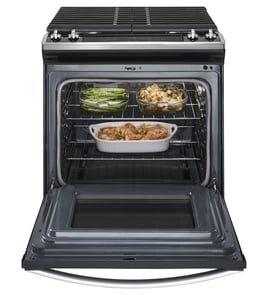


What size gas line for GE gas range?
For the GE JGBS19DEN5WW gas range, we use a flexible metal appliance connector with a 1/2-inch inside diameter; a 5-foot length is commonly recommended for easier installation and positioning. Always install the range with the pressure regulator in the supply line as shown in the JGBS19DEN5WW installation guide.
Recommended gas connection (what to buy)
Most installations use these items (matched to the home’s gas piping and the range regulator):
- CSA International-certified flexible metal appliance connector, 1/2-inch I.D., typically 5 ft
- New shut-off valve (as required by local code)
- Leak-test solution (non-corrosive)
- Correct flare union adapters to match your house pipe size to the connector and regulator
Connector length rules (important)
Connector length can be limited by local requirements.
| Location / rule | Typical maximum flexible connector length |
|---|---|
| Most areas | 5 ft is commonly used for easier installation |
| Massachusetts (special requirement) | 3 ft maximum |
| Canada (general guidance) | Up to 6 ft (single-wall metal connector) |
Gas pressure and regulator basics
We keep the range pressure regulator installed at the inlet of the range manifold for both natural gas and LP.
- Natural gas manifold pressure is designed around 4 inches water column
- LP (propane) manifold pressure is designed around 10 inches water column
- Supply pressure must be high enough to feed the regulator correctly
- LP conversion must be done by a qualified installer
Why it matters
Using the correct 1/2-inch I.D. connector, correct fittings, and the required regulator setup helps the burners and oven ignite reliably and maintain steady flame. It also reduces the chance of leaks caused by mismatched adapters or reusing an old connector.
Last updated: February 2026
How heavy is a 30 inch gas range?
A typical 30-inch freestanding gas range weighs about 140 to 200 lb. For the GE JGBS19DEN5WW, the installation literature focuses on safe clearances and handling (it is heavy and can settle into soft flooring), so we use this common weight range for planning moves and installs; confirm exact weight in the JGBS19DEN5WW installation guide.
Quick planning numbers
- Plan for 2 adults to move the range safely
- Use an appliance dolly and protect floors with plywood on vinyl or carpet
- Keep the range upright (avoid laying it on its back)
- Remove oven racks and any loose parts to reduce shifting
- Recheck leveling after moving using the range leveling leg WB02K10182
Typical weight by build type
| 30-inch gas range type | Typical weight | Notes |
|---|---|---|
| Basic freestanding (manual controls) | 140 to 170 lb | Most common for standard kitchens |
| Freestanding with more insulation/features | 170 to 200 lb | Often feels heavier when maneuvering |
Why it matters
Weight affects whether your floor protection is adequate, how many people you need, and whether the anti-tip bracket stays properly engaged after the range is slid back into place. It also helps you choose the right dolly rating and moving straps.
Related install details that help with fit
The GE guidance for 30-inch ranges calls out common fit dimensions such as 30-inch width and a depth with door closed around 27 3/4 to 28 1/4 inches (varies by model). Use the JGBS19DEN5WW installation guide to match your exact clearances and hookup locations.
Last updated: February 2026
How long should you burn off a new gas oven?
For a new GE JGBS19DEN5WW gas range, we recommend running the oven empty at a moderate temperature for about 1 to 2 hours to burn off manufacturing oils; a light odor or a little smoke during this first heat-up is normal. Use the steps and safety notes in the JGBS19DEN5WW owner’s manual.
Recommended burn-off steps
- Remove all racks, packaging, and any tape inside the oven cavity.
- Set the oven to 350°F to 450°F and let it run 60 to 120 minutes.
- Keep the kitchen ventilated (turn on the range hood, open a window).
- Avoid blocking the rear oven vent ducts; airflow is needed for proper burner operation.
- After the cycle, turn the oven off and let it cool completely.
What you should expect (and what you should not)
During the first burn-off, it is common to notice a “new oven” smell as residues heat up. It is also normal for the oven burner to take 30 to 90 seconds to ignite and then cycle on and off as the oven reaches temperature.
| Observation | Usually normal during burn-off? | What to do |
|---|---|---|
| Light odor | Yes | Ventilate and continue the cycle |
| Small amount of smoke/haze | Yes | Ventilate; stop if smoke becomes heavy |
| Burner cycles on/off | Yes | Normal temperature control behavior |
| Strong gas smell that persists | No | Turn off oven, ventilate, and have the gas supply checked |
Quick safety checks for proper operation
We use the installation checks as a baseline for safe, clean combustion:
- Confirm the oven vent area is clear and not covered.
- Watch the burner flame when operating; it should look mostly blue.
- If flames are mostly yellow or lifting off ports, the air shutter may need adjustment.
- If your model uses electric ignition, the oven cannot be match-lit during a power outage.
Why it matters
A proper burn-off reduces odors during cooking, helps confirm the burner ignites and cycles correctly, and ensures ventilation and flame appearance are normal before you bake food.
Last updated: February 2026
What does F2 mean on my gas stove?
On the GE JGBS19DEN5WW gas range, an F2 code means the oven control is seeing an unsafe temperature condition, most often from a problem in the oven temperature sensing circuit (sensor, wiring, or control). Start by resetting power, then focus on the sensor and connections.
What to check first (safe, quick steps)
- Turn the oven off; let it cool completely.
- Reset power: switch the range breaker off for 1 minute, then back on.
- Confirm the oven door closes fully and the gasket is sealing.
- If the code returns during preheat, suspect the sensor circuit first.
- If the code returns after a long bake, suspect overheating or airflow issues.
Likely causes and the most common fix
In many F2 situations, the control is reacting to a temperature reading that is out of range. The most common service item is the oven temperature sensor, because it tells the control what temperature the oven is actually at.
- If the sensor is open/shorted or its connector is loose, the control can misread temperature.
- If wiring is damaged (heat, pinched harness), the reading can drift or fail.
- Less commonly, the electronic control board itself misinterprets a normal sensor signal.
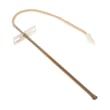
If you need the model-correct sensor, use the range oven temperature sensor WB20K10015.
Troubleshooting guide (symptom to next step)
| What you notice | Most likely direction | What we do next |
|---|---|---|
| F2 appears quickly after starting bake | Sensor circuit issue | Inspect sensor connector and harness; replace sensor if needed |
| Oven seems to run too hot before F2 | Sensor drifting or control issue | Verify sensor fit and wiring; replace sensor first |
| F2 happens intermittently | Loose connection or heat-damaged wiring | Reseat connectors; check for brittle insulation |
| Door feels loose or heat leaks | Door seal issue | Inspect/replace gasket |
Why it matters
An F2 code is the range protecting you from overheating. Fixing the sensor circuit or door sealing helps the oven hold accurate temperatures, prevents repeated shutdowns, and reduces stress on the control.
Helpful model-specific reference
Use the JGBS19DEN5WW owner’s manual for control display behavior, basic operating checks, and troubleshooting notes that match your exact GE range.
Last updated: February 2026