Owner’s manual
 Error Codes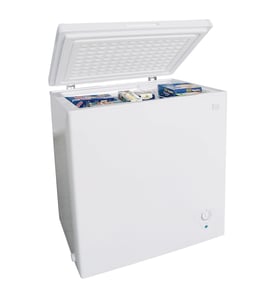



How many cubic feet is a Kenmore model 25316922102 freezer?
The exact cubic-foot capacity for Kenmore chest freezer model 25316922102 is listed on the model’s rating label and in the product literature; it is not determined by the “253” prefix alone. For the most accurate capacity, match the model and serial tag to the specs in the 25316922102 owner's manual.
Where to find the capacity on the freezer
On chest freezers like 25316922102, the serial plate is typically on the left exterior wall. Once you locate it, look for wording such as “Capacity” or “Cu. Ft.”
- Check the left exterior wall for the model/serial plate
- Look for “Capacity”, “Cu. Ft.”, or “Total capacity”
- Compare the model number format (often shown as 253. on the tag) to your full model number
- If the label is worn, use the manual’s model/serial recording section to confirm you have the right unit
How to confirm capacity using documentation
The most reliable way to confirm cubic feet is to use the model-specific literature tied to your exact model number.
| Method | What you need | Accuracy |
|---|---|---|
| Rating label on cabinet | Model/serial plate | Highest |
| Owner’s manual/spec page | Model number match | High |
| Measure and estimate | Interior dimensions | Medium |
Why it matters
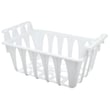
Capacity affects how you organize food, how long it takes to pull down to temperature, and what storage accessories fit best (for example, a replacement freezer basket 216848200 needs to match your freezer’s size and rail layout).
Last updated: February 2026
What can cause a chest freezer to stop working?
A Kenmore 25316922102 chest freezer usually stops working because it is not getting power, the temperature control is set to OFF, or a safety device or control component has failed. Start with the simple checks in the 25316922102 owner's manual before replacing parts.
Quick checks we recommend first
- Confirm the outlet has power (try a lamp or phone charger).
- Make sure the plug is fully seated and not loose.
- Check the house breaker or fuse (many freezers use a 15-amp time-delay fuse).
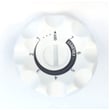
- Verify the temperature control is not set to OFF.
- If the freezer is on a GFCI outlet, try a non-GFCI circuit (GFCIs can trip with compressors).
- Keep the lid closed for several hours after a power loss; food can stay frozen about 24 hours if unopened.
Common causes (and what they look like)
| What can stop it | Typical symptom | What to do next |
|---|---|---|
| No power, tripped breaker, blown fuse | No lights, no sound | Restore power; reset breaker/replace fuse |
| Temperature control set to OFF | Unit appears “dead” | Turn control to a colder setting; allow time to stabilize |
| Loose plug or bad outlet | Intermittent operation | Reseat plug; test outlet |
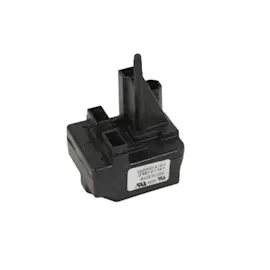
| Failed start device (relay/overload) | Clicking, won’t start | Inspect start components; consider freezer compressor overload and relay clamp 216954300 |
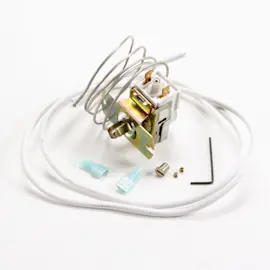
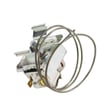
| Failed temperature control thermostat | Won’t cycle on correctly | Test/replace freezer temperature control thermostat 5304496559 |
Alarm light and buzzer: what it means
If the red temperature alarm light blinks and the buzzer sounds, the freezer is sensing an unsafe temperature. Press ALARM OFF to silence the buzzer; the light can keep blinking until safe temperature returns (and the buzzer may come back if the issue continues).
Why it matters
A “no-run” freezer problem is often electrical or control-related. Fixing power, settings, or a start/control part quickly helps prevent thawing, food loss, and repeated compressor stress.
Last updated: February 2026
Why is my chest freezer leaking water from the bottom?
Water under your Kenmore chest freezer model 25316922102 almost always comes from defrost meltwater that is not being routed out correctly (drain plug left open, drain outlet not directed into a pan, or overflow during defrosting). Use the defrost drain plugs exactly as shown in the 25316922102 owner's manual.
Quick checks that fix most leaks
- Make sure the inside drain plug is fully seated after defrosting.
- Make sure the outside drain plug is fully seated after defrosting.
- During defrosting, place a shallow pan under the drain outlet and monitor it so it does not overflow.
- If you use a hose, use a 1/2-inch garden hose adapter to route water directly to a floor drain.
- Keep the lid closed while defrosting so frost softens evenly and meltwater flows to the drain.
Step-by-step: defrost drain method (chest models)
- Place a shallow pan (or divider/drain pan if equipped) beneath the drain outlet.
- Pull out the outside drain plug.
- Pull out the inside drain plug; defrost water will drain out.
- Check the pan occasionally to prevent overflow.
- Reinstall both drain plugs when finished.
What the symptoms usually mean
| What you see | Most likely cause | What to do |
|---|---|---|
| Puddle after a defrost | Pan overflowed | Use a larger pan; check it more often |
| Constant small puddle | Drain plug not fully installed | Reseat inside and outside drain plugs |
| Water near the front edge | Warm air causing condensation | Confirm lid closes evenly; reduce lid-open time |
| Water only when moving unit | Water sloshing from pan/hose | Empty pan first; disconnect hose |
Why it matters
If a drain plug is left open, warm air can enter the freezer, which increases frost buildup and can create more meltwater the next time you defrost. Correct drain plug use keeps temperatures stable and prevents repeat leaks.
Last updated: February 2026