Installation guide
 Owner’s manual
 Error Codes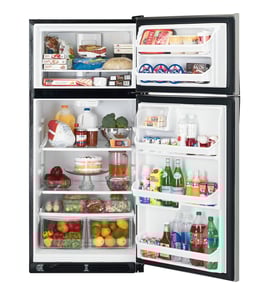


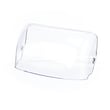
How do I tell what model Kenmore fridge I have?
You can identify your Kenmore refrigerator model by finding the model and serial number plate inside the fresh food (refrigerator) compartment. For Kenmore model 25360649613, the Use & Care Guide notes the serial plate is located inside the refrigerator compartment; record both numbers exactly as shown in your 25360649613 owner's manual.
Where to look for the model and serial plate
Check these common locations on Kenmore top-mount refrigerators:
- Inside the refrigerator compartment on a side wall (most common)
- On the ceiling of the fresh food compartment near the light
- On the inside wall behind the crisper drawers (you may need to slide drawers out)
- Along the door frame area (open the door and look around the perimeter)
- Near the lower front area behind the toe grille or kick plate (if equipped)
How to read and record the number correctly
Model numbers and serial numbers are easy to misread. We recommend:
- Write the model number exactly, including all digits (example: 25360649613)
- Copy the serial number exactly as printed
- Take a clear photo of the plate for reference when ordering parts
- Clean the plate gently with soap and water only so the printing stays readable
Why it matters
The model number tells us the exact parts configuration for your refrigerator. Even within the Kenmore 253 series, small differences can change which door bins, gaskets, sensors, or fan motors fit.
What you can do once you have the model number
Use the model number to match parts and instructions accurately. Here are examples of model-matched parts that may apply to 25360649613:
| What you need | Example part name | Example part ID |
|---|---|---|
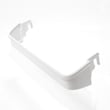
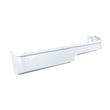
| Door storage replacement | Door bin | 240337901 |
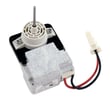
| Cooling airflow repair | Blower motor | 242077705 |
| Door sealing help | Freezer door gasket | 242193220 |
Last updated: February 2026
How many cubic feet is my Kenmore refrigerator by model number?
For Kenmore model 25360649613, the most accurate way to get the exact cubic-foot capacity is to look up the specifications in the 25360649613 owner's manual or on the refrigerator’s serial plate inside the fresh food compartment. That gives the true rated capacity for your specific configuration and color series.
Fast ways to find the capacity (best to least effort)
- Check the serial plate inside the refrigerator compartment; it lists the model and is the best starting point for matching specs.
- Use the 25360649613 owner's manual; it is written for the 253.6000* family and is the most reliable spec reference.
- If you are measuring for fit, use the cabinet dimensions and clearances in the 25360649613 installation guide; capacity and exterior size are related but not the same.
- If the unit is cooling poorly and you are troubleshooting instead of shopping for size, confirm temperatures first (capacity does not affect cooling performance by itself).
What “cubic feet” means (and why it can vary)
Cubic feet is the total interior storage volume (fresh food plus freezer). Even within the Kenmore 253.6000* model family, capacity can vary by:
- Shelf and bin configuration
- Ice maker presence (optional)
- Air ducting and control housing layout
- Liner and insulation revisions
Typical capacity range for this style
Most Kenmore top-mount refrigerators in the 253 series are commonly in this range:
| Refrigerator type | Typical total capacity | Typical use case |
|---|---|---|
| Top-mount (top freezer) | 14 to 21 cu. ft. | Standard kitchens, balanced freezer space |
| Compact top-mount | 10 to 13 cu. ft. | Apartments, garages, secondary fridge |
Why it matters
Knowing the correct cubic-foot rating helps us match the right shelves, bins, and optional accessories, and it also helps when comparing replacement units for kitchen fit and food storage needs.
Last updated: February 2026
What's the average lifespan of a Kenmore refrigerator?
A Kenmore refrigerator typically lasts about 10 to 15 years with normal household use. For your Kenmore 25360649613 top-mount refrigerator, keeping airflow clear, temperatures set correctly, and door seals tight is what most directly extends service life; see the owner's manual for model-specific care and settings.
Typical lifespan and what affects it
Most refrigerators fail early from heat stress, poor airflow, or icing issues rather than “age” alone. The biggest factors are:
- Condenser cleanliness and ventilation (dust buildup makes the compressor work harder)
- Door gasket condition (air leaks cause long run times and frost)
- Evaporator fan performance (weak airflow leads to warm sections and icing)
- Stable power (surges can damage controls)
- How full it runs (overpacking blocks vents; underpacking can cause temperature swings)
Quick maintenance checklist (high impact)
- Set fresh food to about 37°F and freezer to about 0°F (adjust gradually).
- Keep interior vents unblocked (especially near the freezer air outlet).
- Clean dust from the condenser area and make sure the unit has breathing room.
- Confirm doors close on their own and seal evenly all the way around.
- Defrost and clear any heavy frost that restricts airflow.
Parts that commonly influence longevity
If you are troubleshooting warm temps, noise, or frost, these parts are frequent contributors on top-mount designs:
| Symptom | Common area | Example part for this model |
|---|---|---|
| Warm fridge, freezer OK | Air movement from freezer | Blower motor 242077705 |
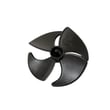
| Frost buildup, poor airflow | Fan area restrictions | Refrigerator fan cover 242294704 |
| Door not sealing, moisture/frost | Door seal | Refrigerator freezer door gasket 242193220 |
Why it matters
A refrigerator that runs longer to hold temperature uses more energy and wears the sealed system faster. Simple airflow and sealing checks often add years of reliable operation and help prevent food spoilage.
Last updated: February 2026