Owner’s manual
 Error Codes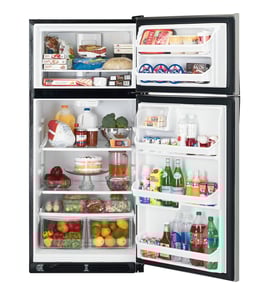


How to tell cubic feet of Kenmore refrigerator by model number?
For Kenmore model 2537419240J, the model number alone usually does not state the exact cubic-foot capacity; the most reliable way is to look up the capacity in the specifications section of the 2537419240J owner's manual or estimate it by measuring the usable interior space and converting cubic inches to cubic feet.
Best ways to find cubic feet (most accurate first)
- Check the specs in the manual: Look for “capacity” or “cubic feet” in the product specifications section of the 2537419240J owner's manual.
- Search the model’s spec label: The model/serial plate is typically inside the refrigerator compartment (often on a side wall or near the crisper area).
- Measure the interior and calculate: This gives a close estimate when shelves and bins vary.
- Use the Kenmore prefix as a clue: “253” identifies the manufacturer family used for many Kenmore refrigerators, but it does not reliably encode the exact capacity.
How to estimate cubic feet by measuring
- Empty the compartment enough to measure.
- Measure the usable interior:
- Width (left to right)
- Depth (front to back, not including door bins)
- Height (bottom to ceiling, not including the freezer divider lip)
- Multiply to get cubic inches, then convert.
Conversion table
| What you have | What to do | Result |
|---|---|---|
| Cubic inches | Divide by 1,728 | Cubic feet |
| Inches (W x D x H) | Multiply W x D x H | Cubic inches |
Why it matters
Knowing cubic feet helps us match the right refrigerator parts and accessories (like shelving, door bins, and gaskets) and it also helps you compare storage capacity across top-mount models.
Last updated: January 2026
What is the top part of a fridge called?
On the Kenmore 2537419240J top-mount refrigerator, the top compartment is the freezer. It’s designed to keep foods frozen, and on many top-mount models it also supports ice making (with an ice tray or an optional automatic ice maker).
What the freezer does (and what you’ll find there)
- Maintains below-freezing temperatures for long-term food storage
- Helps keep ice cream and frozen foods at the right texture
- Often contains the ice maker area (if your model is equipped)
- Shares airflow with the fresh food section through vents and controls
- Can show frost buildup first if a door is left ajar or a gasket leaks
Freezer vs. refrigerator: quick comparison
| Compartment | Typical use | Typical temperature setting |
|---|---|---|
| Freezer (top) | Frozen foods, ice | 0°F |
| Refrigerator (bottom) | Fresh foods, drinks | 37°F |
Why it matters
Knowing the correct compartment name helps when you’re using the controls, following troubleshooting steps, or ordering parts for the right door and section (freezer door parts are different from refrigerator door parts).
Related tips for this model
- If the freezer door does not seal tightly, cold air can leak and cause frost or weak cooling; see how to fix a fridge door seal.
- If you’re checking door swing or handle orientation, the freezer handle removal and door reversal steps are covered in the 2537419240J manual.
- If you’re troubleshooting ice production, common ice maker issues are covered in common refrigerator ice maker problems and solutions.
Last updated: January 2026
What is the average lifespan of 2537419240J?
A Kenmore top-mount refrigerator like model 2537419240J typically lasts 13 years with normal household use and basic maintenance (clean condenser area, good door seals, stable temperatures). Keeping airflow clear and fixing small issues early helps you reach that average.
Typical lifespan and what affects it
Most refrigerators in this class reach the 13-year mark when these conditions are met:
- Condenser area stays clean so the compressor runs cooler
- Door gaskets seal tightly to prevent warm air leaks
- Freezer stays near 0°F and fresh food section near 37°F
- Ice maker and defrost system operate without frequent icing
- Unit has adequate clearance for ventilation and is level
Quick maintenance schedule (simple and effective)
| Task | How often | Why it helps |
|---|---|---|
| Vacuum/brush condenser area | Every 6 to 12 months | Reduces compressor run time and heat |
| Check door seal for gaps, tears, or stiffness | Every 3 months | Prevents frost, sweating, and warm temps |
| Confirm temps with a thermometer | Monthly | Catches cooling problems early |
| Clear/inspect drain pan and drain path if you see water | As needed | Prevents puddles and ice buildup |
Parts that commonly shorten lifespan when they fail
If you are trying to extend the life of 2537419240J, these are the high-impact items to watch:
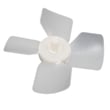
- Evaporator fan issues (warm fridge, noisy freezer); see refrigerator evaporator fan blade 5308000010
- Defrost problems (ice buildup on back wall); see refrigerator defrost bi-metal thermostat 5303918202
- Poor door sealing (frost, moisture, long run times); see universal/multiflex frigidaire refrigerator door gasket (white) 242193213
- Weak condenser airflow (hot cabinet sides, poor cooling); see refrigerator condenser fan 240524102
Why it matters
A refrigerator that is running hot, leaking air at the doors, or icing up in the freezer can run longer cycles. That extra runtime is what wears down major components like the compressor over time.
For model-specific care and operating guidance, use the 2537419240J owner's manual.
Last updated: March 2026