 Installation guide
 Owner’s manual
 Error Codes



Does a Kenmore Elite washer have a filter?
Yes. Kenmore Elite washers like model 41744052400 use filtering to protect the drain pump from lint and small debris; on many front-load designs this is a clean-out (coin trap) area in the drain system that you periodically check and clean. See the 41744052400 owner's manual for the exact access location and steps.
On front-load Kenmore designs, the filter is typically part of the drain system rather than a removable lint screen.
Common places to look:
- Behind the lower front toe panel or a small access door
- At the drain pump clean-out (coin trap) area
- In the drain hose path near the pump
If your washer is not draining well, the drain clean-out is the first place we check.
Before you open any drain clean-out, plan for water.
- Unplug the washer.
- Put towels and a shallow pan under the front edge.
- Open the lower access area (often behind the toe panel).
- Drain water slowly (some models have a small drain hose; others release water when the cap is loosened).
- Remove lint, coins, hair pins, and small socks; then reinstall and tighten the cap.
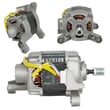
If the clean-out is clear but the washer still will not drain, the washer drain pump 137221600 is a common next suspect.
- Water left in the tub at the end of the cycle
- Slow drain, long drain times, or repeated drain attempts
- Wet loads after spin
- Gurgling from the drain area
| What you see | Most likely cause | What to do next |
|---|---|---|
| Debris in clean-out | Clogged pump trap | Clean it and retest |
| Clean-out empty, still no drain | Pump issue or blockage downstream | Check pump, hose, standpipe |
| Door will not unlock with water inside | Drain problem preventing unlock | Resolve drain first |
Keeping the drain clean-out clear helps your Kenmore washer drain and spin correctly, reduces odors, and can prevent damage to the drain pump and hoses.
Last updated: January 2026
How to do a hard reset on a Kenmore washer?
For the Kenmore washer model 41744052400, a hard reset is done by removing power long enough for the control to fully discharge, then restoring power and restarting a cycle. This clears many temporary control glitches and can remove some stored error conditions.
- Press Pause/Cancel once to stop the cycle.
- Unplug the washer (or switch OFF the breaker).
- Wait 2 minutes.
- Restore power.
- Select a normal cycle and press Start.
If the washer immediately shows the same error or won’t start, use the model’s diagnostic or calibration steps listed in the 41744052400 owner’s manual.
A “reset” won’t fix a mechanical or safety-interlock problem. These checks often explain why the control will not restart:
- Confirm the door closes firmly and the latch engages.
- Verify both hot and cold water supply valves are fully open.
- Check that the drain hose is not kinked or shoved too far down the standpipe.
- If the tub won’t drain, suspect a clog or a failing pump.
- If the washer won’t lock or unlock the door, suspect the door latch/catch.
| What you see | What it usually means | What we do next |
|---|---|---|
| Dead display or no response | Control needs power reset or outlet issue | Hard reset; verify outlet and breaker |
| Won’t drain, water left in tub | Drain restriction or pump problem | Check hose/standpipe; inspect pump |
| Door won’t lock, cycle won’t start | Door latch/catch issue | Inspect latch alignment and strike |
If troubleshooting points to a failed component, these are common on this model:
- Door catch 131763256 (door lock engagement issues)
- Washer drain pump 137221600 (no drain, long drain, water left in tub)
Resetting the control board can clear a one-time software lockup after a power flicker or interrupted cycle. If the same problem returns right away, the washer is usually protecting itself because it detects a door-lock, drain, or fill problem.
Last updated: January 2026
What is the capacity of the Kenmore 400 Series washer?
For the Kenmore 41744052400 (400 Series) washer, the exact tub capacity is listed in the product specifications section of the 41744052400 owner's manual. Most Kenmore front-load washers in this series range from about 3.0 to 3.5 cu. ft., which fits everyday family laundry when loaded loosely.
Use the manual specs so you get the correct number for your exact model.
- Open the specifications section in the 41744052400 owner's manual
- Look for “capacity” or “tub volume” (often shown in cu. ft.)
- If multiple versions are listed, match the full model number 41744052400
- Keep the spec handy when comparing replacement parts or planning laundry loads
A front-load washer in the 3.0 to 3.5 cu. ft. range is designed for regular household loads without packing the drum.
| Load type | Typical fit (3.0 to 3.5 cu. ft.) | Loading tip |
|---|---|---|
| Towels | Several bath towels | Leave space for tumbling |
| Mixed laundry | Small to medium mixed load | Mix item sizes for balance |
| Bedding | One blanket or comforter (size dependent) | Avoid stuffing bulky items |
Correct capacity helps you avoid overloading, which improves cleaning, reduces vibration, and lowers wear on key parts like the suspension and door locking system.
- Load to about 3/4 full for most cycles; items should tumble freely
- Use HE detergent and measure carefully to prevent oversudsing
- If the washer will not start because the door will not latch, check the door catch 131763256
Last updated: January 2026


