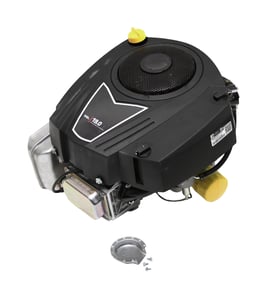






What are the parts of a lawn mower engine?
A Craftsman lawn mower engine like model 143975001 is built from fuel, air, ignition, and mechanical systems that work together to start the engine, mix fuel and air, create spark, and turn the crankshaft. The exact list varies by engine design, but the core components are consistent.
Main engine systems and what they do
- Fuel system: stores fuel and meters it into the engine (tank, cap, carburetor, gaskets, needle/seat, float)
- Air intake: brings in clean air (air filter and intake path)
- Ignition system: creates spark at the right time (ignition coil/lamination, flywheel magnets, spark plug)
- Starting system: spins the engine to begin combustion (recoil starter rope and handle, or electric start kit)
- Internal engine: converts combustion into rotation (cylinder, piston, connecting rod, crankshaft, valves, cylinder head)
- Controls and safety: lets you stop and control speed (throttle control, stop wire/terminal)
Common parts you may replace on model 143975001
These are some of the most frequently serviced items we see for this engine:
- Carburetor 640084B (fuel metering)
- Needle seat 631021B (helps control fuel flow into the carburetor bowl)
- Float 632019A (maintains fuel level in the carburetor)
- Craftsman lawn and garden equipment engine carburetor gasket 26756 (seals carburetor mounting surfaces)
- Lawn & garden equipment engine fuel tank cap 37845 (seals the tank and vents properly)
- Craftsman lawn & garden equipment engine recoil starter rope, 98-in 590535 (pull-start rope)
Quick “system to part” map
| Engine area | What you’ll notice when it fails | Example part on this model |
|---|---|---|
| Fuel delivery | hard starting, surging, won’t stay running | Carburetor, float, needle/seat, gaskets |
| Ignition | no spark, intermittent spark | Lamination/ignition coil |
| Starting | rope won’t retract, rope breaks | Recoil rope, recoil handle |
| Internal engine | low compression, knocking, won’t turn freely | Cylinder, piston, connecting rod, crankshaft |
Why it matters
Knowing which system a symptom points to helps you buy the right replacement part the first time. For example, “starts then dies” is usually fuel delivery (carburetor/float/needle), while “no spark” points to ignition.
Last updated: February 2026
What model number is a Craftsman 143975001 lawn mower?
The model number shown for this Craftsman lawn and garden engine is 143975001. That number identifies the engine, not the mower deck or tractor; the mower’s model number is on the equipment ID label, while 143975001 is used to match engine parts.
Where to find the mower’s model number
Look for an equipment ID tag or sticker on the mower itself. Common locations include:
- On the rear of the mower deck near the discharge chute
- Under the seat (riding mower) or on the seat pan
- On the frame near the rear wheels or handle mounts
- Near the engine mounting area or on the mower housing
- On the handle bracket (walk-behind mower)
Engine model vs. mower model (what each one is for)
Use the right number depending on what you’re repairing.
| You’re trying to replace | Use this number | Example for this page |
|---|---|---|
| Engine parts (carburetor, ignition, fuel parts) | Engine model number | 143975001 |
| Belts, blades, wheels, deck parts | Mower/equipment model number | Found on the mower ID label |
Why it matters
Parts look similar across Craftsman equipment, but they are not interchangeable. Using the engine model 143975001 helps us match the correct carburetor, gaskets, and ignition parts for this specific engine.
Common engine parts customers match by model 143975001
If you are servicing the engine, these are typical parts people replace:
- Carburetor 640084B (fuel delivery and mixture)
- Needle seat 631021B (carburetor fuel inlet sealing)
- Carburetor gasket 26756 (prevents air leaks at the carb)
- Lamination 34443D (ignition coil component)
- Fuel tank cap 37845 (vents and seals the fuel tank)
Last updated: February 2026
What is the average lifespan of 143975001?
A Craftsman engine like model 143975001 typically lasts 8 to 15 years with normal homeowner use and basic maintenance (clean fuel, regular oil changes, and good cooling airflow). Heavy use, dirty fuel, and overheating shorten engine life.
What affects lifespan most
- Fuel quality and storage: stale fuel and ethanol-related varnish plug the carburetor.
- Oil change frequency: running low or dirty oil accelerates wear on the crankshaft and piston.
- Cooling and debris: grass and dirt packed around the blower housing raise operating temperature.
- Starting and run habits: repeated cold starts and short run times increase deposits.
- Carburetor condition: a lean mixture can run hot; flooding washes oil off cylinder walls.
Maintenance targets we recommend
Use these as practical intervals for small lawn and garden engines:
| Item | Typical interval | Why it matters |
|---|---|---|
| Oil change | Every 25 to 50 hours or each season | Prevents accelerated internal wear |
| Fresh fuel | Every 30 days (or stabilized) | Prevents hard-start and carburetor clogging |
| Spark plug | Each season or 100 hours | Improves starting and combustion |
| Cooling fins and shrouds | Each season | Prevents overheating |
Parts that commonly extend service life
If your 143975001 is hard-starting, surging, or leaking fuel, these model-matched parts are common fixes:
- Carburetor 640084B (restores proper fuel metering)
- Lauson lawn & garden equipment engine carburetor rebuild kit 31840 (addresses varnish, worn seals, and jets)
- Craftsman lawn and garden equipment engine carburetor gasket 26756 (prevents vacuum leaks)
- Lawn & garden equipment engine fuel tank cap 37845 (helps maintain correct tank venting)
Why it matters
Most “engine failures” start as fuel-system or overheating problems. Keeping the carburetor clean, the oil fresh, and the cooling system clear usually costs far less than replacing major components like the cylinder or crankshaft.
Last updated: March 2026