 Owner’s manual

How thick of a tree can an electric chainsaw cut?
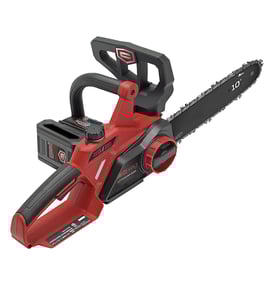
For the Craftsman 15174326 pole saw, we recommend cutting limbs up to 6.9 inches thick (maximum). For safe, controlled cutting, stay within that limit and use the correct cutting method for thicker branches as shown in the 15174326 owner's manual.
What to expect in real use
Even within the 6.9-inch maximum, the cut quality depends on chain sharpness, chain tension, and lubrication.
- Cut at full chain speed before contacting the wood.
- For larger limbs, use a 3-cut method to prevent tearing and pinching.
- Keep the chain properly tensioned; new chains stretch and need frequent retensioning.
- Check and fill the chain oil reservoir regularly.
- Avoid cutting wood with foreign objects (nails, wire, embedded debris).
Recommended cutting approach by branch size
The manual calls out different techniques for thin vs. thick branches.
| Branch thickness | Best approach | Why it helps |
|---|---|---|
| Under about 2 inches | Single cut | Fast, clean cut with less chance of binding |
| About 2 to 6.9 inches | 3-cut method (undercut, top cut, final cut) | Reduces bark tearing and sudden limb drop |
| Over 6.9 inches | Do not cut with this pole saw | Helps prevent kickback, stalling, and loss of control |
Parts that affect cutting performance
If cutting feels slow, crooked, or you have to force the saw through the wood, focus on the wear items first.
- Chain condition: replace if worn or damaged (example replacement: pole saw chain 261002105).
- Guide bar condition: inspect the bar groove and sprocket tip for wear (example: guide bar 261009103).
- Chain tension: retension when drive links start hanging out of the bar groove.
Why it matters
Staying within the Craftsman 15174326 maximum limb thickness helps the motor maintain speed, keeps the chain from binding, and reduces the risk of kickback or uncontrolled limb movement at the end of the cut.
Last updated: January 2026
What model number is a Craftsman 15174326?
The model number for this Craftsman cordless pole saw is 151.74326 (often written without the dot as 15174326). On the tool, the model number is printed on a label attached to the motor housing; you can confirm it in the Craftsman 15174326 operator’s manual.
Where to find the model number on the tool
Look for the model/serial label in these common spots:
- On the motor housing (this is the primary location for model 151.74326)
- Near the main handle area
- Close to the power switch and safety switch area
- On the upper pole section near the head
Why this matters when ordering parts
Using the exact model number helps us match the correct Craftsman chainsaw parts, especially wear items like the chain and guide bar.
- Prevents ordering a chain with the wrong pitch or length
- Helps match the correct guide bar style and tensioning setup
- Ensures you get the right assemblies (handle, housing, strap)
Common part matches for model 15174326
If you are confirming the model to buy parts, these are examples of parts listed for this model:
| Part name | Part ID | What it affects |
|---|---|---|
| Pole saw chain | 261002105 | Cutting performance, kickback risk |
| Guide bar | 261009103 | Straight cuts, chain tracking |
| Housing assembly | 261009102 | Tool-free cover fit and protection |
Quick model clarification
Craftsman has a closely related pole saw model number 151.74926; the operator’s manual lists both. If your label shows 151.74326, order parts using 15174326.
Last updated: January 2026
Why does my electric chainsaw chain keep coming loose?
On the Craftsman 15174326, a chain that keeps coming loose is almost always a tension issue (set too loose), a chain that has stretched from use, or wear at the guide bar or chain. The manual specifically warns not to operate with a loose or widely stretched chain; set correct tension before pruning. See the 15174326 owner's manual.
Most common causes (and what to check first)
- Chain tension not set correctly: Re-tension the chain before each use and after the first few cuts.
- Normal chain stretch: New chains stretch quickly during break-in; recheck tension often.
- Worn guide bar groove or nose area: Wear lets the chain “walk” and lose tension.
- Damaged or worn chain: A heavily worn chain will not hold adjustment.
- Loose hardware: The manual’s troubleshooting guidance calls out loose bolts/nuts as a vibration/noise cause; that same looseness can contribute to chain instability.
How tight should the chain be?
Use this quick check after you adjust tension:
| Check | What you want | What it means if it fails |
|---|---|---|
| Pull chain along the bar by hand (power off) | Moves smoothly with light resistance | Too tight if it binds; too loose if it sags |
| Look at the bottom of the bar | No visible droop | Droop indicates under-tension |
| After a short cut | Tension still firm | Rapid loosening points to stretch or wear |
Parts that commonly solve “keeps coming loose”
If tension is set correctly but won’t hold, inspect these wear items:
- Guide bar 261009103 for a widened groove, burrs, or damage
- Pole saw chain 261002105 for stretch, damaged links, or heavy wear
Why it matters
A loose chain increases the chance of derailment and kickback risk. The manual instructs to ensure correct chain tension and to never work with a loose, widely stretched, or heavily worn chain.
Last updated: January 2026