Owner’s manual

What is the common problem with an air compressor?
The most common air-compressor problem is an air leak that causes low pressure or rapid pressure loss. On the Craftsman 92115200 portable air tank, leaks typically show up around the filler valve, on/off valve, hose connections, or the safety relief valve; moisture left in the tank also leads to internal rust and future leaks.
Most common symptoms you will notice
- Tank will not hold pressure between uses
- Pressure gauge drops quickly after filling
- Constant hissing at the valve/manifold area
- Weak airflow at the chuck or tool
- Safety relief valve vents unexpectedly
Quick checks we recommend (safe, practical)
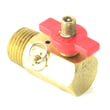
- Close the red on/off knob fully (clockwise) and listen for hissing at the manifold.
- Check fittings and valve areas with a soap-and-water solution; bubbles pinpoint leaks.
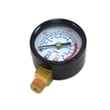
- Verify fill pressure: this tank is typically filled until the gauge reads 95 to 135 PSI.
- Drain after use: reduce pressure to about 25 PSI, invert the tank (manifold down), and pull the safety relief ring to disperse condensation.
- If the tank body leaks: replace the tank; do not attempt welding or tank repair.
Common problems, causes, and what to do
| Problem | Likely cause | What to do next |
|---|---|---|
| Low pressure at the chuck | On/off valve not fully open, restriction, or leak | Open valve fully; check for leaks with soapy water |
| Pressure drops in storage | Leak at valve/fitting or internal rust | Close valve; test for leaks; drain condensation after use |
| Safety valve vents | Overpressure or faulty relief valve | Stop using; vent safely away from your body; inspect setup |
| Rusting concerns | Condensation left inside tank | Follow the drain procedure after each day of use |
Why it matters
Air leaks waste compressed air and can make the tank unreliable for inflating tires or running small air tools. Moisture left inside the tank is a primary driver of premature rusting, which leads to leaks and earlier replacement.
For model-specific operating and storage steps (including the drain procedure and safety warnings), use the 92115200 owner's manual.
Last updated: February 2026
What is the average lifespan of an air compressor?
For a typical homeowner air compressor, the average lifespan is about 10 to 15 years with normal use and basic maintenance. For the Craftsman 92115200 portable air tank, lifespan is driven by tank condition and the stamped “DISCARD AFTER” date; once that date passes, replace the tank.
What matters most for the Craftsman 92115200 portable air tank
This model is a portable air tank, not a motor-driven compressor. The tank is a pressure vessel, so age, rust, and damage matter more than “run hours.” Our owner's manual explains key safety and storage steps, including the “DISCARD AFTER” guidance.
- Check the tank for a stamped “DISCARD AFTER” date and follow it.
- If the tank develops a leak, replace the tank (do not attempt a weld repair).
- Drain air after the last use of the day to reduce internal moisture.
- Store with the red ON/OFF knob turned fully OFF (clockwise).
- Avoid overfilling; fill to the recommended gauge range (typically 95 to 135 PSI for this tank).
Typical lifespan ranges (quick guide)
These are common expectations for consumer equipment; heavy-duty industrial units often last longer with scheduled service.
| Equipment type | Typical lifespan | What usually ends it |
|---|---|---|
| Portable air tank (like 92115200) | Until “DISCARD AFTER” date or corrosion/leak | Rust, damage, leaks |
| Small DIY piston compressor | 5 to 10 years | Pump wear, overheating, poor maintenance |
| Prosumer/shop piston compressor | 10 to 15 years | Motor/pump wear, valve failure |
| Rotary screw compressor | 15 to 20+ years | End-of-life overhaul costs |
Why it matters
Compressed air systems can fail suddenly if a tank is weakened by corrosion or damage. Following the storage and draining steps helps prevent premature rust and helps you get the safest, longest service life from your Craftsman 92115200.
Last updated: February 2026
Is a 20 gallon air compressor big enough for air tools?
A 20-gallon compressor is big enough for many common air tools when you use them intermittently, but it is not ideal for continuous, high-air-demand tools. For the Craftsman 92115200, keep in mind it is a portable air tank (stored air), so runtime depends entirely on how full you fill it and the tool’s CFM needs; it is not a pump that refills itself.
What “big enough” really depends on
Tank size helps, but tool air demand (CFM at PSI) is what determines whether you can work steadily.
- Great fit: brad/finish nailers, staplers, inflators, blow guns (short bursts)
- Usually OK with pauses: small impact wrench, small ratchet (intermittent use)
- Often frustrating: die grinders, sanders, cut-off tools, HVLP spraying (long trigger time)
- Key limiter with a portable tank: once pressure drops, you must refill the tank at an air source
- Practical tip: use the shortest hose you can and fix leaks first; leaks waste stored air fast
Quick sizing guide (what to expect)
Use this as a practical rule-of-thumb for a 20-gallon class setup.
| Tool type | Air demand pattern | 20-gallon result |
|---|---|---|
| Nailers / staplers | Short bursts | Works well |
| Tire inflator | Intermittent | Works well |
| Impact wrench | Bursty but higher CFM | Works with breaks |
| Grinder / sander | Continuous | Runs out quickly |
| Paint spraying | Long trigger time | Usually not enough |
Model-specific operating notes for Craftsman 92115200
This model is designed to be filled from a source of clean, dry compressed air and then used as stored air.
- Fill until the gauge reads about 95 to 135 PSI (typical recommended fill range)
- Turn the red on/off knob to control airflow to the hose
- If the tank develops a leak, replace the tank (do not weld or repair the tank)
- Drain moisture and depressurize after use to reduce internal rust and extend service life
For the exact safety steps and operating procedure, follow the owner's manual.
Why it matters
If your tool needs more CFM than your tank can supply, pressure drops quickly; that means weaker tool performance, inconsistent results (especially spraying), and more downtime refilling.
Last updated: February 2026
What company makes Craftsman air compressors?
For the Craftsman 92115200, the “921” model prefix is commonly associated with DeVilbiss Air Power as the original equipment manufacturer for Sears-branded portable air products. For exact identification details tied to your unit, we recommend checking the labeling and documentation in the owner's manual.
Who actually manufactured Craftsman compressors and air tanks?
Craftsman is the brand on the product, but different companies have built Craftsman air products over time. The manufacturer is usually tied to the model prefix.
Common Craftsman prefixes you may see:
- 921: commonly tied to DeVilbiss Air Power (often referenced for Sears-built air products)
- 106: commonly tied to Campbell Hausfeld
- Other prefixes: may indicate other OEMs depending on the era and product type
How to confirm the maker for your specific 92115200
Use the product label and manual details to match what you have in hand.
Check these items:
- The model number (should read 92115200)
- Any data plate text that lists an OEM name or a part number format
- The manual cover and parts list section
- The manifold/handle area for stamped or printed identifiers
Quick confirmation checklist
| What to check | Where to look | What it tells you |
|---|---|---|
| Model prefix | Model tag/label | Points to the likely OEM family (example: 921) |
| Manual model listing | Manual cover page | Confirms the supported model series |
| Parts list naming | Manual parts list | Helps match assemblies like gauge, hose, manifold |
Why it matters
Knowing the likely OEM helps when you are matching replacement components (for example, a pressure gauge, manifold assembly, or air hose) and when you are following the correct safety and maintenance steps for your Craftsman portable air tank.
Last updated: February 2026
Is a 150 PSI air compressor good for car detailing?
Yes, 150 PSI is a good maximum-pressure rating for car detailing, but what matters most is whether your tool gets steady airflow (CFM) at its working pressure. For the Craftsman 92115200 portable air tank, we recommend filling the tank to about 95 to 135 PSI and then regulating down to the tool’s required PSI. See the 92115200 owner's manual for safe filling and use.
What 150 PSI does (and does not) tell you
A higher max PSI mainly gives you a pressure “reserve” so the regulator can hold a steady outlet pressure as the supply drops.
- Helps maintain 90 PSI output for short bursts (blow gun, dusting crevices)
- Gives more usable air before pressure falls too low
- Does not guarantee strong continuous airflow (that is CFM)
- Does not replace tank size for longer jobs
- Does not make a small compressor suitable for painting by itself
Typical detailing tasks: PSI vs airflow
Most detailing air tools run around 60 to 90 PSI, but their air consumption varies a lot.
| Detailing task | Typical need | What to prioritize |
|---|---|---|
| Blow gun for cracks, vents, drying | Moderate PSI, low to moderate air use | Regulator stability, moisture control |
| Tornador-style cleaning gun | Around 90 PSI, higher air use | Higher CFM, larger tank |
| Inflating tires | Higher PSI, low air use | Max PSI and a good chuck |
| Painting (spray gun) | Steady PSI, very high air use | High CFM and dry air |
Using the Craftsman 92115200 portable air tank for detailing
This model is a portable air tank (not a powered compressor), so it stores air you fill from an external source.
- Fill with clean, dry compressed air; we recommend 95 to 135 PSI on the tank gauge
- Open the red on/off knob to supply air; close it between uses to prevent leaks
- Wear eye protection; compressed air can propel debris
- Drain the tank after the day’s last use to reduce internal rust from condensation
- Check the tank’s stamped “DISCARD AFTER” date and stop using it after that date
Why it matters
Detailing results depend on consistent air delivery. Max PSI helps with short bursts and regulator stability, but CFM and moisture control determine whether tools like Tornador-style guns or spray equipment perform well.
Last updated: February 2026