Installation guide
 Owner’s manual
 Error Codes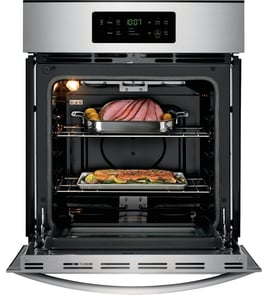




Do I need an electrician to install a wall oven?
If you’re replacing an existing electric wall oven with the Bosch HBN5451UC, you typically do not need an electrician as long as the correct 208/240V, 4-wire single-phase supply and junction box are already in place. If wiring, a new circuit, or a new junction box is needed, we recommend hiring a licensed electrician.
When you can DIY the install
You can usually handle installation yourself when:
- You’re swapping one electric built-in oven for another
- The existing electrical connection matches the oven requirements (208/240V AC, 60 Hz, 4-wire, single-phase)
- A suitable conduit box and UL-listed conduit connector are already available
- The cabinet opening is level, plumb, and properly supported for the oven’s weight
For model-specific steps, follow the HBN5451UC installation guide.
When to hire an electrician
We recommend an electrician if any of these apply:
- You’re converting from a gas oven to an electric wall oven
- You need a new 240V circuit, breaker, or wiring run
- The junction box needs to be added, moved, or upgraded
- You’re unsure your home wiring is 4-wire and properly grounded per local code
Electrical requirements at a glance
| Item | Typical requirement for this Bosch wall oven family | What to verify before install |
|---|---|---|
| Voltage | 208V or 240V AC, 60 Hz | Existing supply matches rating plate |
| Supply type | 4-wire, single-phase | Neutral and ground present |
| Circuit size | Commonly 30A or 40A (varies by model family) | Breaker and wire gauge are correct |
Installation tips that prevent damage
- Plan for lifting help; three or more people is recommended for placing the unit
- Remove the oven door on bottom-hinge models to reduce weight (do not remove side-hinge doors)
- Do not lift by the upper element; use the correct lift points inside the oven cavity
- Leave bottom packaging on while positioning to protect flooring
Why it matters
Wall ovens draw high current and must be grounded correctly. A proper 208/240V connection and a correctly placed junction box help prevent nuisance shutdowns, overheating, and hard-to-diagnose performance issues.
Last updated: February 2026
How do I reset a Bosch oven?
To reset your Bosch HBN5451UC electric wall oven, do a power reset: turn the oven circuit breaker OFF for 60 seconds, then turn it back ON and reset the clock if needed. This clears many control glitches after a power interruption or a stuck mode.
Reset options (from easiest to most effective)
- Cancel the current mode: press the oven’s Off/Cancel or Clear/Off control (wording varies by control panel).
- Power reset (recommended): switch the breaker OFF for 60 seconds, then ON.
- After reset, run a quick test: select BAKE and confirm the oven starts preheating.
- If the display is blank after reset: confirm the breaker is fully ON and the oven has power.
- If the oven is stuck in Self Clean or shows a lock icon: allow time for the door lock to cool and release; then retry the reset.
What to check if the reset does not fix it
A reset helps with temporary electronic issues. If the problem returns right away, these are the most common next checks:
- Door lock system: a lock that does not engage or release can block baking and cleaning modes.
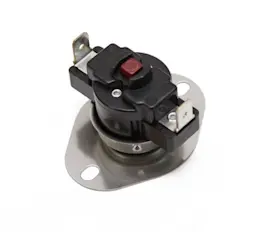
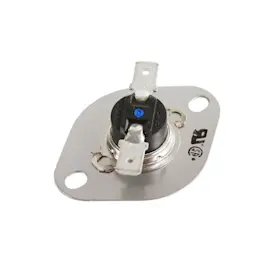
- Overheat protection: an open thermal fuse can leave the oven dead or unresponsive.
- Cooling airflow: a failed cooling fan can cause overheating and shutdown behavior.
- User interface: a failing display/control board can cause random beeps, blank display, or non-responsive keys.
| Symptom after reset | Most likely area to inspect | Common related part |
|---|---|---|
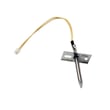
| No power, blank display | Overheat protection, power supply | Wall oven thermal fuse 00631343 |
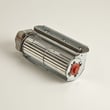
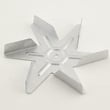
| Overheats, shuts down, runs hot | Cooling airflow | Wall oven cooling fan assembly 00759374 |
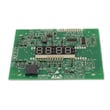
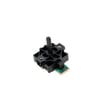
| Display issues or buttons not responding | User interface/control | Wall oven display board 00631881 |
Why it matters
Resetting restores normal operation after a control “lockup” and is also a smart first step before replacing parts like a thermal fuse, cooling fan assembly, or display board.
For model-specific operating steps and troubleshooting, use the HBN5451UC owner’s manual.
Last updated: February 2026
What are the common problems with Bosch ranges?
Common Bosch cooking-appliance problems usually come down to heating performance, controls, and door or fan-related issues. For a Bosch HBN5451UC electric built-in oven, the most common symptoms we see are no heat or uneven baking, a blank or glitchy display, and fan or safety cutout problems; use the HBN5451UC owner's manual for model-specific troubleshooting steps.
Most common symptoms (and what they usually point to)
- Oven will not heat: failed heating circuit, safety cutout, or control issue
- Uneven baking or weak convection: convection fan motor or convection element problem
- Oven overheats or shuts off mid-cycle: cooling airflow issue or thermal fuse opening
- Display is blank or unresponsive: display board or power supply problem
- Self-clean will not start or door will not unlock: door lock mechanism issue
Parts that commonly solve these problems on HBN5451UC
If your symptom matches, these are common repair paths for this model:
| Symptom | Common part to check | What it does |
|---|---|---|
| Uneven convection baking | Thermador wall oven convection fan motor 00642845 | Circulates hot air for convection cooking |
| Oven dead after overheating | Wall oven thermal fuse 00631343 | Opens to protect the oven from excessive heat |
| Oven shuts down or runs hot externally | Wall oven cooling fan assembly 00759374 | Moves cooling air to protect controls and wiring |
| Blank or erratic display | Wall oven display board 00631881 | Runs the display and user interface |
| Door won’t lock/unlock for self-clean | Wall oven door lock assembly 00631192 | Locks the door when self-clean is active |
Quick checks we recommend before replacing parts
- Confirm the breaker is fully on (some ovens use a 2-pole breaker).
- Try a basic function test: set BAKE and verify preheat starts.
- If self-clean is involved, confirm the door lock icon appears and the door locks.
- Listen for the cooling fan after preheat or self-clean; lack of airflow is a red flag.
- If you’re testing electrically, follow safe meter practices using a guide like how to use a multimeter to test electrical parts video.
Why it matters
Heating, cooling, and door-lock systems work together on built-in ovens. A weak cooling fan or an opened thermal fuse can look like a “bad control,” and convection issues often trace back to the fan motor or convection element rather than the bake setting itself.
Last updated: February 2026
What is the disadvantage of a wall oven?
A wall oven like the Bosch HBN5451UC trades flexibility for a built-in look. The biggest disadvantage is that it requires a dedicated cabinet cutout and support structure, which reduces usable cabinet space and makes installation and future service more involved than a freestanding range.
Main drawbacks to plan for
- Permanent space commitment: it occupies a fixed cabinet opening, so changing layouts later is harder.
- Reduced storage: you give up base-cabinet storage where a range might otherwise sit.
- More demanding installation: the opening must be level and plumb, and the base must be properly built to support the oven.
- Heavier handling: Bosch notes the unit is heavy and recommends multiple people for lifting during installation.
- Service access: some repairs require pulling the oven out of the cabinet.
Installation details that drive the trade-offs
Bosch calls out several built-in requirements that can feel like “disadvantages” compared to a range:
- Verify cabinet dimensions and electrical connections before installation.
- Ensure the cabinet opening is level and plumb.
- Provide a solid, level support base capable of supporting the oven’s weight.
- Allow a small side gap when installed at the end of a cabinet run next to a wall or cabinet door (the installation guide specifies at least 1/4 inch (6 mm)).
For the exact cutout and support requirements for your configuration, use the HBN5451UC installation guide.
| Topic | Wall oven (built-in) | Freestanding range |
|---|---|---|
| Cabinet changes | Requires cutout and support base | Minimal or none |
| Storage impact | Reduces cabinet storage | Keeps cabinets intact |
| Install effort | Higher (fit, leveling, electrical) | Typically lower |
| Service access | May need to be removed from cabinet | Usually easier access |
Why it matters
A wall oven can improve kitchen workflow and aesthetics, but the cabinet, electrical, and handling requirements are non-negotiable. Planning the cutout, support, and clearances up front prevents fit issues and makes future repairs simpler.
Last updated: February 2026
What is the highest rated wall oven?
There is no single “highest rated” wall oven for everyone; the best choice depends on your cooking style, budget, and service support in your area. For a Bosch wall oven like model HBN5451UC, we recommend comparing reliability, cooking performance (especially convection), and fit requirements using the HBN5451UC owner's manual before you buy.
What “highest rated” usually means (and what to compare)
When shoppers and reviewers rate wall ovens, they typically score these factors:
- Temperature accuracy and even baking (especially for pastries and roasts)
- Convection performance (fan-driven heat circulation)
- Preheat speed and broil power
- Controls and display usability (knobs vs. touch, readability)
- Reliability and service history (real-world repair rates)
- Installation fit (cabinet cutout, electrical requirements)
Quick comparison checklist (use this when shopping)
| What to check | Why it matters | What to look for |
|---|---|---|
| Size and cutout | Prevents costly cabinet changes | 27-inch vs. 30-inch class, flush vs. traditional install |
| Electrical supply | Avoids wiring surprises | 208/240V, 4-wire single-phase, correct breaker size |
| Convection system | Impacts evenness and cook times | True convection element vs. fan-only convection |
| Service access | Makes future repairs easier | Junction box location and ability to slide oven out |
Model-specific installation notes that affect “best” choice
For Bosch built-in ovens in this family, the installation guide calls out key requirements that can make or break satisfaction long-term:
- Ovens are designed for 208V or 240V AC, 60 Hz, 4-wire, single-phase power.
- The cabinet opening must be plumb, and the base must be flat, level, and properly supported.
- Leave about 1/4 inch clearance when installed next to a wall or cabinet door.
- Plan the junction box so the oven can still be moved for service.
(These factors often matter more than brand rankings because a poor fit or incorrect electrical setup leads to performance issues and nuisance service calls.)
Why it matters
“Highest rated” ovens tend to be the ones that bake evenly, hold temperature, and are installed correctly for airflow and service access. Matching the oven to your cabinet cutout and electrical supply is just as important as choosing a premium brand.
Last updated: February 2026