
Can I add sawstop to any table saw?
No. You can’t add SawStop’s blade-brake safety system to just any table saw, including most older contractor-style saws like the Craftsman 113298751; it’s an integrated design that requires a compatible saw, arbor, brake cartridge, and control system.
- Use a table saw that is built to accept a blade-brake system (a SawStop saw or another saw designed for that technology).
- Improve cut control and reduce kickback risk with correct blade height, fence alignment, and a riving knife or splitter when your saw supports it.
- Keep the blade sharp and matched to the material (dull blades increase force and loss of control).
- Use push sticks, featherboards, and proper outfeed support for narrow or long stock.
- Maintain the saw so adjustments move smoothly and lock securely.
A blade-brake system is not a simple add-on accessory. It typically requires:
- A brake cartridge mounted in a precise location relative to the blade
- A sensing circuit and electronics tied into the motor and switch
- A compatible arbor and blade guard assembly
- A cabinet/trunnion structure designed to contain the braking forces
| Approach | What it changes | Typical result |
|---|---|---|
| Built-in blade-brake saw | Stops blade rapidly on contact | Highest level of injury reduction |
| Riving knife/splitter + guard | Controls kerf closing and shields blade | Strong kickback and contact reduction |
| Technique + accessories | Improves control and hand distance | Meaningful risk reduction |
When the real issue is accuracy (not just safety), start with alignment and blade condition. Our DIY guide on table saw bad angle cuts walks through common causes like blade-to-miter-slot alignment and bevel stop issues.
On a table saw, most serious incidents come from loss of control (kickback) or unintended hand contact. Since a brake system is not a universal retrofit, the best path is either a saw designed for it or tightening up guarding, alignment, and safe cutting practices.
Last updated: February 2026
What are the common table saw mistakes?
Common table saw mistakes include skipping basic safety steps, using the wrong cutting setup, and running a dull blade. On a Craftsman 113298751 table saw, these errors typically show up as kickback risk, burning, rough cuts, and inaccurate angles.
- Cutting without a riving knife or splitter (higher kickback risk)
- Standing directly behind the workpiece during a rip cut
- Using the rip fence and miter gauge together to guide the same cut (can pinch the blade)
- Cutting freehand instead of using the fence, miter gauge, or a sled
- Setting the blade too high above the material
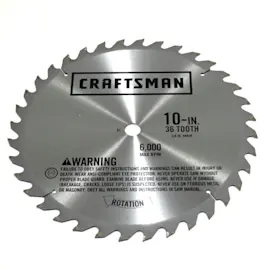
- Using a dull, dirty, or wrong-tooth-count blade for the job
- Skipping push sticks or push blocks on narrow rips
- Blade height: Set gullets just above the top surface of the wood (typically about 1/8 to 1/4 inch above).
- Fence alignment: Keep the fence parallel to the blade to reduce binding.
- Miter gauge use: Use it for crosscuts; use the fence for rip cuts.
- Support: Use outfeed support for long boards so the workpiece does not lift or twist.
| Mistake | What you notice | What to do next |
|---|---|---|
| Dull/incorrect blade | Burning, slow feed, tear-out | Clean or replace blade; match blade type to cut |
| Blade too high | More tear-out, more exposed blade | Lower blade to proper height |
| Poor alignment | Drift, binding, rough edge | Recheck blade-to-miter-slot and fence alignment |
| No riving knife/splitter | Kerf closes, kickback tendency | Install and use the correct anti-kickback setup |
Most “mistakes” are really control and alignment issues. Correct blade height, proper guides (fence or miter gauge), and anti-kickback protection reduce binding and help your Craftsman table saw cut straighter and safer.
For step-by-step technique and safety reminders, use our guide: how to use a table saw safely.
Last updated: February 2026
What are the parts of a table saw?
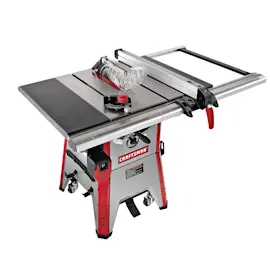
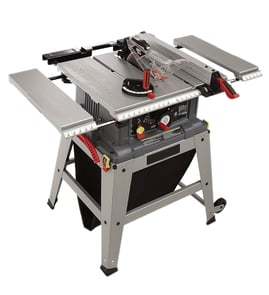
A Craftsman table saw like model 113298751 is built around a motor-driven blade system plus alignment and safety components that guide the workpiece and control cut depth and angle. Knowing the main parts helps you troubleshoot issues like bad cuts, slow blade speed, or height adjustment problems.
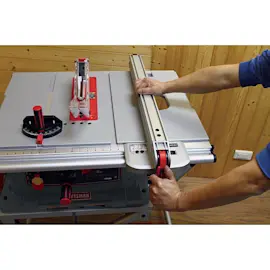
- Tabletop: Flat work surface that supports the wood during the cut.
- Blade: The cutting tool; tooth count and blade type affect cut quality.
- Arbor and arbor nut/flange: Shaft and hardware that mount and secure the blade.
- Motor: Drives the blade (direct-drive or belt-drive depending on design).
- Drive system (belt and pulleys, if equipped): Transfers power from motor to arbor.
- Blade height mechanism: Raises and lowers the blade for depth of cut.
- Bevel/tilt mechanism: Tilts the blade for bevel cuts (commonly 0° to 45°).
- Blade guard: Covers the blade to reduce accidental contact.
- Riving knife or splitter: Helps prevent kickback by keeping the kerf open.
- Anti-kickback pawls (if equipped): Grab the workpiece if it starts to move backward.
- Rip fence: Guides rip cuts parallel to the blade.
- Miter gauge: Guides crosscuts at set angles.
- On/off switch and overload protection (if equipped): Controls power and helps protect the motor.
| Symptom | Most likely parts involved | First check |
|---|---|---|
| Bad cuts or burning | Blade, fence, miter gauge, alignment | Blade sharpness and fence parallelism |
| Bad angle cuts | Bevel scale/stop, trunnion/tilt mechanism | Verify bevel stop and blade-to-slot alignment |
| Blade spins too slow | Motor, belt/pulleys (if used), power supply | Belt tension and binding in arbor |
| Can’t adjust blade height | Height screw/gears, trunnion, sawdust buildup | Clean and lubricate height mechanism |
Most “table saw problems” trace back to a small set of parts: the blade/arbor, fence and alignment points, and the height/bevel mechanisms. Identifying the right area first saves time and helps you choose the correct repair steps.
For step-by-step DIY help, use our guide: table saw common question.
Last updated: February 2026
What size motor is on a 10 inch craftsman table saw?
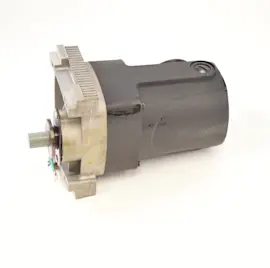
For the Craftsman table saw model 113298751, the exact motor size depends on the specific motor installed (original or replacement). Most 10-inch Craftsman table saws are built around a 120V motor in the 1 to 2 HP range, often described by amperage (commonly 13 to 15 amps) rather than horsepower.
Check the motor nameplate (usually on the motor housing). Use these fields to confirm what you have:
- Amps (A): common ratings are 13A to 15A on 120V saws
- Voltage (V): typically 120V (some can be wired 240V)
- Horsepower (HP): often listed as 1 HP, 1-1/2 HP, or 2 HP
- RPM: motor speed is commonly around 3,450 RPM (blade speed can differ due to pulleys)
- Frame/type: helps match a replacement motor and mounting pattern
| What you see on the label | What it usually indicates | Why it matters |
|---|---|---|
| 13A to 15A @ 120V | Typical jobsite or homeowner saw power | Helps size wiring and breakers |
| 1 to 2 HP | Typical continuous-duty range for 10-inch saws | Impacts cut speed and bog-down |
| ~3,450 RPM motor | Standard induction motor speed | Affects pulley selection and vibration |
Motor “size” is used for more than power. It affects belt and pulley setup, breaker trips/overload resets, and how well the saw maintains blade speed in thick hardwood. If your saw bogs down, the issue is often the belt, pulleys, arbor bearings, or blade condition, not just horsepower.
If you are chasing performance or cut quality issues, these guides help narrow it down:
- Table saw blade spins too slow
- Table saw overload trips
- Table saw bad cuts
- How to adjust a table saw blade
Last updated: February 2026