Installation guide
 Owner’s manual
 Error Codes





What are common problems with Jenn Air stoves?
Common problems we see with Jenn-Air cooking appliances include uneven or no heating, temperature that drifts from the set point, a door that does not seal well, and self-clean issues such as a door that will not lock or unlock. For your Jenn-Air JJW3830WS00 double wall oven, the owner's manual is the best place to confirm model-specific operating and care steps.
Common symptoms and what they usually point to
- Oven not heating or heats slowly: failed heating circuit, temperature sensing issue, or a safety thermostat opening
- Bakes unevenly: convection airflow problem (blower), rack position, or temperature sensor drift
- Self-clean will not start: door latch not engaging, control not sensing lock, or high temperature safety condition
- Self-clean finished but door stays locked: latch mechanism issue or control not seeing the unlock position
- Oven light not working: burned-out bulb or loose socket connection
Parts that commonly relate to these problems (JJW3830WS00)
If troubleshooting points to a specific component, these model-matched parts are commonly involved:
| Symptom | Part to check | Example part on this model page |
|---|---|---|
| Temperature inaccurate, overheating, underheating | Oven temperature sensor probe | Sensor probe WP74008369 |
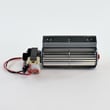
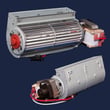
| Fan noise, poor airflow, uneven baking | Convection or cooling blower | Blower WPW10273667 or oven blower WPW10273666 |
| Door will not lock/unlock for self-clean | Door latch assembly | Door latch WPW10213755 |
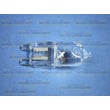
| Oven light out | Light bulb | Wall oven light bulb WPW10169757 |
Quick checks we recommend before replacing parts
- Confirm the oven is not in Sabbath, Demo, or Control Lock mode (if equipped).
- For temperature complaints, compare set temperature to an oven thermometer reading after preheat and a 15 to 20 minute stabilize time.
- For self-clean issues, let the oven cool fully; many models keep the latch locked until the cavity temperature drops.
- Check for obvious door gasket or alignment issues that prevent a tight seal.
- If you are testing electrical components, shut off power at the breaker first.
Why it matters
Heating, airflow, and door-latch feedback all work together in an electric wall oven. A small issue (like a drifting sensor probe or weak blower) can cause big symptoms such as long preheat times, uneven baking, or self-clean lock problems.
Last updated: February 2026
How long do Jenn Air wall ovens last?
A Jenn-Air wall oven typically lasts 15 years with normal household use and basic maintenance. For your Jenn-Air JJW3830WS00 double wall oven, following the care, cleaning, and operating guidance in the owner's manual helps you reach that expected lifespan.
Typical lifespan (what to expect)
Most built-in electric wall ovens fall into a similar range when they are installed correctly and not overheated repeatedly.
- Typical lifespan: 15 years
- Common “life extenders”: keeping vents clear, avoiding harsh cleaners on controls, fixing heating issues early
- Common “life shorteners”: frequent self-clean overheating, blocked airflow, running with a failing cooling blower
What usually wears out first
These parts and systems tend to drive “end-of-life” symptoms (slow preheat, uneven baking, error codes, overheating, or shutdowns):
- Heating components (bake/broil circuits)
- Electronic controls and touchpad-related components
- Temperature sensing (probe/sensor)
- Cooling/ventilation components (blower and airflow path)
- Door hardware (latch, hinges, handle) that affects sealing and heat retention
Quick maintenance checklist (high impact)
- Keep the oven vent area clear so heat can escape properly.
- Use self-clean sparingly; let the oven cool fully afterward.
- Replace a dim or failed oven light promptly to avoid working “blind” around hot surfaces.
- If you notice overheating or loud fan noise, address it early (cooling airflow protects controls).
- Use gentle, non-abrasive cleaning methods on stainless and painted surfaces.
Parts that can help you keep it running
If performance issues show up, these model-matched parts are commonly involved:
| Symptom | Commonly related part | Example from this model |
|---|---|---|
| Oven temperature seems off | Temperature sensor | Sensor probe WP74008369 |
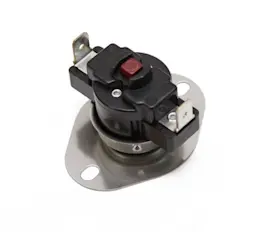
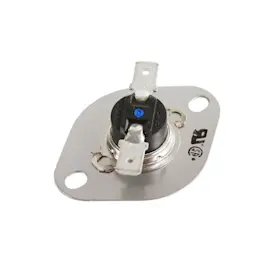
| Oven overheats or shuts down | High-limit thermostat | Thermostat (listed for this model) |
| Loud fan, poor cooling | Cooling blower | Oven blower WPW10273666 |
| Interior light out | Oven light bulb | Wall oven light bulb WPW10169757 |
Why it matters
A wall oven is built into cabinetry, so preventing overheating and catching small failures early protects the electronic controls, wiring, and surrounding installation. That is the difference between a straightforward repair and a much bigger project.
Last updated: February 2026
What does F9 mean on a Jenn air oven?
On the Jenn-Air JJW3830WS00 double wall oven, an F9 error points to a door lock safety circuit problem (the control is not seeing the lock circuit operate correctly). This often shows up around self-clean; checking the door latch circuit and related wiring is the right first step.
What to check first (safe, quick checks)
- Cancel the cycle and let the oven cool completely if the code appeared during self-clean.
- Power reset: turn the breaker off for 1 minute, then back on.
- Confirm the door is fully closed and nothing is obstructing the latch area.
- If the code returns, inspect for loose or damaged wiring at the latch and control connections.
- If the latch motor runs but the lock never “confirms,” the latch assembly or its switch circuit is typically involved.
Parts commonly involved
F9 is usually tied to the lock circuit, but temperature feedback and airflow issues can contribute to odd behavior during high-heat cycles.
| Symptom you notice | Most likely area | Example part on this model page |
|---|---|---|
| F9 during/after self-clean, door will not lock or unlock | Door latch circuit (latch, switches, wiring) | Door latch WPW10213755 |
| Erratic temps or repeated faults during high heat | Oven temperature sensing circuit | Sensor probe WP74008369 |
| Overheating around control area, cooling fan issues | Cooling/venting blower circuit | Oven blower WPW10273666 |
Why it matters
During self-clean, the oven relies on the door lock safety circuit to confirm the door is locked before allowing sustained high temperatures. If the control cannot verify that circuit, it will stop the cycle and post an error to prevent unsafe operation.
Use the manual for model-specific steps
For your JJW3830WS00, use the troubleshooting and operation guidance in the JJW3830WS00 owner's manual, especially for self-clean behavior, door lock operation, and recommended reset steps.
Last updated: February 2026
What size is a double wall oven?
For the Jenn-Air JJW3830WS00 30 inch electric built-in double oven, the overall dimensions are 29 3/4 inches wide, 52 1/4 inches high, and 24 3/8 inches deep. For cabinet fit, plan on a 30-inch minimum cabinet width, 24-inch minimum cutout depth, and a cutout height that fits 49 3/4 to 51 15/16 inches (see the installation guide).
JJW3830WS00 double wall oven dimensions
Use these measurements to confirm the oven will physically fit and fully recess into the cabinet.
- Overall width: 29 3/4 in (75.6 cm)
- Overall height: 52 1/4 in (132.8 cm)
- Overall depth: 24 3/8 in (61.9 cm)
- Max recessed width: 28 in (71.1 cm)
- Max recessed height: 49 1/2 in (125.8 cm)
Cabinet cutout requirements (double oven)
These are the planning dimensions for the cabinet opening.
- Minimum cabinet width: 30 in (76.2 cm)
- Minimum cutout depth: 24 in (61.0 cm)
- Recommended cutout height: 49 3/4 in (126.4 cm)
- Cutout height range that fits: 49 3/4 in to 51 15/16 in (126.4 cm to 131.9 cm)
| What you are checking | What to use | Why |
|---|---|---|
| Overall size | 29 3/4 W x 52 1/4 H x 24 3/8 D | Confirms the oven clears surrounding cabinets and trim |
| Cutout opening | Height range 49 3/4 to 51 15/16; depth 24 min | Ensures the oven slides in without binding |
| Cabinet width | 30 in minimum | Prevents side-to-side interference |
Why it matters
Double wall ovens often appear to fit based on width alone, but the cutout height range and minimum cutout depth determine whether the oven can be pushed fully into place and secured correctly.
Last updated: February 2026