Owner’s manual
 Error Codes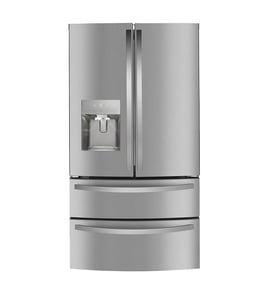



How many cubic feet is my Kenmore Elite refrigerator?
For Kenmore Elite refrigerator model 25344723109, the capacity is typically listed as about 30.6 cubic feet. To confirm the exact capacity for your specific unit and configuration, check the model identification and specifications section in the owner's manual.
How to confirm the capacity on your exact unit
Capacity can vary slightly by configuration, so we recommend verifying using the model and serial information and the spec listing.
- Locate the model/serial plate on the left wall inside the refrigerator.
- Match the model number exactly: 25344723109.
- Review the specifications section in the manual for the stated capacity.
- If you are comparing listings online, confirm they reference the same model number.
- If your refrigerator has been modified (bins, shelves, door configuration), that does not change true cubic feet, but it can change usable space.
Quick reference: capacity terms
| Term | What it means | Why it matters |
|---|---|---|
| Cubic feet (cu. ft.) | Total interior volume | Helps compare overall storage size |
| Usable space | Space you can practically load | Affected by shelves, bins, ice maker |
| Standard-depth vs counter-depth | Cabinet depth style | Impacts kitchen fit and capacity |
Why it matters
Knowing cubic feet helps us match the right storage accessories and troubleshoot cooling complaints. For example, an overpacked refrigerator can restrict airflow and cause warm spots, frost, or uneven temperatures.
Last updated: January 2026
Is there a way to reset a Kenmore Elite refrigerator?
Yes. For Kenmore Elite refrigerator model 25344723109, the most reliable reset is a power reset: unplug the refrigerator, wait about 5 minutes, then plug it back in and allow up to 4 hours to fully cool. Use the 25344723109 owner's manual for any model-specific control steps.
How to do a safe reset (power reset)
- Turn the temperature control to OFF if your unit has an OFF position.
- Unplug the refrigerator by gripping the plug (do not pull the cord).
- Wait 5 minutes to let the control components fully discharge.
- Plug the unit back in firmly.
- Set the temperature control back to your normal setting.
- Allow a full cool-down period (up to 4 hours) before judging results.
What a reset can and cannot fix
A reset is best for clearing minor control glitches after a power interruption. If the refrigerator still will not cool, the issue is usually power, airflow, a door seal problem, or a failed cooling/defrost component.
| Symptom after reset | Most common cause | What to check first |
|---|---|---|
| No lights, no sound | Power supply issue | Outlet, cord fit, house breaker/fuse |
| Runs constantly, warm temps | Door not sealing or frequent openings | Door closure, gasket condition |
| Frost buildup, weak cooling | Defrost system issue | Heavy frost on evaporator cover, airflow |
| Warm fridge, freezer OK (or vice versa) | Airflow/fan issue | Listen for evaporator fan, clear vents |
Quick checks we recommend before replacing parts
- Confirm the plug is fully seated and the circuit is not tripped.
- Keep door openings to a minimum during recovery.
- Make sure the door closes squarely and the gasket is clean.
- Verify shelves and food packages are not blocking interior vents.
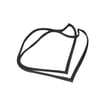
- If the door seal is torn, hardened, or leaking, inspect the refrigerator door gasket (black) 5304507206.
Why it matters
Resetting restores normal control operation, but it also helps you confirm whether the problem is a temporary control glitch or an ongoing issue like warm-air leaks at the door gasket or a defrost-related frost restriction.
Last updated: January 2026
Why is my Kenmore Elite refrigerator not cooling enough?
If your Kenmore Elite refrigerator model 25344723109 is not cooling enough, the most common causes are restricted airflow (dirty condenser area, blocked toe grille, overcrowded shelves), a door that is not sealing, or a defrost or fan problem that prevents cold air from circulating. Use the owner's manual to confirm the correct temperature settings and operating conditions.
Quick checks we recommend first
- Confirm the room temperature stays between 40°F and 110°F for normal operation.
- Make sure the toe grille is not blocked; airflow there is required for proper cooling.
- Set the fresh food section to 37°F (the manual lists 34°F to 40°F, with 37°F as optimum).
- Avoid overcrowding shelves; packed food blocks airflow and causes uneven cooling.
- Limit door openings and make sure doors close fully every time.
Door seal and leveling (cooling depends on it)
A warm refrigerator is often a warm-air leak. If the door is misaligned or the gasket is dirty or damaged, the unit runs longer and still struggles to hold temperature.
- Clean the gasket and the cabinet sealing surface with mild soap and warm water; dry fully.
- Check for gaps by closing the door on a sheet of paper; resistance should feel consistent.
- Level the refrigerator so the door closes easily when left halfway open.
| What you notice | Likely issue | What to do |
|---|---|---|
| Frost or moisture near the door | Door not sealing | Clean gasket, check alignment, level unit |
| Runs a lot, still warm | Warm air entering | Reduce door openings, check gasket fit |
If the gasket is torn, hardened, or won’t seal, replacement is often the fix; for this model, see the refrigerator door gasket (black) 5304507206.
When it points to a cooling system or defrost problem
If airflow and door sealing look good but temperatures stay high, focus on the freezer cooling components.
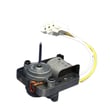
- If you do not hear the evaporator fan running when the compressor is on, the fan motor can be the cause; see the freezer evaporator fan motor 297309000.
- Heavy frost on the freezer back wall often points to a defrost issue (heater, thermostat, or timer).
- After a power outage or long door-open event, allow about 4 hours for the refrigerator to cool down completely.
Why it matters
Low cooling can quickly lead to food spoilage and can also force the compressor to run longer than normal. Fixing airflow restrictions and door sealing first prevents unnecessary part replacement.
Last updated: January 2026
What does er ff mean on kenmore elite refrigerator?
On Kenmore Elite refrigerator model 25344723109, an ER FF code points to a problem with the freezer evaporator fan (the fan that moves cold air from the freezer into the fresh food section). When that fan is not running correctly, the refrigerator side often warms up.
What you should check first
- Power reset: Unplug the refrigerator for 5 minutes, then plug it back in and listen for the freezer fan.
- Airflow blockage: Make sure packages are not pressed against the rear freezer panel or blocking vents.
- Frost buildup: Heavy frost on the back freezer wall often indicates a defrost problem that can stop airflow.
- Door sealing: A leaking door seal can cause excess frost and airflow issues.
- Fan noise clues: Grinding, squealing, or intermittent spinning usually indicates a failing fan motor.
Likely causes and common fixes
| What’s happening | What it usually means | Typical fix |
|---|---|---|
| Freezer fan is silent | Fan motor not running or not getting power | Test and replace the fan motor if needed |
| Fan runs but fridge is warm | Airflow blocked or evaporator iced over | Clear blockage; address defrost system |
| Thick frost on freezer back wall | Defrost system issue | Check heater, thermostat, and defrost timer |
| Error returns after reset | Ongoing fan/defrost fault | Diagnose components and wiring |
If you suspect the fan itself, the correct replacement for this model is the freezer evaporator fan motor 297309000. If you see heavy frost, the defrost system parts commonly involved include the defrost timer 5304518034, defrost heater, and defrost bi-metal thermostat.
Why it matters
The evaporator fan is what distributes freezer-made cold air to the refrigerator compartment. When it fails (or airflow is blocked by ice), temperatures rise, food spoils faster, and the unit may run longer than normal.
For component locations and access steps specific to model 25344723109, use the owner's manual.
Last updated: January 2026