Error Codes



How do you put the bottom grill on a GE refrigerator?
On a GE GWE23GYNFFS bottom-mount refrigerator, we reinstall the bottom grille (base grille/toe grille) by aligning its tabs with the slots along the lower front frame, then pressing or sliding it into place until it snaps in evenly. Reinstall any retaining screws if your grille uses them.
Before you start
- Unplug the refrigerator or switch off power at the breaker.
- Pull the refrigerator forward a few inches for easier access.
- If your model has screws, keep a Phillips screwdriver ready.
- Check the grille for broken tabs or warped corners.
How to reinstall the bottom grille
- Position the grille: Hold it level across the bottom front of the cabinet.
- Align the tabs: Match the grille’s clips/tabs to the matching slots along the base.
- Seat the grille: Press along the length (left to right) so it snaps in evenly.
- Secure it (if applicable): Reinstall any screws that hold the grille to the frame.
- Verify fit: Make sure the grille is flush and not rubbing the doors or freezer drawer.
Quick checks if it will not stay on
- Tabs are cracked or missing: The grille will not lock in; replace the damaged piece.
- Slots are blocked: Clear dust or debris from the mounting slots.
- Grille is upside down: Flip it and try again; many grilles only fit one way.
- Cabinet is out of level: Leveling issues can twist the opening and make the grille hard to seat.
Common symptoms and what they point to
| What you notice | Most likely cause | What we do next |
|---|---|---|
| Grille pops off on one side | Broken tab or not fully seated | Reseat; inspect tabs |
| Grille bows in the middle | Warped grille | Replace grille if it will not sit flat |
| Rattling at the bottom front | Loose screws or clips | Tighten screws; reseat clips |
Why it matters
The bottom grille helps protect components at the base of the refrigerator and supports proper airflow. If it is loose or missing, you can get extra noise, vibration, and dust buildup underneath.
For a related GE French door style center mullion piece, see our guide: how to remove a GE french door refrigerator flipper mullion.
Last updated: February 2026
What is the most common problem with a GE refrigerator?
The most common problem we see with GE refrigerators like model GWE23GYNFFS is a cooling complaint (fresh food too warm, freezer not holding temperature, or temperatures swinging). In many cases, the root cause is restricted airflow or a fan issue, not the sealed system.
Most common causes of poor cooling
- Dirty condenser coils causing high operating temps and long run times
- Evaporator fan not moving cold air through the compartments
- Blocked air vents from overpacked shelves or bins
- Door not sealing, letting warm air and moisture in
- Sensor or control issue misreading temperature
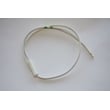
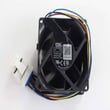
If you suspect a fan or sensor problem, common related parts for this model include the refrigerator fan motor WR60X35205 and the refrigerator temperature sensor WR55X10025.
Quick checks we recommend first
- Confirm settings: Set the refrigerator to about 37°F and the freezer to about 0°F.
- Listen for airflow: With the doors closed, you should typically hear a fan running at times.
- Check vents: Make sure packages are not blocking return vents or supply vents.
- Inspect the door seal: Look for gaps, rips, or areas that do not grip the cabinet.
- Clean condenser area: Vacuum dust from the grille and coil area (unplug the refrigerator first).
Symptom-to-likely-cause guide
| Symptom | Most likely cause | What to do next |
|---|---|---|
| Fresh food warm, freezer OK | Airflow problem in fresh food section | Clear vents, check fan operation |
| Freezer warm, fresh food warm | Condenser airflow or compressor not running right | Clean coils, verify condenser fan |
| Temps swing up and down | Sensor or control logic issue | Check sensor, look for error codes |
| Frost buildup, weak airflow | Defrost problem or fan issue | Defrost and test fan |
Why it matters
Cooling problems make the compressor run longer, increase frost and moisture, and can shorten the life of components like fans, sensors, and electronic controls. Catching airflow and sealing issues early prevents food spoilage and repeat breakdowns.
For model-specific troubleshooting steps and fault displays, use our GE refrigerator error codes resource.
Last updated: February 2026
How do I find the model number on my GWE23GYNFFS?
Your GE refrigerator’s model number is printed on a rating label (data plate) attached to the cabinet. On most GE bottom-mount and French-door refrigerators like model GWE23GYNFFS, you will find it inside the fresh food compartment along the side wall or near the ceiling.
Where to look on a GE GWE23GYNFFS
Check these common label locations first:
- Inside the refrigerator section on the left side wall
- Inside the refrigerator section on the right side wall
- On the ceiling of the fresh food compartment (near the lights)
- Behind the crisper drawers on the cabinet wall
- Along the door frame area (cabinet face, not the door itself)
What the label looks like (and what to copy)
The rating label typically includes several identifiers. We recommend copying these exactly:
- Model number (example: GWE23GYNFFS)
- Serial number
- Electrical ratings (volts/amps)
- Manufacturing date code (if shown)
Quick guide
| Item on label | Why it matters |
|---|---|
| Model number | Ensures diagrams and parts match your exact refrigerator |
| Serial number | Helps confirm production run and compatible revisions |
| Brand (GE) | Helps narrow parts families and service info |
Why it matters
GE refrigerators often have multiple versions that look similar but use different parts (controls, sensors, door gaskets). Using the exact model number helps us match the correct replacement part the first time, such as the refrigerator main control board WR55X46805 or the refrigerator temperature sensor WR55X10025.
Last updated: March 2026