Installation guide
 Owner’s manual
 Error Codes



Are JennAir ovens gas or electric?
Jenn-Air ovens can be gas, electric, or dual-fuel depending on the model. For model JIS1450DS1, the documentation identifies it as an electric induction range, which means the oven is electric and the cooktop uses induction (electric) heating; see the JIS1450DS1 user guide.
How to tell what type you have (fast checks)
- Check the model/serial/rating plate on the right vertical surface of the oven door frame.
- Look for a gas line connection behind the range; gas models require a gas supply hookup.
- Look for a 240-volt electrical connection; electric ranges typically use a 240V circuit.
- Induction cooktops require magnetic cookware (a magnet sticks to the pan bottom).
- Confirm the fuel type and electrical requirements in the JIS1450DS1 installation guide.
What “electric induction range” means
Induction is still electric, but it heats the pan using a magnetic field rather than heating a coil or radiant element.
| Range type | Cooktop heat source | Oven heat source | Typical hookups |
|---|---|---|---|
| Gas range | Gas burners | Gas (often) | Gas line + 120V outlet |
| Electric range | Electric radiant/coil | Electric | 240V circuit |
| Electric induction range (like JIS1450DS1) | Electric induction | Electric | 240V circuit |
| Dual-fuel range | Gas burners | Electric | Gas line + 240V circuit |
Why it matters
Fuel type affects installation (gas line vs. 240V circuit), cookware compatibility (induction), and which parts you buy for repairs (for example, electronic controls and wiring differ between gas and electric designs).
Last updated: January 2026
Is JennAir considered high end?
Yes. Jenn-Air is widely considered a high-end kitchen appliance brand; the JIS1450DS1 electric induction range is positioned as a premium product with advanced cooking features and a design focus that typically comes with higher price points and more specialized parts support (see the JIS1450DS1 user guide).
What “high end” usually means for a range like JIS1450DS1
High-end ranges typically stand out in a few practical ways that affect ownership, cooking results, and repairs:
- More specialized cooking technology (this model is an electric induction range)
- More precise electronic controls and display components
- Premium fit and finish (stainless options, accessory kits)
- Higher-cost replacement components compared to basic ranges
- More emphasis on correct installation and electrical supply setup
What to expect as an owner (cost, service, and parts)
Premium ranges often have a different “ownership profile” than entry-level models.
| Area | Typical for high-end ranges | What it means for you |
|---|---|---|
| Parts pricing | Higher | Budget more for control and display parts |
| Controls | More electronic | Troubleshooting often starts with power reset and control checks |
| Cooking performance | More consistent | Better temperature control and responsiveness |
| Installation sensitivity | Higher | Correct electrical connection and leveling matter |
Practical tips if you are comparing brands
When customers ask if a brand is high end, we recommend focusing on measurable factors:
- Cooking technology (induction vs. radiant electric)
- Control type (touch keypad vs. knobs)
- Availability of model-specific documentation and parts
- Long-term maintenance items (cleaning tools, bulbs, racks)
- Installation requirements (electrical supply, anti-tip setup)
Why it matters
If you treat JIS1450DS1 as a high-end range, you will typically get better cooking precision and design, but you should also expect higher parts costs and more reliance on electronic components and correct installation practices (review the JIS1450DS1 installation guide).
Last updated: January 2026
What are common problems with JennAir stoves?
Common problems we see on the Jenn-Air JIS1450DS1 range include the oven not heating, uneven baking, a cooktop that will not operate, and control or display issues. Many symptoms trace back to power supply problems, heating components, or electronic controls; start with the checks in the JIS1450DS1 owner's manual.
Most common symptoms (and what they usually point to)
- Nothing will operate: unplugged cord, tripped breaker, blown fuse, or a wiring connection issue
- Cooktop will not operate: control settings, cookware compatibility (induction), or a control fault
- Oven not heating or weak heat: failed heating component such as the bake element W10779716
- Uneven baking: rack position, cookware, or temperature calibration/settings
- Display or keypad problems: stuck key, moisture/cleaner intrusion, or a failing keypad/control
Quick checks we recommend before replacing parts
- Confirm the range has power (check breaker/fuse first).
- Make sure controls are set correctly (mode, temperature, and start).
- Let the unit cool, then retry (some functions can pause if temperatures are high).
- If the cooktop is induction, verify the pan is induction-ready and centered.
- Review the troubleshooting table in the JIS1450DS1 owner's manual for symptom-specific steps.
Common symptom-to-part examples
| Symptom | Common area to inspect | Example part for this model |
|---|---|---|
| Oven not heating | Heating circuit | Bake element |
| Dead/no power | Power connection | Terminal block |
| Buttons not responding | User interface | Keypad |
| Dim/failed oven light | Lamp | Oven bulb |
Why it matters
Catching the root cause early helps prevent repeat failures. For example, a loose power connection can cause intermittent operation, while a weak bake element can lead to long cook times and uneven results.
Last updated: January 2026
How long should a JennAir oven last?
A Jenn-Air oven in a range like model JIS1450DS1 typically lasts 15 years with normal household use and basic care. Keeping the oven vent clear, cleaning spills promptly, and avoiding abrasive cleaners helps the heating system and controls stay reliable longer.
Typical lifespan (what to expect)
Most premium electric ranges and wall ovens fall into a similar service-life window when they are installed correctly and used normally.
- Typical lifespan: about 15 years
- Common “life extenders”: gentle cleaning, good airflow at the oven vent, stable power supply
- Common “life shorteners”: repeated overheating, blocked venting, harsh cleaners on glass/finishes, power surges
| What you’re judging | What’s normal over time | What suggests service is needed |
|---|---|---|
| Preheat performance | Around 12 to 15 minutes to reach 350°F | Preheat takes much longer or never reaches temp |
| Temperature stability | Elements cycle on/off during baking | Large swings, burning, or undercooking |
| Controls and display | Buttons respond consistently | Dead keys, random beeping, blank display |
Maintenance habits that help it reach 15 years
We recommend these practical habits for the JIS1450DS1 induction range:
- Keep the oven vent unblocked and avoid placing meltable items near it.
- Clean the cooktop with nonabrasive methods; avoid steel wool, abrasive powders, ammonia, rust remover, and chlorine bleach.
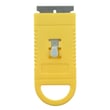
- Remove cooked-on residue with a scraper designed for ceramic glass (example: cooktop scraper WA906B).
- Wipe up acidic spills (tomato, vinegar) after the range cools to protect finishes.
- Use the correct cleaning cycle and products for your model (see JIS1450DS1 user guide).
Why it matters
A range can “work” past its typical lifespan, but performance issues (slow preheat, uneven baking, control problems) usually show up first. Addressing those early often prevents secondary damage to wiring, sensors, and electronic controls.
Last updated: January 2026