Owner’s manual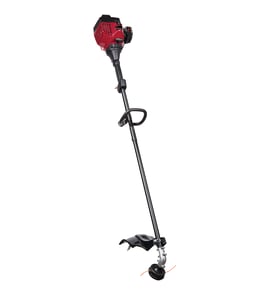



What is the lifespan of a line trimmer?
A gas line trimmer like the Craftsman 316791201 typically lasts 8 to 12 years for most homeowners when it’s maintained and used seasonally. In heavy, daily use, lifespan is better measured in run-time; many commercial trimmers reach 900 to 1,200+ hours with consistent upkeep (fuel system care, air filtration, and correct storage). See the maintenance schedule in the owner's manual.
Typical lifespan ranges
- Homeowner/seasonal use: 8 to 12 years
- Frequent use (large properties): 5 to 8 years
- Commercial use: 900 to 1,200+ operating hours
| Usage pattern | What “end of life” usually looks like | Most common fixable causes |
|---|---|---|
| Occasional trimming | Hard starting after storage | Old fuel, clogged carburetor passages, cracked fuel lines |
| Weekly use | Power loss, surging | Dirty air filter, muffler restriction, carburetor tuning |
| Heavy use | Vibration, drive issues | Worn shaft/coupler, gearbox wear |
What shortens (or extends) trimmer life
We see trimmers last longer when you stay ahead of the basics:
- Use fresh, properly mixed fuel (and don’t store fuel long-term in the tank)
- Clean/replace the air filter on schedule
- Keep the cutting head clear of wrapped grass and string
- Inspect fuel system parts for leaks and soft/cracked rubber
- Store the trimmer dry and clean at the end of the season
Parts that commonly affect lifespan
If the trimmer starts fine but won’t stay running, leaks fuel, or loses power, these model-compatible parts are often involved:
- Engine fuel tank 753-06250 (cracks or leaking fittings can end a season fast)
- Engine carburetor mount gasket 753-06253 (air leaks can cause lean running and overheating)
- Muffler gasket 753-06419 (exhaust leaks can reduce performance and increase noise)
Why it matters
A trimmer that’s running lean (air leak, restricted fuel flow, or exhaust leak) can overheat and wear out faster. Routine fuel-system and airflow maintenance usually costs less than replacing major assemblies later.
Last updated: February 2026
Which is better, .080 or .095 trimmer line?
For a Craftsman gas trimmer like model 316791201, .095-inch line is better for heavy weeds and durability, while .080-inch line is better for lighter trimming and easier line feed. The best choice is the thickest line your cutting head is rated to handle; confirm the supported line diameter in the 316791201 owner's manual.
Quick comparison: .080 vs .095
| Feature | .080 in line | .095 in line |
|---|---|---|
| Best for | Light grass, edging, detail work | Thick grass, weeds, tougher growth |
| Durability | Moderate | Higher |
| Cutting aggressiveness | Lower | Higher |
| Load on engine | Lower | Higher |
| Typical line feed | Usually easier | Can be harder if head is not designed for it |
How we recommend choosing for the 316791201
- Use .080 if you mainly edge sidewalks, trim around fences, and want smoother feeding.
- Use .095 if you regularly hit thick weeds and want longer runtime between respools.
- Match the line to your cutting head rating; oversized line can cause poor feed, bogging, and extra wear.
- If the trimmer bogs down with .095, step back to .080 (or shorten the cutting length slightly).
- If you are replacing worn drive components that affect cutting performance, inspect the head and shaft system; the line trimmer cutting head 753-05045 is a common wear item on this model.
Why it matters
Line diameter changes how hard the engine and cutting head have to work. Too thin can break constantly in heavy growth; too thick can reduce RPM, increase vibration, and make bump-feed or auto-feed less reliable.
Tips for best results (either size)
- Keep the line length correct; overly long line makes the engine work harder.
- Avoid “welding” the spool by not running the head dry against hard surfaces.
- Replace line before it gets brittle (especially after long storage).
- Clean debris from the head so the line can feed smoothly.
Last updated: February 2026
Can I use .095 trimmer line?
Yes, you can use .095-inch trimmer line on many gas trimmers, but it must match what your Craftsman 316791201 cutting head is designed to feed. If the line is too thick for the head, it will jam, feed poorly, and overload the flexible drive system. Check the line size range listed in the owner's manual.
How to tell if .095 line will work on your 316791201
Use these quick checks before you spool up:
- Look for a line diameter range printed on the cutting head (often molded into the housing).
- If your head uses pre-cut segments, confirm the specified diameter for those segments.
- If the head is bump-feed, confirm the spool and eyelets are sized for .095.
- If you already have feeding issues with thinner line, thicker line usually makes it worse.
- If the engine bogs down or the head stops easily, step down to a thinner line.
What to expect by line diameter
Thicker line can cut heavier weeds, but it also increases load on the driveline and head.
| Line diameter | Best for | Common downside |
|---|---|---|
| .065 to .080 | Light grass, edging | Wears faster in thick weeds |
| .085 | Mixed trimming | Can break more in rocks/fences |
| .095 | Heavy grass, weeds | More drag; can jam in smaller heads |
If the head jams or won’t feed after switching to .095
Try these fixes (in order):
- Rewind the spool neatly and do not cross-wrap the line.
- Reduce how tightly you pack the spool; overfilling causes binding.
- Clean debris from the eyelets and head housing.
- Inspect the driveline for binding; a worn shaft can make feeding feel worse.
- If vibration or intermittent drive shows up, inspect the kmart line trimmer flexible drive shaft 753-05267.
Why it matters
Using the correct trimmer line diameter helps your Craftsman 316791201 maintain RPM, feed line smoothly, and avoid premature wear on the cutting head, flexible drive shaft, and gearbox.
Last updated: February 2026
Who makes the best .095 trimmer line?
For a Craftsman gas trimmer like model 316791201, the “best” .095 trimmer line is the one that matches your cutting conditions: premium twisted or serrated .095 line for heavy weeds, and a quality round .095 line for everyday trimming with fewer feed issues. Check the 316791201 owner's manual for the line diameter and head compatibility your trimmer is designed to use.
How we choose the best .095 line for your job
Different .095 line shapes behave differently in a gas line trimmer:
- Twisted: quieter, cuts cleanly, good all-around performance
- Serrated (or star): aggressive cutting for thick grass and weeds, can wear faster
- Round: most durable and least likely to jam, best for routine edging and lighter growth
- Square: strong cutting bite, can be noisier and may break more on hard surfaces
Quick comparison: .095 line types
| Line shape | Best for | Tradeoff |
|---|---|---|
| Twisted | Mixed trimming and moderate weeds | Can cost more |
| Serrated/star | Heavy weeds and thick grass | Faster wear, more vibration |
| Round | General trimming, fewer tangles | Less aggressive cutting |
| Square | Fast cutting in dense growth | Noisier, can snap on rocks/fences |
What matters most (so you do not waste line)
Using the wrong line can cause constant bump-feed problems, poor cutting, or extra strain on the clutch and drive system. Before buying a spool in bulk, we recommend:
- Confirm .095 is an approved diameter for your cutting head in the 316791201 owner's manual
- Match line shape to conditions (round for routine, twisted/serrated for heavy growth)
- Avoid oversizing line diameter; it can reduce RPM and increase stalling
- Replace worn cutting components if feeding is inconsistent (a damaged head can mimic “bad line”)
Related parts that affect cutting and feeding
If your trimmer cuts poorly even with good line, a worn head or drive component is often the real cause. These model-compatible parts are commonly involved:
- Line trimmer cutting head 753-05045 (feeds and dispenses the line)
- Kmart line trimmer flexible drive shaft 753-05267 (transfers power to the head)
- Troybilt line trimmer gearbox 791-182193 (drives the head on some configurations)
Last updated: February 2026