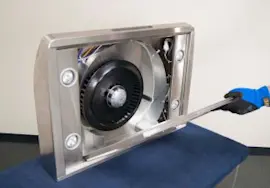
Owner’s manual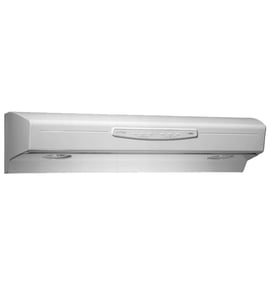


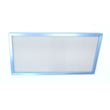

How to remove Broan elite range hood filter?
To remove the filter on your Broan P195 range hood, open the grille by rotating the two knobs outward, remove the stop, then slide the grease filter to the right and lift it off the guides. Follow the steps in the P195 owner's manual for the exact grille and stop locations.
- Turn the hood off; let the lights and metal surfaces cool.
- Open the grille: rotate both knobs toward the outside.
- Remove the stop (the small retainer that prevents the filter from sliding out).
- Slide the grease filter toward the right to clear the guides.
- Lower the filter and pull it out.
- Reinstall by reversing the steps: set it on the guides, slide left into place, reinstall the stop, then close the grille.
Grease filters on this style of hood are designed to be cleaned frequently.
- Wash in warm water with dish detergent or a degreasing cleaner.
- Rinse well and dry completely before reinstalling.
- Dishwasher cleaning is typically OK for metal grease filters; place it so it cannot bend.
- Avoid harsh abrasives that can damage the filter frame.
| Filter type | What it does | Maintenance interval |
|---|---|---|
| Grease filter | Captures grease from cooking | Clean frequently (more often with heavy frying) |
| Ductfree filter (if equipped) | Helps reduce odors in recirculating setups | Replace about every 6 months |
A clean grease filter helps airflow, reduces smoke and odor buildup, and keeps the blower from working harder than it should. If airflow stays weak after cleaning, check for a clogged filter or consider replacing the range hood grease filter SB08087232.
Last updated: February 2026
Are Broan range hoods any good?
Yes. Broan range hoods, including model P195, are a solid, reliable choice for everyday cooking ventilation; they are built around proven basics like a blower, grease filtration, and straightforward controls, with features such as Heat Sentry that can automatically boost the fan when cooking heat rises.
A good range hood clears smoke, grease, and odors consistently, fits your cabinet or wall setup, and stays dependable over years of use.
Key things we look for:
- Ventilation performance: steady airflow through clean filters and clear ductwork
- Noise level: higher fan speeds are always louder on any brand
- Serviceability: common wear parts (filters, switches, control board, blower) are replaceable
- Safety features: automatic high-speed response to excessive heat (Heat Sentry)
From the P195 documentation, we can point to a few practical design details:
- Heat Sentry can turn the blower on or raise it to high speed if it senses excessive heat
- Standard wiring connections (white to white, black to black, green to ground) when installed correctly
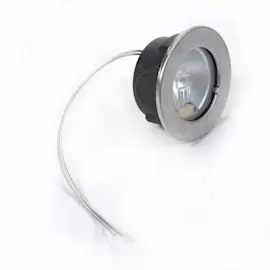
- Uses two halogen bulbs (MR16 shielded, GU10, 120V, max 50W)
Reference: P195 owner's manual
Most negative feedback on range hoods comes down to installation, maintenance, or a worn component.
| Symptom | Most common cause | Typical fix |
|---|---|---|
| Fan is loud | Grease buildup, loose mounting, duct restriction | Clean filter, check mounting screws, inspect duct |
| Weak airflow | Clogged filter, blocked duct, failing blower | Replace filter, clear duct, test blower |
| Fan turns on by itself | Heat Sentry reacting to heat | Reduce heat, improve ventilation; shut off at breaker only if necessary |
If your P195 fan is acting up, use: range hood fan doesn't work
A dependable hood protects cabinets and walls from grease, improves indoor air quality, and reduces lingering odors. Keeping the grease filter clean and the duct path clear does more for performance than any “premium” feature.
Last updated: February 2026
What are the parts of a range hood called?
A range hood is typically made up of the hood body (canopy), a blower and duct connection for venting, grease filters, lights, and the controls that run the fan and lighting. On the Broan P195, you will also see heat-sensing safety control features described in the P195 owner’s manual.
- Hood canopy or cover: the visible body that captures smoke and steam
- Blower or fan assembly: moves air through the hood and into the ductwork
- Duct connector or damper: connects the hood to the duct and helps prevent backdrafts
- Grease filter: traps grease before it reaches the blower and duct
- Lights and lamp hardware: illuminate the cooktop area
- Controls (switches or electronic board): turn fan speeds and lights on and off
- Heat-sensing control (thermostat): can automatically run the blower if it detects high heat
| Part name | What customers call it | What it affects |
|---|---|---|
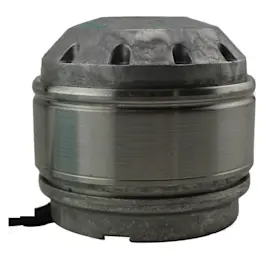
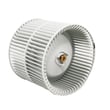
| Range hood blower assembly | fan motor, blower | airflow, noise, fan not running |
| Range hood grease filter | grease screen | grease capture, airflow restriction |
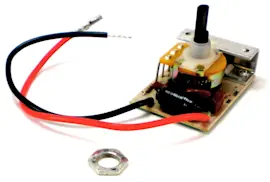
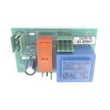
| Range hood electronic control board | control module | fan and light operation |
| Switch | fan switch, light switch | fan speeds or light on/off |
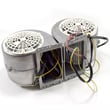
If you are matching parts by name, these model-specific items are common starting points: range hood blower assembly SB06002008, range hood grease filter SB08087232, and range hood electronic control board SB08086668.
Many range hood parts sound similar (switch vs. control board, blower vs. duct connector). Using the correct part name and the Broan model number P195 helps ensure the replacement fits, mounts correctly, and connects to the wiring and ductwork as intended.
Last updated: February 2026
Why is my Broan range hood not working?
If your Broan P195 range hood isn’t working, the most common causes are a power supply problem, a heat-protection shutdown (thermal overload), or a failed control component such as a switch or electronic control board. Start with power and reset checks, then inspect the blower and controls.
- Confirm the hood has power (breaker on, wall switch on if your hood is switched).
- If the blower stopped after heavy cooking, let the motor cool; the P195 motor has a thermal overload that shuts it off when overheated and restarts after cooling.
- If the blower seems to run “by itself,” the Heat Sentry feature can automatically turn the blower on high when it senses excessive heat.
- Check the grease filter for heavy buildup; restricted airflow can contribute to overheating and poor performance.
- Turn off power before opening the hood for any inspection.
A jammed blower wheel, heavy grease, or debris can keep the fan from spinning or make it hum.
Helpful parts to consider (model P195):
If the hood has power but won’t respond to the buttons, a failed switch or control board is a common next suspect.
- Switch SB03292301
- Range hood electronic control board SB08086668
- Ht sentry SB02300787 (can force the blower on high when it detects high heat)
| What you notice | Most likely cause | What we recommend |
|---|---|---|
| No lights, no fan | No power, wiring issue, control failure | Verify breaker and supply; then check controls |
| Fan hums but won’t spin | Blower obstruction or failing motor | Inspect blower wheel; replace blower assembly if needed |
| Fan turns on by itself | Heat Sentry reacting to heat | Reduce heat source; verify ventilation and filter condition |
| Fan shuts off then restarts | Thermal overload from overheating | Clean filter, improve airflow, check for duct restriction |
A range hood that can’t move air effectively can overheat, trigger automatic high-speed operation, and reduce smoke and odor capture. Keeping the filter clean and the blower unobstructed helps the P195 run quieter and more reliably.
For model-specific operating details and safety steps, use the P195 owner’s manual.
Last updated: February 2026