Owner’s manual



Should a range hood be hardwired or plug-in?
For the Frigidaire FHWC3025MSB range hood, installation is set up for a direct-wire (hardwired) connection into the hood’s terminal box. The owner's manual specifies a dedicated 120-volt, 60 Hz, 15-amp AC circuit and provides step-by-step wiring connections (hot, neutral, and ground).
What we recommend for FHWC3025MSB
Hardwiring is the correct approach for this model because the documented installation procedure is a direct-wire connection.
- Turn off power at the breaker before starting
- Use a 120V, 60 Hz, 15-amp fused circuit
- Use copper wire and connect the ground wire to the green ground screw
- Use UL-listed wire connectors for hot (black) and neutral (white)
- Use an approved strain relief where the power cable enters the hood
Hardwired vs plug-in: quick comparison
| Connection type | Typical use case | What you need | Best for |
|---|---|---|---|
| Hardwired (direct-wire) | Most under-cabinet hoods like FHWC3025MSB | Junction/terminal box connection, strain relief | Clean install, code-compliant permanent wiring |
| Plug-in (cord and plug) | Some hoods designed with a factory cord | Receptacle in cabinet, cord routing | Easy removal, simple replacement |
Why it matters
A range hood draws enough current that it needs a properly sized circuit and a solid ground. Following the FHWC3025MSB wiring method helps prevent nuisance breaker trips, poor fan performance, and electrical shock hazards.
If you are converting from plug-in to hardwire (or vice versa)
- Match the hood’s wiring method shown in the manual
- Confirm your home wiring type (copper vs aluminum) and use approved connectors if aluminum is present
- If the hood is not operating after install, check the breaker/fuse first, then recheck wiring connections
Last updated: February 2026
What's the best CFM for a range hood?
For a 30-inch range like the Frigidaire FHWC3025MSB, the best CFM is the lowest airflow that reliably clears smoke and odors for how you cook. Most 30-inch kitchens do well around 250 to 400 CFM; heavy searing, wok cooking, or long duct runs often need more.
How to choose the right CFM
Use these practical sizing rules to match the hood to your cooking setup:
- Electric or induction cooktops: plan about 100 CFM per linear foot of cooktop width (a 30-inch cooktop is 2.5 feet, so roughly 250 CFM).
- Gas cooktops: plan about 100 CFM per 10,000 BTU of total burner output (for example, 40,000 BTU total needs about 400 CFM).
- Frequent high-heat cooking: add capacity (smoke and grease load is higher).
- Long duct runs or many elbows: increase CFM because airflow drops with restriction.
- Recirculating (ductless) setups: focus on filter condition and fit; airflow alone will not overcome saturated filters.
Quick sizing examples (common 30-inch setups)
| Cooking setup | Typical target CFM | Notes |
|---|---|---|
| 30-inch electric/induction | 250 to 300 | Good baseline for most homes |
| 30-inch gas, moderate BTU | 350 to 450 | Size to total BTU output |
| Heavy searing or wok cooking | 450+ | Also prioritize good ducting |
Venting and installation details that affect performance
Your FHWC3025MSB can be installed as recirculating or ducted (roof or wall). Ducting choices and clearances directly impact how well any CFM rating performs.
- Confirm whether you are set up for recirculating or roof/wall venting
- Keep ducting as short and straight as possible
- Seal openings in the wall or ceiling around the duct path
- Follow the specified cabinet opening and clearance guidance
For model-specific venting options and clearances, use the owner's manual.
Why it matters
Oversizing CFM can increase noise and may require additional air considerations in some homes; undersizing leaves smoke, odors, and grease behind. The best result comes from matching airflow to your cooktop output and your venting layout.
Last updated: February 2026
What is the average lifespan of a range hood?
Most range hoods last about 15 years (with a typical range of 10 to 20 years) when they are installed correctly and the filters are cleaned regularly. On the Frigidaire FHWC3025MSB range hood, the fan motor and switches are common wear items that can shorten lifespan if they start failing.
What usually determines how long a range hood lasts
A range hood is mostly metal and wiring; the parts that wear out first are the moving and heat-exposed components.
- Fan motor wear from frequent use and grease buildup
- Grease filter loading that restricts airflow and makes the motor work harder
- Venting issues (blocked duct, stuck damper, long duct runs) that reduce airflow
- Heat and moisture exposure from heavy cooking
- Electrical issues such as a failing speed/control switch
Maintenance that helps you reach the 10 to 20 year range
Use these habits to reduce strain on the blower and keep airflow strong.
- Clean the grease filter on a regular schedule (more often with frying)
- Keep the fan running a few minutes after cooking to clear heat and moisture
- Wipe grease from the underside and around the filter area so it does not migrate into the blower
- If you are ducted, check that the exterior cap opens freely and is not clogged
- If you are recirculating, replace the charcoal filter as it becomes saturated
Parts that commonly affect lifespan on FHWC3025MSB
If the hood is loud, weak, or intermittent, these are the first parts we check.
| Symptom | Most likely area | Example part for this model |
|---|---|---|
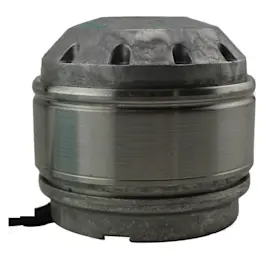
| Fan will not run or is weak | Motor or airflow restriction | Range hood fan motor assembly 5304490025 |
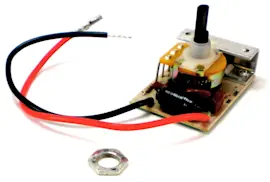
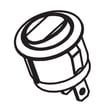
| Fan runs only on some speeds | Speed/control switch | Switch 5304490031 |
| Poor odor removal in recirculating mode | Charcoal filter saturated | Range hood charcoal filter 5304486302 |
| Rattling or backdraft | Damper not sealing or sticking | Range hood vent damper, 3-1/4 x 10-in 5304490028 |
Why it matters
A hood that is struggling to move air runs hotter and longer, which accelerates wear on the motor and controls. Correct venting and clear filters help the FHWC3025MSB ventilate better and typically extend service life.
For model-specific care and venting requirements, follow the owner's manual.
Last updated: February 2026
What are the disadvantages of recirculating hoods?
Recirculating (ductless) range hoods on the Frigidaire FHWC3025MSB pull cooking air through filters and return it to the kitchen instead of venting outdoors. They reduce grease and some odors, but they leave more heat and humidity in the room and require regular filter care to keep performance strong.
Key disadvantages of recirculating (ductless) venting
- Odors can linger longer because air is returned to the room
- Heat and moisture stay in the kitchen (steam and humidity are not exhausted outside)
- Odor control depends on the charcoal filter being replaced on schedule
- More routine upkeep than ducted setups (grease filter cleaning plus charcoal filter replacement)
- Perceived noise can be higher in the kitchen because discharge is back into the space
Filter maintenance for FHWC3025MSB
Your hood uses a grease filter to capture grease. In recirculating mode, it also uses a charcoal filter for odor reduction. The FHWC3025MSB owner's manual notes the charcoal filter is not washable and must be replaced when it becomes saturated.
- Clean the grease filter regularly to maintain airflow
- Replace the charcoal filter when odors start lingering or airflow drops
- Confirm the hood is set up correctly for recirculating mode (vent cover configuration)
| Item | What it affects | What you do |
|---|---|---|
| Grease filter | Grease capture and airflow | Clean/wash regularly |
| Charcoal filter | Odor reduction in recirculating mode | Replace (not washable) |
Parts that commonly impact ductless performance
- Range hood charcoal filter 5304486302 (odor reduction in recirculating mode)
- Range hood grease filter 5304523620 (airflow and grease capture)
- Range hood fan motor assembly 5304490025 (air movement if airflow stays weak after filter care)
Why it matters
If you do high-heat cooking, frequent frying, or strong spices, a recirculating hood can leave more lingering odor and moisture than a ducted installation. Staying current on filter cleaning and charcoal filter replacement keeps the best possible indoor air quality.
Last updated: February 2026