Owner’s manual
 View engine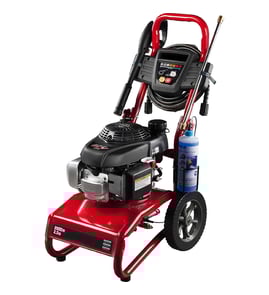



Does Craftsman have a lifetime warranty on pressure washers?
No. For the Craftsman gas pressure washer model 580752810, the owner’s manual describes a limited 1-year warranty for defects in materials and workmanship when the unit is maintained and operated as instructed; commercial use is 90 days and rental use is 30 days. See the 580752810 owner’s manual.
What the warranty covers (and what it does not)
The warranty described for model 580752810 focuses on defects in material and workmanship, not lifetime coverage.
Not covered examples include:
- Normal wear items (for example, spark plugs and air filters)
- Damage from running the pump without water supplied
- Damage from misuse, abuse, or lack of maintenance
- Issues caused by not following operating and storage instructions
Warranty length by how the pressure washer is used
| Use type | Warranty period stated for model 580752810 |
|---|---|
| Household (personal) use | 1 year |
| Commercial use | 90 days |
| Rental use | 30 days |
Why it matters
Warranty terms affect whether a repair is covered and what you may pay out of pocket. Following the maintenance schedule and operating steps in the manual also helps prevent avoidable failures (especially pump damage from no water flow).
Helpful tip for keeping coverage in good shape
We recommend these habits for this Craftsman pressure washer:
- Always turn on the water supply before starting the engine
- Purge air from the pump by squeezing the spray gun trigger before use
- Use cold water only (under 100°F)
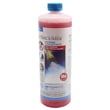
- Rinse the detergent system after each use
- Store the unit dry and winterize before freezing temperatures
Last updated: January 2026
What is a good PSI for a gas pressure washer?
A good PSI depends on the job, but for the Craftsman 580752810 gas pressure washer, the rated maximum outlet pressure is 2,900 PSI. That puts it in the sweet spot for most homeowner cleaning, from siding and decks to driveways, when you use the right nozzle and distance (see the 580752810 owner's manual).
PSI ranges we recommend by task
Use PSI as a guide, then fine-tune with nozzle choice and how close you spray.
- 1,200 to 2,000 PSI: cars, patio furniture, grills (lower risk of damage)
- 2,000 to 2,900 PSI: decks, fences, siding, brick, most concrete cleaning
- 3,000+ PSI: heavy stripping and aggressive concrete work (typically higher-output machines)
Match PSI to the nozzle (this matters more than most people think)
Your 580752810 uses quick-connect spray tips that change both pressure and spray pattern.
| Nozzle color/pattern | Typical use | Relative pressure | Damage risk |
|---|---|---|---|
| Black (soap) | detergent application | Lowest | Low |
| Yellow (40°) | delicate rinse | Low | Low |
| Orange (15°) | general cleaning | Medium to high | Medium |
| Red (0°) | max, spot cleaning | Highest | Highest |
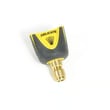
If your spray pattern is uneven or the washer “pulses,” a partially clogged tip can spike pressure at the nozzle. Replacing a worn or damaged tip with the correct nozzle 195983XGS can restore normal cleaning performance.
Quick safety and setup checks (best practices)
- Keep the spray tip 8 to 24 inches from the surface; move closer only after testing a small area.
- Use cold water only (under 100°F) to protect the pump.
- Always turn water on and purge air before starting the engine.
- Never use the 0° tip on glass, soft wood, or painted surfaces.
- If you stop spraying, do not let the unit sit pressurized; release pressure at the gun.
Why it matters
Choosing the right PSI helps you clean faster without etching concrete, shredding wood fibers, or forcing water behind siding. With a 2,900 PSI machine like the Craftsman 580752810, most results come from the correct nozzle, distance, and detergent technique, not maximum pressure.
Last updated: January 2026
Can you put 87 gas in a pressure washer?
Yes. For the Craftsman gas pressure washer model 580752810, we recommend using clean, fresh regular unleaded gasoline, and 87 octane is fine because this model calls for a minimum of 85 octane. Follow the fueling and storage steps in the 580752810 owner’s manual.
Fuel type and what to avoid
Using the right fuel helps prevent hard starting, surging, and carburetor issues.
- Use regular unleaded gasoline (fresh, clean)
- Use 87 octane (meets and exceeds this model’s minimum requirement)
- Do not mix oil with gasoline
- Do not use fuel containing methanol
- Avoid old fuel, especially if the unit will sit for 30 days or more
Quick comparison: 87 vs higher octane
Higher octane does not add cleaning power or pressure; it mainly resists knock in high-compression engines.
| Fuel choice | Works in 580752810? | When it makes sense |
|---|---|---|
| 87 octane (regular) | Yes | Best everyday choice |
| 89 to 93 octane | Yes | Only if it is the freshest fuel available |
| Methanol-blend fuel | No | Can damage the fuel system |
Safe fueling tips (important)
Gasoline handling is the biggest safety risk on a gas pressure washer.
- Shut the unit off and let it cool at least 2 minutes before refueling
- Fuel outdoors; keep away from sparks, flames, and cigarettes
- Do not overfill; leave room for fuel expansion
- Wipe up spills before starting
- If storing 30+ days, run the fuel system dry or drain the tank per the manual
Why it matters
Fresh, correct fuel helps your engine start easier and run smoother, and it reduces varnish buildup that can clog the carburetor and cause “won’t start” or “losing power” symptoms.
Last updated: January 2026
Is it worth repairing a pressure washer?
Yes, repairing a pressure washer is usually worth it when the fix is a common wear item and your Craftsman 580752810 still runs well and can build pressure. If the pump or engine has major internal damage, replacement often makes more sense than a high-cost repair.
Quick way to decide (repair vs. replace)
We use these practical checkpoints for the Craftsman 580752810:
- Repair it if the issue is a nozzle, hose leak, clogged inlet screen, or routine tune-up items.
- Repair it if the engine starts easily and runs smoothly at full throttle, but performance is inconsistent.
- Replace it if the pump will not build pressure after basic checks and maintenance.
- Replace it if the engine has low compression, severe knocking, or repeated no-start problems after ignition and fuel checks.
- Repair it if you can fix it with a small number of parts and basic tools.
For model-specific operating and maintenance intervals (oil, pump oil, storage), use the 580752810 owner’s manual.
Common “worth repairing” fixes on this model
Many “no pressure” or “weak spray” complaints are caused by restrictions or leaks, not a failed pump.
- Clean or replace the spray tip; a worn or clogged tip can kill pressure (see nozzle 195983XGS).
- Inspect the high-pressure line for cuts, bulges, or coupling leaks (see hose 84006753).
- Confirm the water supply is strong and the inlet screen is clean.
- Purge air from the pump by running water through the system before starting.
- Use the correct nozzle for the job; the detergent nozzle is low pressure by design.
Cost-to-value checklist
Use this simple comparison to keep the decision objective.
| What you found | Typical outcome | Usually worth it? |
|---|---|---|
| Clogged/worn nozzle, minor hose leak | Restores pressure quickly | Yes |
| Routine maintenance overdue (oil, cleaning, storage issues) | Prevents repeat failures | Yes |
| Pump will not build pressure after basic checks | Repair can be complex | Maybe |
| Major engine problem (hard start, won’t stay running, mechanical noise) | High labor or replacement engine | No |
Why it matters
A pressure washer that is maintained and stored correctly is far less likely to suffer pump damage from overheating, debris, or freezing. Spending a little on the right maintenance parts can prevent a much bigger pump or engine expense later.
Last updated: January 2026
What is the most common problem with pressure washers?
Low or no spray pressure is the most common issue we see on the Craftsman 580752810 gas pressure washer. In many cases it is caused by a clogged spray nozzle, restricted water supply, or air trapped in the pump, not an engine failure.
Quick checks that fix most “low pressure” complaints
- Verify the garden hose is supplying steady water; use cold water only (under 100°F).
- Turn water fully ON, then squeeze the trigger to purge air before starting.
- Inspect and clean the water inlet screen; do not run the washer if the screen is damaged.
- Remove and clean the spray tip; debris in the nozzle is a top cause of pulsing and low pressure.
- Confirm the high-pressure hose is not kinked, cut, or leaking.
- Make sure you are using the correct quick-connect nozzle for the job (detergent nozzle is low pressure).
For model-specific operating steps and nozzle cleaning procedure, use the 580752810 owner’s manual.
When it is more than a simple clog
If the nozzle and water supply check out, low pressure can point to a restriction or wear in the spray path (wand, hose, fittings) or a pump-related issue (valves, seals, unloader). On this model, start by ruling out the easy external items first.
Common symptoms and likely causes
| Symptom | Most likely cause | First action |
|---|---|---|
| Low pressure, steady | Wrong nozzle or low water supply | Switch nozzle; verify flow |
| Low pressure, pulsing | Partially clogged nozzle | Clean/replace nozzle |
| Pressure drops under load | Hose leak or inlet restriction | Inspect hose; clean inlet screen |
| No pressure at all | Nozzle blocked or air in pump | Purge air; clean nozzle |
Parts that often solve low-pressure problems
If cleaning does not restore pressure, replacing the wear item is often faster than repeated cleaning.
- Nozzle 195983XGS: the spray tip that shapes the spray pattern; clogs and wear reduce pressure.
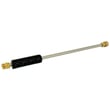
- Extension 207796GS: the extension wand; internal blockage or damaged quick-connect can restrict flow.
- Hose 84006753: the high-pressure hose; leaks, internal damage, or kinks can cause pressure loss.
Why it matters
Running with restricted water flow or a clogged nozzle can overheat the pump and trigger the thermal relief (warm water discharge). Fixing the simple restriction early helps protect the pump and keeps cleaning performance consistent.
Last updated: January 2026
How much does it cost to get a pressure washer fixed?
For the Craftsman pressure washer model 580752810, the manual doesn’t list repair pricing, so we can’t quote a model-specific cost. In practice, most pressure washer repairs fall into a few common tiers: small leak or spray-tip fixes are usually the least expensive, while pump work is typically the most expensive.
Typical repair cost ranges (general guidance)
These ranges reflect common market pricing for gas pressure washers like the Craftsman 580752810:
- Minor leak fixes (O-rings, seals, fittings): $20 to $75
- Spray/pressure issues (cleaning or replacing a spray tip): $15 to $60
- Hose replacement (cuts, bulges, leaking couplers): $30 to $150
- Pump service (valves, unloader valve service): $120 to $300
- Pump replacement (parts plus labor): $250 to $600
For safety steps and maintenance items that can prevent costly pump damage, follow the 580752810 owner’s manual.
What usually drives the price
- Whether the problem is in the spray tip/gun/hose versus inside the pump
- Labor time (diagnosis plus teardown on pump repairs)
- Whether the unit ran without adequate water supply (can damage the pump)
- Parts replaced (hose, nozzle, fittings, pump components)
- Shop minimum charges and local labor rates
Quick comparison table
| Repair area | Common symptom | Typical cost tier | Often DIY? |
|---|---|---|---|
| Nozzle/tip | Pulsing, weak spray | Low | Yes |
| Hose/couplers | Leaks, loss of pressure | Low to medium | Yes |
| Pump/unloader | Surging, low pressure after basics | Medium to high | Sometimes |
| Full pump | No pressure after checks | Highest | Sometimes |
Parts on this model that can keep costs down
If the issue is a leak or poor spray pattern, checking these first often avoids pump work:
- Hose 84006753 (water hose) for cracks, bulges, or leaking ends
- Nozzle 195983XGS for clogs or wear
- Water inlet screen and in-line filter screen (clean debris)
- Correct water supply (cold water, steady flow)
Why it matters
Pump repairs get expensive quickly. Catching a clogged nozzle, restricted inlet screen, or a leaking hose early can prevent overheating and internal pump wear, keeping the repair closer to the low end.
Last updated: January 2026