Owner’s manual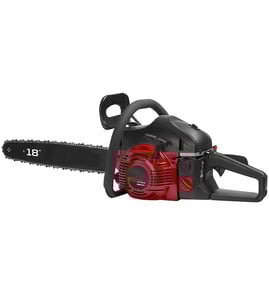




What model number is a Craftsman 358352380 chainsaw?
The model number for this Craftsman gas chainsaw is 358.352380 (often written without the dot as 358352380). On the saw itself, you will find the model number on a decal attached to the unit; we use that exact number to match the correct parts and specifications in the Craftsman 358352380 owner's manual.
Look for a model/serial decal on the chainsaw body. Common places include:
- The rear handle area near the fuel tank
- The crankcase or starter housing area
- Near the bar mount side cover area
- A flat spot on the chassis where labels are protected from abrasion
If the decal is dirty or oil-stained, wipe it gently so you can read the full number.
Both formats refer to the same model; the dotted format is common in Craftsman documentation.
| You might see it as | What it means | When it’s used |
|---|---|---|
| 358.352380 | Same model number | Operator’s manual, parts lists |
| 358352380 | Same model number | Online search, tags, receipts |
Using the exact model number ensures you get parts that fit your specific chassis and engine configuration (this model family includes multiple close variants). It also helps when ordering wear items like a guide bar, chain, or fuel system parts.
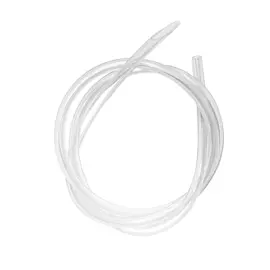
If you are troubleshooting oiling or fuel delivery issues, matching the model number first helps you select the correct replacement line, such as the oil line 530069216.
Last updated: January 2026
How to look up chainsaw serial number?
For the Craftsman gas chainsaw model 358352380, the serial number is printed on the product identification label attached to the saw. Use that serial number (along with the model number) when ordering parts or getting service; see the 358352380 owner's manual.
We typically see the model and serial information on a decal or label on the chainsaw body. Check these common spots:
- On the engine housing or crankcase area
- Near the muffler side of the engine
- On a flat area of the main housing where the label can sit flush
- Near the rear handle or fuel and oil tank area
- Under the top cover (if your saw has a removable shroud)
Once you locate the serial number, use it to match the correct parts list and documentation for your exact production run.
| What you have | What it helps with | Example for this saw |
|---|---|---|
| Model number | Identifies the product family | 358352380 |
| Serial number | Identifies the specific unit | Used to confirm exact build |
| Date of purchase | Helps with records and service history | Record and keep with manual |
On older gas chainsaws like the Craftsman 358352380 (1994-era), small running changes can affect fit for items like the guide bar, chain, fuel system parts, and fasteners. Having the serial number ready helps ensure you get the right replacement parts the first time.
Last updated: January 2026
Where is the model number on a chainsaw?
On the Craftsman chainsaw model 358352380, the model number is found on a decal or ID label attached to the saw body. The operator instructions also note that the model and serial number are found on the product, so check the housing carefully before ordering parts.
We typically see the model/serial decal in one of these spots:
- On the rear handle area near the trigger
- On the starter (recoil) housing side
- Near the fuel tank or oil tank area
- On the crankcase housing near the bar mount
- Under the top cover (near the air filter area)
For model-specific label locations and diagrams, use the 358352380 owner's manual.
If the decal is hard to read, these steps usually help:
- Wipe the area with a damp rag first, then dry it
- Use a flashlight at an angle to make stamped or faded text stand out
- Take a close-up photo and zoom in
- Look for both the model number and serial number; they are often together
- Record the model number and serial number and keep them with your paperwork
The manual recommends recording key details for future reference.
| Item to write down | Example for this saw | Why it matters |
|---|---|---|
| Model number | 358352380 | Ensures correct parts diagrams and fit |
| Serial number | (from your label) | Helps identify production variations |
| Purchase date | (your date) | Useful for service history and maintenance tracking |
Chainsaws often have multiple versions that look similar. Using the exact model number (and ideally the serial number) helps us match the correct Craftsman parts like a guide bar, chain, or fuel cap to your specific unit.
Last updated: January 2026
Should I use 40 1 or 50 1 fuel for a chainsaw?
For the Craftsman 358352380 gas chainsaw, we use a 40:1 fuel mix (regular unleaded gasoline plus high-quality 2-cycle air-cooled engine oil). That ratio is the manufacturer specification for this model and helps prevent overheating and engine seizure; see the 358352380 owner's manual.
Use 40:1 every time you mix fuel for the Craftsman 358352380.
- Mix fuel in a clean, approved fuel container (do not mix in the saw’s tank).
- Use fresh regular unleaded gasoline.
- Use 2-cycle AIR-COOLED engine oil (not automotive oil, not marine/boat oil).
- Measure carefully; too little oil can cause poor performance and engine damage.
- Fill the bar oil tank whenever you fill the fuel tank; this saw typically uses about one tank of bar oil per tank of fuel mix.
| Fuel amount | 40:1 oil needed | What it means |
|---|---|---|
| 1 gallon gas | 3.2 fl oz oil | Correct for Craftsman 358352380 |
| 2 gallons gas | 6.4 fl oz oil | Double batch |
| 5 gallons gas | 16 fl oz oil | Common “1 pint per 5 gallons” batch |
For this specific chainsaw, the decision is already made by the manufacturer: 40:1.
- 40:1: More oil for lubrication; matches the Craftsman 358352380 requirement.
- 50:1: Less oil; commonly used on some newer engines designed for 50:1, but it is not the target ratio for this model.
- If you run leaner on oil than specified (like 50:1 in a 40:1 saw), you increase the risk of overheating and scoring.
The fuel mix is the engine’s lubrication system on a 2-cycle chainsaw. Using the correct 40:1 ratio protects crank bearings, piston, and cylinder surfaces, and it supports reliable starting and consistent power under load.
Last updated: January 2026