Installation guide
 Owner’s manual
 Error Codes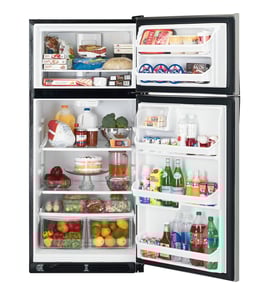



How to tell cubic feet of Kenmore refrigerator by model number?
For Kenmore model 25370603412, the most reliable way to get cubic feet is to look up the capacity in the 25370603412 owner's manual. If you do not have the capacity listed, you can estimate it by measuring the usable interior space and converting cubic inches to cubic feet.
How to find capacity using the model number
We use the full model number (not just “253”) to match the exact configuration (shelves, ice maker-ready layout, and liner design).
- Find the model/serial tag inside the fresh food section (often on a side wall or near the crisper area).
- Confirm the model is 25370603412 (all digits matter).
- Check the specifications section in the 25370603412 owner's manual.
- If you are comparing similar Kenmore 253-series units, use the manual spec, not the “253” prefix.
How to estimate cubic feet by measuring (quick method)
If you need a practical estimate for moving, cabinetry, or replacement shopping, measure the interior and convert.
- Measure width, depth, and height of the usable interior (in inches).
- Multiply:
W x D x H = cubic inches. - Divide by 1728 to convert to cubic feet.
- Subtract space taken by thick insulation, air ducts, and the freezer divider (your estimate will run a bit high).
Conversion table
| What you have | What to do | Result |
|---|---|---|
| Interior inches (W x D x H) | Multiply | Cubic inches |
| Cubic inches | Divide by 1728 | Cubic feet (approx.) |
Why it matters
Cubic feet helps you compare storage capacity across top-mount refrigerators, but it does not tell the whole story. Shelf layout, crisper volume, and ice maker space can change usable storage even when capacities look similar.
Last updated: January 2026
What is the upper part of a fridge called?
On the Kenmore 25370603412 top-mount refrigerator, the upper section is typically called the freezer compartment (or simply the freezer). It’s the coldest area of the appliance and is designed to keep foods frozen and, on many models, support an ice maker.
What you’ll find in the upper (freezer) compartment
Common freezer-area components and features include:
- Freezer shelves or bins for frozen food storage
- An ice maker (if equipped) and related wiring/water supply connection
- Air vents that circulate cold air to the fresh food section
- A freezer door gasket that helps seal in cold air
- Temperature controls (location varies by model)
If you’re asking because of ice or temperature problems
If the freezer is not freezing well, or ice production is slow, these checks usually help first:
- Confirm the freezer temperature is set correctly; wait 24 hours after changes before adjusting again
- Make sure the toe grille and vents are not blocked so air can circulate properly
- Verify the refrigerator is level and tilted slightly back so doors close and seal
- If connected to water, confirm supply pressure is in the typical 30 to 100 psi range
- Check door seals for gaps, tears, or areas not fully contacting the cabinet
| Symptom in upper section | Most common cause | First thing to do |
|---|---|---|
| Frost buildup | Door not sealing, frequent opening | Inspect gasket and door alignment |
| Warm freezer | Airflow restriction, control setting | Clear vents, verify settings |
| No ice (if equipped) | Ice maker off, water supply issue | Confirm switch is ON and water is connected |
Why it matters
Knowing the correct name (freezer compartment) helps you match the right Kenmore refrigerator parts, follow troubleshooting steps in the documentation, and describe symptoms accurately when ordering parts or scheduling service.
For model-specific diagrams, control locations, and door removal details, use the 25370603412 owner’s manual.
Last updated: January 2026
What does DH mean on Kenmore Elite refrigerator?
On Kenmore Elite refrigerators, DH indicates a defrost system temperature sensing problem (often shown as “defrost high” or a defrost sensor not reporting the expected temperature change). On your Kenmore 25370603412 top-mount refrigerator, confirm the exact display wording and any paired codes in the 25370603412 owner's manual.
What DH usually points to
DH is tied to the refrigerator not seeing the correct temperature feedback during defrost. That commonly involves the defrost thermostat or sensor, but it can also be triggered by a heater or control issue that prevents normal defrost temperature rise.
Symptoms you may notice
- Frost or ice buildup on the freezer back wall
- Freezer temperature swings or slowly rises
- Fresh food section warms due to restricted airflow
- Fan noise changes (fan hitting ice) or weak airflow at vents
- Ice maker production drops
Safe checks we recommend first
- Power reset: Unplug for 5 minutes, then restore power.
- Door seal check: Make sure doors close fully and gaskets seal all the way around.
- Look for heavy frost: A solid frost blanket behind the freezer panel supports a defrost problem.
- Airflow check: Keep packages from blocking return vents and supply vents.
- Condenser cleanliness: Clean dust from the condenser area to reduce run time and improve cooling stability.
How the defrost system pieces relate
| Component | Job during defrost | How it can relate to DH |
|---|---|---|
| Defrost heater | Warms the evaporator to melt frost | No heat means little or no temperature rise |
| Defrost thermostat or sensor | Confirms coil temperature change | Bad readings trigger DH-style sensing faults |
| Control board or timer | Starts and ends defrost | Incorrect timing can cause abnormal temperatures |
Parts that can be involved
If you confirm frost buildup and a defrost failure, one common model-compatible part to check is the refrigerator defrost heater 242044008. A failed sensor or thermostat can also cause DH, even when the heater is good.
Why it matters
When defrost temperature feedback is wrong, frost builds up and blocks airflow; that raises temperatures, reduces ice production, and forces longer compressor run times.
Last updated: January 2026