Owner’s manual




What is the average price for a treadmill?
A typical home treadmill ranges from about $300 to $2,500, with many solid runner-friendly models landing around $1,000 to $2,000. For the Nordictrack NTL14950 (C2420), price varies most by motor power, deck size, incline capability, and console features; see the NTL14950 owner's manual for feature details.
Typical treadmill price ranges (what you get)
- Under $300 to $700: basic walking treadmills, smaller motors and decks
- $700 to $1,500: better cushioning and stability, good for regular jogging
- $1,500 to $2,500: stronger motors, larger running surface, more incline and programs
- $2,500+: commercial-grade builds, heavier frames, higher duty cycles
Features that most affect price
- Motor horsepower and cooling (better for longer runs)
- Running belt and deck size (more room costs more)
- Incline range and incline motor strength
- Console and training programs (including interactive features)
- Frame weight and folding design (space-saving designs can add cost)
Quick comparison table
| Price tier | Best for | Common tradeoff |
|---|---|---|
| Budget | walking, light use | smaller deck, louder operation |
| Mid-range | jogging, frequent use | fewer premium console features |
| Premium | running, longer workouts | higher cost, heavier machine |
Why it matters
Matching the treadmill to how you actually use it helps you avoid underpowered motors, cramped running surfaces, and faster wear on the walking belt and drive system.
Last updated: January 2026
Can you take apart a NordicTrack treadmill to move?
Yes. For the Nordictrack NTL14950 (C2420 treadmill), we recommend moving it by folding it into the storage position and rolling it on the built-in wheels rather than fully disassembling it; this reduces risk to wiring and electronics. Follow the step-by-step moving instructions in the NTL14950 owner's manual.
Best way to move the NTL14950 (no disassembly)
Before you move the treadmill, convert it to the storage position and confirm the latch pin is fully inserted.
- Unplug the treadmill and remove the safety key.
- Fold the deck into the storage position and verify the latch pin is fully seated.
- Hold the handrails and place one foot against a wheel.
- Tilt the treadmill back until it rolls freely on the wheels.
- Roll it carefully to the new location (avoid uneven surfaces).
- Lower it back down using proper lifting posture (bend legs, keep back straight).
When taking it apart makes sense
Partial disassembly can help when you must fit through tight doorways, stairs, or a vehicle. On most treadmills, that means removing external pieces (like the console/uprights) while keeping the motor base assembled.
Common “move prep” tasks:
- Label and photograph wire connections before unplugging anything.
- Bag and label fasteners by location.
- Protect the deck and frame from scratches during transport.
Safety and power protection (important after the move)
After relocating, use a quality surge suppressor to help protect the treadmill’s electronics from voltage spikes.
| Item | What to look for | Why it matters |
|---|---|---|
| Surge suppressor | UL 1449 listed TVSS, 120V/15A, 400V or less suppressed voltage rating, 450 joules minimum | Helps prevent control board damage from power surges |
| Outlet setup | Properly grounded outlet | Reduces shock risk and nuisance electrical issues |
Why it matters
Treadmills are heavy and wire-dense; moving the NTL14950 by folding and rolling helps prevent pinched harnesses, damaged console connections, and frame misalignment that can lead to belt tracking problems.
Last updated: January 2026
How heavy is too heavy for a treadmill?
For the Nordictrack NTL14950 treadmill, “too heavy” means over 350 lb. The manual states the treadmill should not be used by persons weighing more than 350 pounds; exceeding that limit can overstress the deck, belt, motor drive system, and frame.
How to use the weight limit safely
- Treat 350 lb as the maximum user weight, not a “close enough” guideline.
- If you are near the limit, avoid sprinting and high incline; higher impact loads stress the deck and drive belt more.
- Keep the treadmill on a level surface with proper clearance; instability increases strain and fall risk.
- Use a properly functioning surge suppressor; control damage can cause unexpected speed changes.
- Follow the folding and moving instructions; you must be able to safely lift 55 lb to raise/lower/move the unit.
What can happen if you exceed the rating
Exceeding the max user weight commonly leads to faster wear or failure in high-load components.
| Area affected | What you may notice | Typical result |
|---|---|---|
| Walking belt and deck | Slipping, hesitation, burning smell | Premature belt/deck wear |
| Drive system | Belt squeal, inconsistent speed | Drive belt or motor strain |
| Frame and hardware | New rattles, loosened fasteners | Misalignment, vibration |
| Electronics | Sudden stops or speed changes | Higher risk of falls and damage |
Parts that often relate to speed sensing and belt behavior
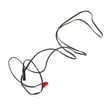
If the treadmill shows erratic speed readings or stops unexpectedly (even when under the weight limit), a speed sensor issue is a common place to start.
Why it matters
The manufacturer’s max user weight is a safety and durability rating. Staying within the limit helps the treadmill maintain stable speed control, reduces impact stress on the walking belt and deck, and lowers the chance of sudden failures.
For additional safety and operating details specific to the NTL14950, follow the NTL14950 owner's manual.
Last updated: January 2026
Is the NordicTrack NTL14950 a good treadmill?
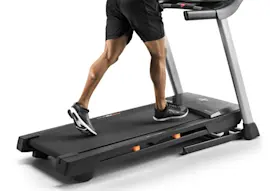
Yes. The Nordictrack NTL14950 (C2420) is a good home treadmill because it is designed for enjoyable, effective workouts and it folds up to save floor space; it also includes core safety and electrical protections that support reliable day-to-day use when set up correctly (see the NTL14950 owner's manual).
What “good” means for the NTL14950
We judge a treadmill like the NTL14950 on usability, space, and long-term serviceability.
- Space-saving design: the C2420 platform folds, taking less than half the floor space of many non-folding treadmills.
- Home-friendly features: console, handrails, pulse sensor, fan, accessory tray, and book holder are part of the standard layout.
- Basic safety controls: key/clip system and guidance to remove the key when not in use.
- Electrical protection guidance: the manual calls for a UL-listed surge suppressor to reduce damage from voltage spikes.
- Parts support: replacement parts are identified by key number and description in the parts list and exploded drawing.
Quick checklist: who it’s a good fit for
| If you want… | NTL14950 fit | Why |
|---|---|---|
| A fold-up treadmill for limited space | Strong | Designed to fold for smaller footprint |
| Simple, consistent walking and jogging workouts | Strong | Traditional console and deck layout |
| Easy troubleshooting and part replacement | Strong | Manual includes parts list and exploded drawing |
| Protection from power issues | Strong (with proper setup) | Surge suppressor guidance is specific |
Setup and use tips that affect performance
These steps make the biggest difference in how “good” the treadmill feels over time.
- Use a single-outlet, UL 1449 listed surge suppressor rated for 120V/15A, with a monitoring light.
- Keep the key removed when the treadmill is not in use.
- Check the reset/off circuit breaker location and keep it accessible.
- If speed readings are erratic, inspect the speed sensor area; the toyostove treadmill reed switch and sensor wire 165798 is a common sensor-related replacement part type.
Why it matters
A treadmill can have great features, but real-world satisfaction comes from safe operation, stable power, and the ability to maintain wear items. Following the manual’s electrical and safety guidance helps prevent avoidable downtime.
Last updated: January 2026