Owner’s manual
 Error Codes


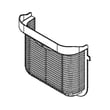
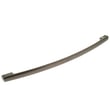

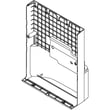
How to remove bottom grille on GE refrigerator?
On the GE GFE28GELCDS bottom-mount refrigerator, the bottom grille (base grille) typically comes off by releasing its retaining tabs or removing a small number of screws, then pulling the grille straight out from the front. Use steady, even pressure to avoid cracking the plastic.
Before you start
- Unplug the refrigerator or switch off power at the breaker if you will be working near wiring.
- Protect the floor with cardboard or a towel to prevent scratches.
- If you need more clearance, raise the front leveling legs before pulling the refrigerator forward.
- Pull the refrigerator straight out (not sideways) to avoid floor damage.
Steps to remove the bottom grille
- Look along the top edge and corners of the grille for fasteners.
- If you see screws, remove them with a Phillips screwdriver and set them aside.
- If there are no screws, grip the grille near both ends and pull straight outward to release the clips.
- If it resists, press inward slightly, then pull outward again to pop the tabs free (do not pry hard with a metal tool).
- Once removed, inspect the clips/tabs for cracks and clean dust from the condenser area if accessible.
Reinstalling the grille
Reinstall is the reverse: align the grille with the slots, press evenly until it snaps in, then reinstall any screws.
| What you see | What to do | Tool |
|---|---|---|
| Screws at corners/edge | Remove screws, then pull grille off | Phillips screwdriver |
| No screws, visible slots/tabs | Pull straight out to release clips | Hands (plastic putty knife optional) |
Why it matters
Removing the base grille is often the first step for cleaning, checking airflow, and accessing lower-front components. A grille that is forced off can crack, which can lead to poor fit and vibration noise.
For model-specific diagrams and handling notes, follow the GFE28GELCDS owner's manual.
Last updated: February 2026
What does a GE model number tell me?
A GE model number identifies the refrigerator’s product family and key design attributes so we can match the correct parts, features, and documentation. For GE bottom-mount models like GFE28GELCDS, the starting letters help indicate the series and whether it is standard-depth or counter-depth.
What you can learn from the model number (and why we ask for it)
When you provide the full model number, we use it to narrow down the exact configuration of your refrigerator so you get the right information the first time.
- Confirms the brand and product line (GE and GE Profile families)
- Helps identify the platform/series (the leading letters, such as GFE)
- Indicates depth class for many GE bottom-freezer models
- Helps match the correct owner’s manual, wiring diagrams, and troubleshooting steps
- Improves accuracy when selecting parts like a water filter, door gasket, or dispenser components
GE depth clue example (from the manual)
For many GE and GE Profile refrigerator model families, the first letters are a quick depth indicator:
| Model prefix | Typical depth class | What that means for you |
|---|---|---|
| DFE, GFE, GNE, PFH, PFE, PFD, GFD | Standard depth (SD) | More interior space; deeper cabinet |
| GYE, PYE, DYE, CYE, PWE, CWE, ZWE, PYD | Counter depth (CD) | Shallower cabinet; more flush with cabinets |
Because your model starts with GFE, it falls into the standard-depth group described in the documentation.
Where to find the model and serial number on GFE28GELCDS
We recommend copying the full model number exactly as shown on the appliance label.
- Look inside the fresh food (refrigerator) compartment
- Check the left side wall, near the middle
- Write down both the model and serial number
For diagrams, feature details, and model-specific troubleshooting sections, use the GFE28GELCDS owner’s manual.
Why it matters
Even small model-number differences can change the correct part fit and the correct repair steps (for example, dispenser layouts, door hardware, or which water filter cartridge the unit uses). Using the full model number keeps repairs accurate and avoids returns.
Last updated: February 2026
What is the average life expectancy of a GE refrigerator?
Most GE refrigerators, including the GE GFE28GELCDS bottom-mount refrigerator, typically last 10 to 20 years with normal home use and basic maintenance (cleaning, correct temperatures, and good door sealing).
What affects refrigerator lifespan most
- Condenser airflow and cleanliness: Dust buildup makes the compressor work harder.
- Door gasket condition: Air leaks cause longer run times and temperature swings.
- Ice maker and water system health: Leaks, low water pressure, and clogged filters add stress and can cause damage.
- Temperature settings: We recommend keeping the fresh food section around 37°F and the freezer around 0°F.
- Usage habits: Frequent door openings and overpacking reduce airflow and increase run time.
Maintenance checklist to help your GE refrigerator reach the high end of the range
- Vacuum or brush dust from the condenser area on a regular schedule.
- Confirm doors close fully and the gasket seals evenly all the way around.
- Keep air vents inside the refrigerator and freezer clear (avoid blocking with food packages).
- Replace the water filter on schedule and flush the dispenser after changes.
- Address unusual noises early (fan, compressor, or ice maker sounds that change suddenly).
Typical lifespan expectations (quick guide)
| Component or system | Typical expectation | Why it matters |
|---|---|---|
| Compressor and sealed system | Often the longest-lasting major system | Drives cooling; heavy run time shortens life |
| Evaporator/condenser fans | Common wear item over time | Poor airflow causes warm temps and frost issues |
| Ice maker and dispenser parts | Moderate wear, depends on use and water quality | Failures can cause no-ice issues or leaks |
| Door gaskets | Wear gradually | Leaks increase energy use and reduce cooling performance |
Why it matters
A refrigerator that is nearing end-of-life usually shows it through longer run times, inconsistent temperatures, frost buildup, or water leaks. Catching those symptoms early often prevents food spoilage and reduces the chance of a major cooling-system failure.
Helpful model-specific resources
- Use the maintenance and care guidance in the owner's manual.
- If you are troubleshooting alarms, see how to reset the door alarm on a GE refrigerator.
Last updated: February 2026
What is the most common problem with a GE refrigerator?
Cooling problems are the most common issue we see in GE refrigerators, including the GE GFE28GELCDS. Symptoms usually include warm fresh food, soft ice, or temperature swings; the root cause is often airflow restriction, dirty condenser coils, a defrost problem, or a failing fan or sealed-system component. For model-specific checks and settings, use the GFE28GELCDS owner's manual.
Most common symptoms to watch for
- Fresh food section is warm but freezer seems closer to normal
- Freezer is warm and ice production slows or stops
- Frost buildup on the rear freezer panel (defrost or airflow issue)
- Fridge runs constantly or cycles too often
- Door alarm sounds frequently because a door is not sealing or closing fully
Quick checks we recommend first (no tools)
- Confirm temperature settings and give the unit 24 hours to stabilize after changes.
- Clean condenser coils (dust buildup is a top cause of weak cooling and long run times).
- Check door gaskets for gaps, tears, or food packages preventing a full seal.
- Verify airflow: do not block vents with bins or tightly packed food.
- Listen for fans: you should typically hear an evaporator fan running at times when cooling.
Common causes and what they usually look like
| Likely cause | Typical signs | What to do next |
|---|---|---|
| Dirty condenser coils | Warm temps, long run time | Clean coils; recheck temps in 24 hours |
| Defrost system issue | Frost blanket on evaporator cover | Defrost and diagnose components |
| Evaporator fan problem | Warm fridge, weak airflow at vents | Inspect fan area for ice or obstruction |
| Door seal or alignment issue | Moisture, frequent door alarm, uneven doors | Inspect gasket and align doors |
| Sealed system or compressor issue | Poor cooling in both sections | Professional diagnosis is usually required |
Why it matters
Cooling issues can spoil food quickly and also overwork the compressor. Addressing simple causes (coils, airflow, door seal) early often prevents bigger failures and reduces energy use.
Helpful DIY guides
- GE refrigerator error codes
- How to reset the door alarm on a GE refrigerator
- How to fix your evaporator cooling fan
Last updated: February 2026