Installation guide
 Owner’s manual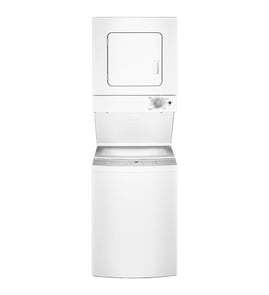




What are the dimensions of a GE washer/dryer combo?
For the GE GUD24GSSJ0WW stacked laundry center, the exact cabinet dimensions depend on the specific installation clearances and configuration; most 24-inch-class GE laundry centers are roughly 24 inches wide, about 70 to 76 inches tall, and about 26 to 32 inches deep. For the exact measurements and required clearances, use the GUD24GSSJ0WW installation guide.
Most GE 24-inch stacked washer/dryer laundry centers fall into these planning ranges:
- Width: ~23.5 to 24.5 inches
- Height: ~70 to 76 inches
- Depth (cabinet): ~26 to 32 inches
- Depth with door open: often 45 inches or more (varies by door swing)
- Water pressure requirement (installation): 20 to 120 psi (helps confirm your hookup setup)
We recommend measuring three things before ordering parts or planning a closet install:
- Width at the narrowest point (trim, door jambs, baseboards)
- Depth to the back wall (include venting and hose bend room)
- Height to the lowest obstruction (shelves, door track, overhead cabinet)
| What to check | What to allow for | Why it matters |
|---|---|---|
| Side clearance | 0.5 to 1 inch each side | Reduces vibration contact and noise |
| Rear clearance | 3 to 6 inches | Room for water hoses, drain hose, and venting |
| Front clearance | Door swing space | Lets you load/unload without obstruction |
Laundry centers like the GE GUD24GSSJ0WW are compact, but tight closets can still cause vibration noise, kinked hoses, or crushed venting. Planning for real-world clearances helps the washer spin smoothly and the dryer vent safely.
Last updated: February 2026
What parts do I need for a washer and dryer?
For the GE GUD24GSSJ0WW stacked laundry center, you typically need the correct water fill hoses and washers, drain hookup parts, and the right dryer venting and (if gas) gas connection parts. Your exact list depends on whether you are installing electric vs gas and your home hookups.
- 2 washer fill hoses (hot and cold) with rubber washers
- 2 strainer screens for the water inlets (helps protect the inlet valves)
- Drain standpipe hookup (your home drain pipe and a way to secure the drain hose)
- Dryer venting: 4-inch duct plus 4-inch spring clamps
- Duct tape (for duct joints where appropriate)
- Cable tie (to help secure hoses and reduce strain)
The installation guide calls out a flexible gas line connector and using a soap solution for leak detection. Local codes apply; for example, Massachusetts has specific requirements for who can install and limits flexible connector length. See the GUD24GSSJ0WW installation guide for the exact requirements.
| Connection type | What you’ll usually need | Notes |
|---|---|---|
| Washer water | 2 fill hoses, rubber washers, strainer screens | Water pressure must be 20 to 120 psi; hot water typically 120 to 150°F |
| Washer drain | Standpipe connection and a way to secure the drain hose | Install on firm flooring to reduce vibration |
| Dryer vent | 4-inch duct, clamps, exterior damper | Keep duct clean, unkinked, and unobstructed |
| Gas dryer (if applicable) | Flexible gas connector, pipe compound, leak-test solution | Follow local code and the installation instructions |
Using the right hoses, clamps, and venting parts prevents leaks, poor drying, and vibration issues. Proper venting also helps drying performance and reduces lint buildup.
Last updated: February 2026
What is the average lifespan of GUD24GSSJ0WW?
The average lifespan of the GE GUD24GSSJ0WW stacked laundry center is 13 years with normal household use and basic maintenance. Keeping airflow clear for the dryer and preventing drain clogs on the washer side are the two biggest factors in reaching that lifespan.
- Dryer venting and lint control: restricted exhaust makes the dryer run hotter and longer.
- Drain system health: coins, lint, and small items can strain the drain pump.
- Load size and balance: chronic overloading increases wear on the drive belt and motor.
- Water quality: sediment can affect valves and internal hoses over time.
- Routine inspection: catching a worn glide, seal, or hose early prevents bigger damage.
The owner documentation calls out annual exhaust cleaning; we recommend making that a standard routine.
- Clean the lint screen every load.
- Inspect and clean the exhaust ducting at least yearly (the manual recommends annual cleaning by qualified service personnel); see the GUD24GSSJ0WW owner's manual.
- Keep the unit level to reduce vibration and out-of-balance wear.
- Check hoses for soft spots, bulges, or seepage.
- If the washer is slow to drain, inspect the drain hose path and pump area before repeated use.
| Type | Examples on this model | What you typically notice |
|---|---|---|
| Wear items | Drum support and seals | Squealing, scraping, lint buildup, longer dry times |
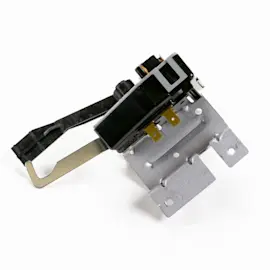
| Functional parts | Switches, lid lock, pump | No-start, lid will not lock/unlock, no drain |
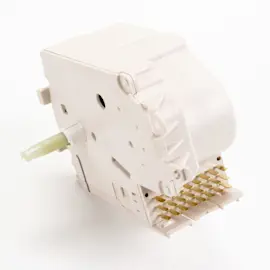
| Major components | Motors, control board | Intermittent operation, no spin, no heat, dead unit |
If you are troubleshooting a no-drain condition, a common repair is replacing the laundry center washer drain pump WH23X26206.
A laundry center is a compact, shared-frame design; when airflow is restricted or draining is poor, the machine works harder each cycle. That extra heat, vibration, and run time is what shortens service life.
Last updated: March 2026