Owner’s manual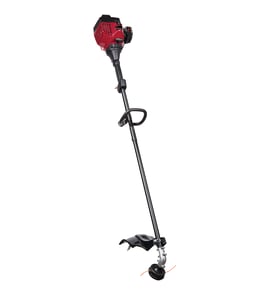

How to replace line on Craftsman gas trimmer?
To replace the cutting line on your Craftsman 358795571 gas line trimmer, remove the cap and spool, wind 25 feet of 0.080-inch (2 mm) round line onto the spool in the direction shown, then reinstall the spool and thread the line through the guide ring. Follow the steps in the owner's manual to match your trimmer head style.
Before you start (safety and setup)
- Turn the ON/OFF switch to OFF and let the engine cool.
- Disconnect the spark plug lead before maintenance.
- Wear gloves and eye protection.
- Use only 0.080-inch (2 mm) round line (never wire, rope, or string).
- Keep the debris shield installed when operating.
Refill the spool with new line (manual method)
- Remove the cap, then lift out the line guide ring and spool.
- Cut 25 feet of 0.080-inch (2 mm) round line.
- Insert one end of the line into the center cavity of the empty spool.
- Wind the line onto the spool in the direction shown on the spool (commonly counterclockwise).
- Leave 4 to 6 inches of line unwound.
- Install the spool back into the head.
- Thread the line through the line guide ring.
- Rest the guide ring on the spool, place the line into the slot, and keep it in the slot while tightening the cap (tighten securely, do not overtighten).
Quick checks if the line tangles or will not feed
- You wound the line in the wrong direction; rewind to match the arrow on the spool.
- The line overlapped or crossed; rewind with neat, even layers.
- The line diameter is wrong; switch to 0.080-inch (2 mm) round.
- The line is pinched under the cap; re-seat the guide ring and keep the line in the slot during assembly.
Parts that commonly affect line feeding
| Symptom | What to inspect | What to do |
|---|---|---|
| Cap will not tighten or keeps loosening | Spool cap | Replace the cap if cracked or stripped |
| Line binds or will not advance smoothly | Spool and guide ring area | Rewind neatly; clean debris from the head |
If your cap is damaged, we recommend replacing it with the poulan line trimmer spool cap 530054224 listed for model 358795571.
Why it matters
Correct line size and winding direction prevent jams, reduce vibration, and help the automatic line advance work properly. Using the wrong material (wire or rope) can damage the trimmer head and create a safety hazard.
Last updated: February 2026
How to unflood a string trimmer?
To unflood your Craftsman 358795571 gas line trimmer, set the ON/OFF switch to ON, move the start lever to RUN, hold the throttle trigger fully, and pull the starter rope repeatedly until the engine starts and runs. This clears excess fuel from the cylinder.
Steps to start a flooded engine (model 358795571)
Follow the flooded-start procedure from the owner's manual:
- Move the ON/OFF switch to ON.
- Move the start lever to RUN (not START).
- Fully squeeze and hold the throttle trigger.
- Pull the starter rope handle repeatedly until the engine starts.
- Keep holding the throttle until the engine runs smoothly.
What usually causes flooding
Flooding happens when too much fuel gets into the engine during starting. Common causes include:
- Pressing the primer bulb too many times
- Using the cold-start (START) position when the engine is already warm
- Repeated start attempts without letting the engine clear
- Old fuel or incorrect fuel mix (2-cycle oil and gasoline)
Quick reference: cold vs. warm vs. flooded starts
| Start condition | Start lever position | Throttle trigger while pulling? | Primer bulb? |
|---|---|---|---|
| Cold engine | START | No (until it starts) | Press 6 times |
| Warm engine | RUN | Yes (hold fully) | Typically no |
| Flooded engine | RUN | Yes (hold fully) | No |
Why it matters
Using the correct start method prevents spark plug wet-fouling, reduces pull-start wear, and gets your trimmer running faster with less frustration.
Last updated: February 2026
What's the difference between a whipper, snipper, and a line trimmer?
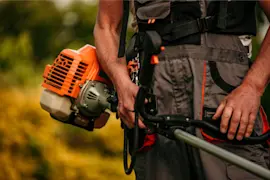
A “whipper snipper” and a “line trimmer” are the same tool; the names vary by region. Your Craftsman 358795571 is a gas line trimmer that uses rotating nylon line to cut grass and weeds along edges and tight areas. Check the owner's manual for the correct line size and safe cutting methods.
Quick definitions (what people usually mean)
- Line trimmer: General name for a string trimmer that cuts with nylon line.
- Whipper snipper: Common nickname for a line trimmer (especially outside the U.S.).
- Snipper: Shortened slang for the same tool.
- Brush cutter (often confused with the terms above): Heavier-duty tool that may use a metal blade for thick weeds and brush.
What matters for your Craftsman 358795571
This model is designed to cut with round trimmer line, not wire, rope, or other materials. The manual calls out using 0.080 inch (2 mm) diameter round line and notes that other sizes/shapes may not feed correctly and can create a safety hazard.
Cutting and edging basics (from the manual)
- Let the tip of the line do the cutting; do not “crowd” the line into the work.
- For trimming, hold the head about 3 inches above the ground at an angle.
- For edging, use the Twist and Edge feature to rotate the tube to the edging position.
- The head advances line automatically; do not tap the head on the ground to feed line.
Comparison table
| Term you hear | Usually refers to | Typical cutting method |
|---|---|---|
| Line trimmer | String trimmer | Nylon line |
| Whipper snipper | Same as line trimmer | Nylon line |
| Snipper | Same as line trimmer | Nylon line |
| Brush cutter | Heavier-duty cutter | Line or metal blade (model-dependent) |
Why it matters
Using the right term helps you buy the right consumables and parts. For this trimmer, the biggest “fit” issues are the correct line diameter and using the tool as intended so the cutting head feeds properly and parts last longer.
Last updated: February 2026
Who makes the best .095 trimmer line?
For the Craftsman 358795571 gas line trimmer, we do not recommend .095-inch line. This model is designed to run 0.080-inch (2 mm) round trimmer line; using thicker line can prevent proper line advance and can damage the cutting head. See the line specs in the owner's manual.
What to use instead (best choice for this model)
Use 0.080-inch (2 mm) round line. That size feeds correctly in the automatic-advance head and gives the best balance of cutting performance and spool life.
Good “best” criteria when shopping for 0.080 line:
- Round profile (feeds more reliably than shaped line in many auto-feed heads)
- Quality nylon that resists fraying and welding in the spool
- Line rated for gas trimmers (higher heat and RPM)
- Fresh line (old line gets brittle and breaks faster)
Why .095 line is a problem on the 358795571
The manual calls out 0.080-inch line because the head is engineered around that diameter.
- Thicker line can bind in the spool
- Auto-advance may stop working or overfeed
- Extra load can reduce RPM and cutting efficiency
- Increased wear on the spool, cap, and guide ring
Quick comparison
| Line size | Fit for Craftsman 358795571 | What you’ll notice |
|---|---|---|
| 0.080 in (2 mm) round | Recommended | Smooth feed, normal power, normal wear |
| 0.095 in | Not recommended | Poor feed, bogging, head wear or breakage |
If you’re breaking line too often (use these fixes first)
Before moving up in diameter, we recommend these adjustments:
- Keep the line at the correct cutting length (let the shield do the trimming)
- Cut with the tip of the line; do not “crowd” the head into heavy material
- Avoid rocks, gravel, and fence posts that nick and shred line
- Clean debris out of the head when you replace line
Parts that commonly get damaged when the head binds
If the head starts sticking or feeding inconsistently, these parts are often involved:
Why it matters
Using the correct line size protects the cutting head and keeps the automatic line advance working the way Craftsman designed it, so you spend less time clearing jams and reloading.
Last updated: February 2026