Owner’s manual
 View engine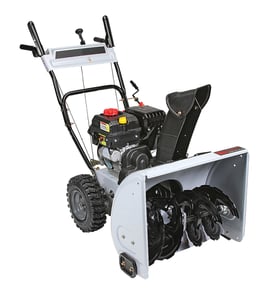



How to find snowblower model number?
For your Craftsman gas snow blower, the model number is on the product identification label; for this unit it’s 536.881110 (often shown as 536881110 on parts sites). Use that exact number when looking up parts and diagrams in the 536881110 owner's manual.
Where to look on a snowblower
Most snowblowers place the model and serial label in one of these spots:
- Rear frame between the wheels
- Side or rear of the auger housing (the front “bucket”)
- Near the engine mounting area on the frame
- Under or near the handlebar panel
- On the engine itself (engine model is separate from the snowblower model)
Snowblower model number vs. engine model number
Your snowblower has two different identifiers. Using the right one prevents ordering the wrong belt, pulley, cable, or tune-up parts.
| What you’re identifying | What it’s used for | Example for this unit |
|---|---|---|
| Snowblower model number | Parts diagrams for frame, auger/impeller, drive system, chute, controls | 536.881110 (536881110) |
| Engine model number | Engine-specific parts (carburetor, ignition, gaskets, starter parts) | 143.011101 (shown in the manual) |
Tips to make sure you have the right number
- Write the model number exactly as printed (include dots or dashes if shown).
- Record the serial number too; it helps match production variations.
- If the label is dirty, wipe it clean and use a flashlight to read stamped characters.
- If you’re shopping for drive parts, confirm the model first, then match the diagram callout.
Why it matters
Craftsman snowblower parts are model-specific; the correct model number ensures you get the right items for your drive system (for example, a snowblower gas belt 585416MA or idler pulley 1502120MA) and avoids fit issues during installation.
Last updated: February 2026
How to tell year of Craftsman snowblower by serial number?
For Craftsman model 536881110, the most reliable way to determine the year is to decode the snowblower serial number on the unit’s ID label; many Craftsman snow throwers use a date-coded serial format where the first characters indicate the build date. Use the decoding guidance in the 536881110 owner's manual and match it to your serial number exactly.
Where to find the serial number on a Craftsman snowblower
Check these common locations on a gas snow blower frame:
- On the rear frame near the handles
- On the side of the frame near the engine mount
- Near the auger housing (side plate area)
- Under or behind any service cover panels
- On the engine itself (engine model tag can also include a date code)
How to decode the serial number (what to look for)
Craftsman serial numbers are commonly date-coded. Start by writing the serial number exactly as shown (including letters).
- Look for a 6-digit block that resembles a date (often month/day/year or year/month/day)
- If the serial begins with two digits that look like a year, that is often the build year
- If the serial includes a letter, it may represent a year code in some Craftsman formats
- Compare the serial format to the examples and notes in the 536881110 owner's manual
Quick decoding checklist
| What you see in the serial | What it usually means | What to do next |
|---|---|---|
| All numbers, date-like grouping | Date-coded build info | Identify which digits map to year |
| Letters + numbers | Possible year letter code | Use the manual’s year-code chart |
| No obvious date pattern | Alternate factory format | Use engine tag date code as backup |
If the serial number is missing or unreadable
If the label is damaged, use the engine identification as a backup because the engine often has its own model and code information.
- Clean the label area gently and re-check under bright light
- Look for an engine tag; this model commonly uses a Tecumseh engine family
- Use the engine code date as a practical estimate of the snowblower’s build year
Why it matters
Knowing the year helps us match the correct parts diagrams and maintenance items (belts, shear pins, cables, and tune-up parts) so you order parts that fit your exact Craftsman snow thrower configuration.
Last updated: February 2026
Is it cheaper to repair or replace a snowblower?
For a Craftsman gas snow blower model 536881110, it’s cheaper to repair when the problem is a normal wear item (belt, pulley, cable, tune-up parts) and the machine is otherwise solid. Replacement makes more sense when the engine or drive system has repeated failures, major damage, or repair costs approach about half the price of a comparable new snowblower.
Quick decision checklist
- Repair if the issue is maintenance or a single failed part (belt, idler, key, cable).
- Repair if the unit still starts easily and runs smoothly after a tune-up.
- Replace if the engine has low compression, heavy smoke, or persistent no-start after proper service.
- Replace if the auger/impeller or drive system has multiple worn components at once.
- Replace if the frame/auger housing is badly bent or the machine vibrates abnormally even after inspection.
- Repair if you can do the work safely and follow the procedures in the owner's manual.
Typical repair costs vs. what you get
| Situation | Usually best choice | Why |
|---|---|---|
| Slipping or broken drive/auger belt | Repair | Common wear item; restores throwing or drive performance quickly |
| Won’t move forward (traction issue) | Repair first | Often belt, cable, or friction wheel related; usually fixable |
| Abnormal vibration after hitting an object | Inspect then repair | Vibration is a warning sign; fix the damaged component before using |
| Repeated major engine problems | Replace | Reliability drops and costs stack up |
Model 536881110 parts that commonly make repair worthwhile
If your symptoms match, these are the kinds of parts we typically replace first:
- Snowblower gas belt 585416MA (belt slipping, auger not engaging)
- Idler pulley 1502120MA (belt won’t tension correctly)
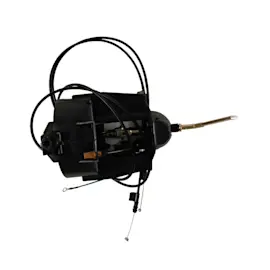
- Chute cable 761131MA (chute won’t rotate/aim reliably)
- Snowblower engine tune-up kit 730280 (seasonal maintenance, hard starting)
Why it matters
A well-maintained snowblower is safest and most reliable when the drive and auger systems engage smoothly. The manual also stresses key safety steps during inspection and repair: stop the engine, disconnect the spark plug wire, and keep hands clear of rotating parts, especially when clearing clogs or checking belts.
Last updated: February 2026
Should I spray my snowblower with WD-40?
Yes, you can spray a light coat of a spray lubricant on your Craftsman 536881110 gas snow blower, but use it only on bare metal areas like the chute, auger housing, and impeller to help prevent rust and reduce snow sticking. Follow the storage and maintenance guidance in the owner's manual.
Where to spray (and where not to)
Use spray lubricant as a surface protectant, not as a general-purpose “spray everything” step.
- Spray the inside of the discharge chute (light coat, then let it dry)
- Spray the auger housing and impeller surfaces (bare metal areas)
- Wipe off excess so it does not attract dirt
- Do not spray near belts, pulleys, or friction-drive components
- Do not spray on hot engine or muffler surfaces
- Do not spray electrical connections while the machine is running
Best time to apply
The manual calls out cleaning and drying after use, plus rust prevention on bare metal parts during storage.
| When | What to do | Why it helps |
|---|---|---|
| After clearing snow | Let engine idle a few minutes, then clean and dry the unit | Helps melt ice and reduces corrosion risk |
| Before storage (end of season) | Coat bare metal in blower housing, auger, and impeller with rust preventative | Prevents rust during long storage |
| Before a storm (optional) | Light coat inside chute | Helps reduce clogging and sticking |
Why it matters
Snow, salt, and moisture can corrode the blower housing and cause snow to pack and freeze inside the chute. A thin, dry film on the right metal surfaces helps keep performance consistent and reduces off-season rust.
Related maintenance to do at the same time
Pair the spray step with basic upkeep so the machine stays reliable.
- Remove packed snow and debris after each use
- Tighten loose screws and nuts
- Check and service the spark plug on schedule
- Lubricate pivot points and the auger shaft as listed in the maintenance chart
- For seasonal upkeep, consider an engine kit such as the snowblower engine tune-up kit 730280
Last updated: February 2026