View engine




How do I tell what year my snowblower is?
For a Craftsman gas snow blower model 536888600, the most reliable way to tell the year is to use the engine manufacture date code (stamped on the engine shroud, valve cover, or blower housing). That code typically decodes to an exact build date, which closely matches the snowblower’s model year.
Where to look for the date information
Check these common locations on a snowblower engine:
- Blower housing or recoil starter shroud (near the pull-start)
- Valve cover area
- Engine identification label (often includes model, type, and code)
- Stamped metal tag or sticker near the muffler heat shield
If the engine has been replaced, the engine date will reflect the replacement engine, not the original snowblower.
How engine date codes usually decode
Many small engines use a numeric code where the first two digits indicate the year, followed by month and day.
| Example code | What it means | Result |
|---|---|---|
| 99011556 | First 2 digits = year | 1999 |
| 99011556 | Next digits often indicate month/day | Jan 15 (typical format) |
If your code format is different, use the engine brand’s decoding rules for that specific engine family.
Why it matters
Knowing the build year helps us match the correct parts and specs for wear items such as belts, bearings, and chute hardware. It is especially useful when a model has multiple production runs with small design changes.
Parts that commonly vary by production run
When you are confirming the year, these are examples of parts that can differ across revisions:
- Chute hardware such as the snowblower chute retainer ring, inner 337227MA
- Chute rotation components (worm gear and related hardware)
- Drive and auger engagement linkage parts
Last updated: January 2026
What is the most common problem with snow blowers?
The most common problem we see on snow blowers like the Craftsman 536888600 is a no-start or hard-start condition, usually caused by stale fuel, a dirty carburetor, or a worn spark plug. The next most common issues are chute clogs and drive or auger problems.
Most common issues (and what to check first)
- Won’t start or starts then dies: drain old fuel, add fresh fuel, check spark plug, clean the carburetor
- Runs but won’t throw snow well: clear packed snow, inspect the impeller and chute for blockage
- Chute won’t rotate or won’t stay positioned: inspect the chute rings and worm gear; replace worn parts such as the snowblower chute retainer ring, inner 337227MA
- Auger won’t turn: check for jammed ice, broken shear pins (common), or a stretched cable
- Poor drive or slipping: inspect friction disc, belts, and pulleys for wear
Quick troubleshooting order (fastest wins first)
- Confirm the engine has fresh fuel and the fuel shutoff is on.
- Check the spark plug condition and gap; replace if fouled.
- Look for ice-packed snow in the auger housing and discharge chute.
- Verify the auger and drive controls fully engage; check cable tension.
- Inspect wear items like pulleys, bearings, and seals if symptoms persist.
Symptom-to-cause cheat sheet
| Symptom | Most likely cause | Typical fix |
|---|---|---|
| No start / hard start | Old fuel, dirty carburetor, bad spark plug | Fresh fuel, carb clean, plug replacement |
| Throws snow weakly | Clogged chute, worn impeller, wet heavy snow | Clear chute, inspect impeller |
| Chute won’t turn | Worn chute ring or worm gear | Replace worn chute parts |
| Auger won’t engage | Jam, cable issue, shear pins | Clear jam, adjust/repair linkage |
Why it matters
Most snowblower failures are simple maintenance problems that show up after storage. Fixing fuel and ignition issues early prevents repeated hard-starting, reduces carburetor buildup, and helps the auger and chute system work reliably in heavy snow.
Last updated: January 2026
Is sae 30 the same as 5W30 for snowblower?
SAE 30 and 5W-30 are not the same oil for a Craftsman gas snow blower model 536888600. SAE 30 is a single-viscosity oil, while 5W-30 is a multi-viscosity oil that flows easier during cold starts and still protects like a 30-weight oil when warm.
What the numbers mean (quick comparison)
| Oil type | Cold-start flow | Hot protection | Best use case |
|---|---|---|---|
| SAE 30 | Thicker in cold weather | Good once warm | Warmer temperatures, easier starting conditions |
| 5W-30 | Thinner in cold weather | Good once warm | Cold-weather starting and typical snowblower use |
What we recommend for snowblower use
For most snowblower conditions (cold starts, winter storage, short run times), 5W-30 is the better choice because it reduces drag at startup and helps the engine lubricate faster.
Common best practices:
- Use 5W-30 for typical winter operation and easier starting.
- Avoid SAE 30 when temperatures are near freezing or below; it can crank slower and lubricate slower at startup.
- Check oil level before each use; low oil can cause rapid engine damage.
- Change oil at least once per season (or about every 25 hours of use).
- Use a clean funnel and wipe the dipstick area to keep dirt out of the crankcase.
When SAE 30 can make sense
SAE 30 can be acceptable when you are operating in consistently warmer conditions (above about 40°F) and the engine starts easily. For most snowblower owners, that is not the typical environment.
Why it matters
Snowblower engines work hard in cold air, and most wear happens in the first minute after startup. Using an oil that flows well in the cold helps protect internal parts like the crankshaft and bearings right away.
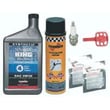
If you are also doing seasonal maintenance, a tune-up kit can help you refresh ignition and fuel-related wear items at the same time as an oil change; see snowblower engine tune-up kit 730291.
Last updated: January 2026
Is it worth fixing a snowblower?
For a Craftsman gas snow blower model 536888600, fixing it is worth it when the problem is a normal wear item (chute parts, cables, springs, scraper blade) and the total repair cost stays well under the price of a comparable replacement. If the repair involves major drivetrain or engine damage, replacement usually makes more sense.
Quick way to decide (cost vs. value)
Use this simple rule of thumb for most gas snowblowers:
- Worth fixing: repair cost is under ~50% of the cost of a similar new snowblower
- Consider replacing: repair cost is over ~50%, especially if multiple major parts are worn
- Also worth fixing: the machine is otherwise solid (good compression, no severe rust, auger and drive systems are intact)
| What’s wrong | Typical outcome | Usually worth it? |
|---|---|---|
| Chute won’t rotate or won’t stay positioned | Chute ring or worm gear wear | Yes |
| Auger or drive control feels loose | Cable/spring/adjustment issue | Yes |
| Poor scraping or leaves snow behind | Scraper blade wear | Yes |
| Loud grinding, seized auger/impeller area | Bearing/gearbox/shaft damage | Often no |
Repairs that are commonly worth doing on this model
These are the types of fixes that usually restore performance without turning into a major rebuild:
- Replace worn chute hardware such as the snowblower chute retainer ring, inner 337227MA or snowblower chute retainer ring, outer 585193MA
- Repair chute rotation issues by inspecting the chute worm and gears (for example, a worn worm 585196MA)
- Restore throwing performance by checking for packed snow, shear pin issues, or impeller damage (impeller replacement is a bigger job)
- Improve snow pickup by replacing a worn scraper blade 1739239BMYP
- Fix control feel and engagement by inspecting springs, spacers, and cables (stretching, binding, or misrouting)
Why it matters
A snowblower that is only held back by wear parts can often be brought back to reliable service for far less than the cost of a new machine. On the other hand, major drivetrain or engine repairs can quickly exceed the practical value of the snowblower, even if it is repairable.
Before you buy parts: 5-minute checklist
- Confirm the engine starts and runs smoothly (no surging after warm-up)
- Check auger and drive engagement for slipping or delayed response
- Inspect the chute for wobble, binding, or stripped gear teeth
- Look for oil leaks around seals and shafts
- Add up parts plus any shop labor, then compare to replacement cost
Last updated: January 2026