Installation guide
 Owner’s manual
 Error Codes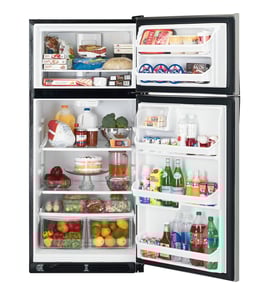
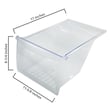


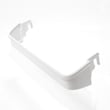

What is the upper part of a fridge called?
On the Frigidaire LFHT1817LF9 top-mount refrigerator, the upper section is the freezer compartment. It is designed to keep foods frozen and to help the refrigerator maintain safe temperatures across both compartments when the doors seal and airflow is not blocked.
What the freezer compartment does
- Keeps food at freezing temperatures for long-term storage
- Helps circulate cold air through the refrigerator and freezer (do not block air vents with food)
- Often houses the ice maker on models equipped for ice production
- Works with the main temperature control, which affects temperatures in both compartments
Common names you may see
| What people call it | What it usually means | Where it is on LFHT1817LF9 |
|---|---|---|
| Freezer | Freezer compartment | Top section |
| Freezer box | The insulated freezer area | Top section |
| Upper compartment | Freezer on a top-mount | Top section |
| Fresh food section | Refrigerator compartment | Bottom section |
Quick tips for best performance
- Keep the freezer door sealing fully on all sides; a poor seal causes temperature swings and frost.
- Leave space around vents so the fan can circulate air properly.
- After changing temperature settings, wait about 24 hours before adjusting again.
- If you are installing or moving the refrigerator, follow the clearance and leveling steps in the LFHT1817LF9 installation guide.
Why it matters
Knowing the correct name helps when ordering parts, reading troubleshooting steps, and setting temperatures. For example, airflow and door sealing issues in the freezer can affect cooling in the fresh food section as well.
Last updated: January 2026
What are the disadvantages of a top mount fridge?
Top-mount refrigerators like the Frigidaire LFHT1817LF9 are reliable and space-efficient, but the main disadvantages are less convenient fresh-food access (you bend more), fewer organization features than many bottom-freezer designs, and fewer built-in dispenser options on many models. See the LFHT1817LF9 owner's manual for your exact features.
Common disadvantages (what most owners notice)
- Fresh-food items sit lower: you reach down more often for produce, drinks, and leftovers.
- Freezer is at eye level: convenient for frozen foods, but it pushes the refrigerator section down.
- Organization can be simpler: fewer specialty drawers and wide pull-out bins compared with many bottom-mount styles.
- Dispenser features are less common: many top-mount models do not include external ice and water.
- Door swing clearance matters: if the hinge side is near a wall, you may need extra space to open the door wider.
LFHT1817LF9-SPECIFIC considerations
Your LFHT1817LF9 installation guidance highlights a few practical tradeoffs that can feel like “disadvantages” if space is tight:
- You typically need about 3/8 inch clearance at the sides and top and about 1 inch at the back for airflow and connections.
- The refrigerator should be leveled and slightly tilted back so doors close properly.
- If you do not connect a water supply, the ice maker should be turned OFF.
For step-by-step setup details, use the LFHT1817LF9 installation guide.
Quick comparison: top-mount vs bottom-freezer
| Feature | Top-mount (like LFHT1817LF9) | Bottom-freezer |
|---|---|---|
| Fresh-food access | Lower, more bending | Higher, more convenient |
| Freezer access | Higher, easy reach | Lower, more bending |
| Typical organization | Simpler | Often more flexible |
| Dispenser options | Less common | More common |
Why it matters
Choosing a refrigerator style affects daily comfort and food visibility. If you use fresh foods more than frozen, the lower refrigerator compartment in a top-mount design can be the biggest day-to-day drawback.
Last updated: January 2026
Which is better, top mount or bottom mount refrigerator?
A top-mount refrigerator like the Frigidaire LFHT1817LF9 is usually the better pick when you want a simpler, typically more budget-friendly layout with fewer complex parts. A bottom-mount is usually better when you want fresh-food items at eye level and easier access to the refrigerator section.
Quick comparison: top mount vs bottom mount
- Top mount (freezer on top): simpler design, often lower purchase and repair costs
- Bottom mount (freezer drawer on bottom): easier access to fresh food, often better organization for the refrigerator section
- Your daily habits matter most: how often you use the freezer vs fresh-food section usually decides what feels “better”
| Feature | Top mount | Bottom mount |
|---|---|---|
| Fresh-food access | Lower shelves require more bending | More at eye level |
| Freezer access | Easy reach | Drawer style, less bending |
| Typical complexity | Lower | Higher (drawer rails, seals) |
| Best for | Value, simplicity | Convenience, fresh-food-first use |
What we recommend for LFHT1817LF9 owners
If you already own the Frigidaire LFHT1817LF9, you can get the most out of the top-mount design by focusing on airflow, door sealing, and correct setup:
- Set the refrigerator on a solid, level floor so doors close properly
- Keep the toe grille area clear for airflow
- Use the recommended installation clearances (sides/top and back)
- Wait 24 hours between temperature control changes for stable results
- Turn the ice maker OFF if the water supply is not connected
For model-specific setup details (clearances, leveling, temperature control guidance), use the LFHT1817LF9 owner's manual.
Why it matters
Choosing the right layout affects comfort and food quality. A top-mount can be easier to maintain and keep efficient when it is leveled correctly and has good airflow; a bottom-mount can reduce bending for everyday fresh-food use.
Last updated: January 2026
What is the most common problem with Frigidaire refrigerators?
Cooling problems are the most common issue we see with Frigidaire refrigerators, including the Frigidaire LFHT1817LF9. Most “not cold enough” complaints trace back to airflow restrictions (dirty coils, blocked vents), a weak evaporator fan, or warm air leaks at the door gasket; water and ice issues are also frequent.
What to check first (fast, no tools)
- Confirm the controls are not set to “0” (off) and allow 24 hours for temperatures to stabilize after changes.
- Make sure the unit is plugged in firmly; check the breaker or a 15-amp time-delay fuse if it will not run.
- Verify the refrigerator is not simply in a defrost cycle; wait about 20 minutes and recheck.
- Look for blocked air vents inside the fresh food and freezer sections (overpacked shelves can cause warm spots).
- Inspect door closing and sealing; a poor seal causes frost, sweating, and temperature swings.
Common symptoms and the most likely causes
| Symptom | Most likely cause | What we recommend |
|---|---|---|
| Refrigerator warm, freezer OK | Airflow issue or evaporator fan problem | Clear vents; review how to fix your evaporator cooling fan |
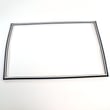
| Frost buildup, moisture on gasket | Door not sealing or gasket warped | Clean gasket, warm and reshape; replace if torn (see parts below) |
| Unit won’t run | Power issue, control set to “0”, defrost cycle | Follow the “will not run” checks in the LFHT1817LF9 owner’s manual |
| Ice maker not making ice | Water supply/priming issue or shutoff | Confirm water valve is on; lower wire arm or switch to “I” per manual |
Parts that often solve common Frigidaire issues
If you find a damaged seal, the correct gasket depends on door color:
- Frigidaire refrigerator door gasket (white) 242193206
- Frigidaire refrigerator door gasket (black) 242193212
Why it matters
A refrigerator that runs with restricted airflow or a leaking door seal runs longer, struggles to hold safe food temperatures, and can lead to icing and moisture problems that look like bigger failures.
Last updated: January 2026