Installation guide
 Owner’s manual
 Error Codes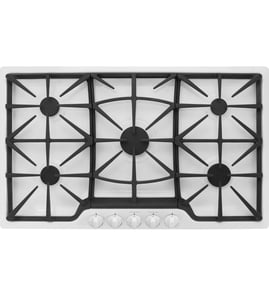




What is the clearance between rangehood and gas cooktop?
For the Jenn-Air CVGX2423B18 gas cooktop, we follow the installation clearances in the installation guide: allow 30 inches (76.2 cm) minimum from the cooking surface to overhead combustible construction or metal cabinets. If the overhead surface is properly protected, that clearance can be reduced to 24 inches.
Use these clearances as your baseline when laying out a hood, microwave hood, or cabinets above the cooktop:
- 30 in. minimum from cooking surface to overhead combustible construction or metal cabinets
- 24 in. minimum only when the underside above is protected (per the installation instructions)
- 13 in. maximum overhead cabinet depth above the cooking surface
- 0.75 in. minimum horizontal clearance at the rear to adjacent combustible construction
- 2 in. minimum horizontal clearance at the sides to adjacent combustible construction
- 6 in. or greater side clearance improves performance (recommended)
| Clearance item | Minimum | Notes |
|---|---|---|
| Cooking surface to overhead cabinets/combustibles | 30 in. | Standard minimum vertical clearance |
| Cooking surface to overhead (protected underside) | 24 in. | Only with specified insulating protection |
| Overhead cabinet depth | 13 in. max | Deeper cabinets increase reach-over risk |
| Side wall clearance (performance) | 6 in. | Recommended for better operation |
Correct hood and cabinet spacing helps prevent heat damage, reduces the chance of reaching over open flames, and supports proper burner performance and ventilation capture.
- Avoid using cabinets above the cooktop for storage.
- Keep the cooktop away from combustible items like curtains.
- Follow all local codes and the National Fuel Gas Code requirements referenced in the instructions.
Last updated: February 2026
Why is my Jenn-Air igniter not working?
On the Jenn-Air CVGX2423B18 gas cooktop, an igniter usually stops working because it is wet, soiled, misaligned, or the burner head is not seated correctly. Start by drying and cleaning the igniter area, then confirm you hear rapid clicking when the knob is turned to LITE (see the owner's manual).
- Make sure the burner head is seated flat on the burner base.
- Check that burner ports and ignition ports are not clogged.
- Dry the igniter; burners will not light if the igniter is wet.
- Turn the knob OFF if the igniter does not click.
- Check your home power: a tripped breaker or blown fuse can stop ignition.
- Power reset: Turn the burner knob OFF; then check the breaker/fuse and restore power.
- Clean and dry: Remove grates and burner head; clear ports with a soft brush and wipe moisture.
- Re-seat parts: Reinstall the burner head so it sits correctly on the burner base.
- Test for clicking: Turn the knob to LITE and listen for clicking.
- If clicking but no flame: Confirm the gas supply is on; recheck for clogged ports.
| Symptom | Most likely cause | What to do next |
|---|---|---|
| No clicking on any burner | Power issue or ignition control problem | Check breaker/fuse; then inspect ignition components |
| Clicking but burner will not light | Wet/dirty igniter or clogged ports | Dry and clean ports; retry |
| Uneven flame | Clogged burner ports | Clean ports; re-seat burner head |
| Yellow flame or flame lifting | Gas/air mixture issue | Stop using that burner and have it serviced |
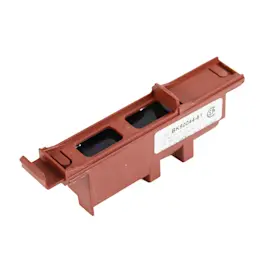
If cleaning and re-seating do not restore ignition, the spark system may need service. A common related component is the module- sp WPW10475147 (spark module).
A weak or inconsistent ignition can lead to delayed lighting and poor cooking performance. Keeping burner heads seated and ports clear helps the igniter spark reliably and light the gas quickly.
Last updated: February 2026
What's the average cost to install a gas stove?
For a Jenn-Air CVGX2423B18 gas cooktop, installation typically runs $200 to $600 when you already have a correctly sized gas shut-off valve and electrical supply in place; costs rise to $800 to $3,500+ when a new gas line, permits, venting changes, or cabinet modifications are needed.
Installation cost depends less on the appliance and more on what your kitchen already has.
- Existing gas line and shut-off valve in the right location (lower cost)
- New or relocated gas piping (higher cost)
- Downdraft ducting work (higher cost for this cooktop style)
- Electrical needs (outlet, junction box, cord, breaker)
- Permits and inspections required by your area
- Old appliance removal and disposal
| Scenario | What’s included | Typical range |
|---|---|---|
| Simple replacement hookup | Disconnect old unit, connect to existing shut-off, leak test, basic check | $200 to $600 |
| Moderate install | Minor gas line adjustment, minor cabinet tweaks, basic duct alignment | $600 to $1,500 |
| Full install | New gas line run, permits, significant ducting or cabinet work | $800 to $3,500+ |
This model is a built-in downdraft gas cooktop, so the install is more involved than a freestanding “gas stove.” Key requirements we see in the installation instructions include:
- A manual shut-off valve in an accessible location
- Use of the appliance pressure regulator supplied with the cooktop
- Gas pressure must be within the specified range; an external regulator is required if supply exceeds the limit
- Flexible gas connector length limits may apply (commonly up to 36 inches where required)
- The downdraft system is designed to be vented outdoors and ducted properly
For the exact clearances, gas connection details, and ducting notes, use the installation guide.
Gas and downdraft venting mistakes can cause ignition problems, poor burner performance, and unsafe leaks. Paying for a qualified installer and a proper leak test is the difference between “it lights” and “it’s correct.”
Last updated: February 2026
What are common problems with Jenn-Air stoves?
Common problems we see on Jenn-Air cooking appliances include burners that click but will not light, uneven or lifting flames, and downdraft ventilation that does not capture smoke well. On your Jenn-Air CVGX2423B18 gas downdraft cooktop, most issues trace to burner port clogs, wet/soiled igniters, mis-seated burner parts, or ducting and filter setup; see the owner's manual for model-specific checks.
- Burner clicks but won’t light: clogged burner/ignition ports, wet or dirty igniter electrode, or burner head not seated correctly
- Uneven flame: clogged burner ports or burner head not seated on the burner base
- Flame lifts off ports: gas/air mixture or installation issue that needs professional service
- Yellow flame: can indicate a gas/air issue; some yellow tips are normal on LP gas
- Ventilation weak: cross-drafts, stuck wall cap damper, incorrect ducting, or filter installed incorrectly
- Turn the burner knob OFF, let everything cool, then remove grates and burner heads.
- Clean burner ports gently (soft brush or pin); wipe spills and dry thoroughly.
- Reseat the burner head squarely on the burner base.
- If the igniter is wet, let it air-dry; moisture can prevent ignition.
- For downdraft issues, confirm the filter is installed correctly and the wall cap damper moves freely.
| Symptom | Part that may be involved | What it does |
|---|---|---|
| No spark or inconsistent ignition | Module- sp WPW10475147 | Controls spark/ignition timing to the burners |
| Clicking but no ignition at one burner | Cooktop burner igniter electrode | Creates the spark at the burner |
| Weak downdraft control | Knob, fan (black) W11715914 | Lets you select fan speed/settings |
Gas ignition and flame quality affect cooking performance and safety. Ventilation performance affects smoke and odor removal; the manual also lists ducting guidelines (duct size, elbow limits, damper movement) that directly impact capture efficiency.
Last updated: February 2026