Owner’s manual
 View engine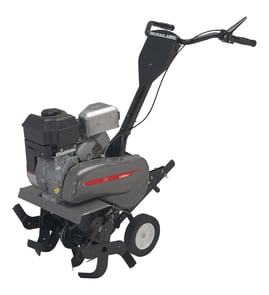



What kind of engine is on a Craftsman tiller?
The Craftsman front-tine tiller model 944629540 uses a Briggs & Stratton gasoline engine rated at 5.5 HP with 13 cu. in. (221cc) displacement. The engine family shown for this model is Briggs & Stratton model 137202 (type 1124-E1); see the owner's manual for the full specifications.
Engine details for model 944629540
Here are the key engine specs we use for parts matching and maintenance:
- Brand: Briggs & Stratton
- Engine model: 137202 (type 1124-E1)
- Power rating: 5.5 HP
- Displacement: 13 cu. in. (221cc)
- Fuel: unleaded regular gasoline
- Fuel capacity: 4 quarts (2.8 L)
Maintenance specs that matter
Using the correct oil and spark plug helps starting, power, and engine life.
| Item | Spec for 944629540 | Notes |
|---|---|---|
| Engine oil type | SAE 30 (above 32°F) or SAE 5W-30 (below 32°F) | Match oil to temperature |
| Oil capacity | 20 oz (0.6 L) | Check level before each use |
| Spark plug | Champion RJ19LM | Gap: 0.030 in (0.76 mm) |
Why it matters
Your tiller’s engine model and displacement determine the correct tune-up parts (spark plug, air filter, fuel system parts) and the right operating fluids. Using the wrong specs can cause hard starting, poor tilling power, and faster wear.
Last updated: February 2026
Will a front tine tiller break new ground?
Yes. A front-tine tiller like Craftsman model 944629540 can break new ground, but it works best when you do it in shallow passes and let the machine “bite” gradually. For hard-packed soil or sod, plan on multiple passes and careful depth stake and wheel adjustments (see the owner's manual).
Best way to break new ground with a front-tine tiller
We recommend starting shallow, then increasing depth as the soil loosens. This reduces bouncing and helps the tines penetrate.
- Moisten hard, dry soil first; tines do not penetrate dry, hard ground well
- Start with the throttle in a slow position until you are comfortable controlling the tiller
- Set the depth stake and wheels for shallow tilling on the first passes
- Make multiple passes, then cross the first cuts at a deeper, normal setting
- Leave a row untilled between passes, then come back between rows for easier turning
- If the tiller shakes or “runs and jumps,” slow down and reset wheel height and depth stake
Depth and control settings that matter most
The manual explains that tilling speed and depth are regulated by depth stake position and wheel height. The depth stake acts like a brake; lowering it increases digging depth and slows forward motion.
| Adjustment | What it changes | What to do for new ground |
|---|---|---|
| Depth stake position | Penetration depth and forward speed | Start shallow; lower the stake gradually as soil loosens |
| Wheel height | How aggressively the tines engage | Start higher (shallower); adjust by trial and error |
| Pass pattern | How evenly soil breaks up | Make shallow passes first; then cross-cut at deeper settings |
Why it matters
Breaking new ground is the hardest job for any tiller. Using shallow passes protects belts and pulleys, improves handling, and helps you reach a typical garden tilling depth of about 4 to 6 inches without fighting the machine.
Last updated: February 2026
Where is the model number on a Craftsman tiller?
On Craftsman tillers, the model number is printed on the model plate. For Craftsman model 944629540, the plate is attached to the right-hand engine bracket; record the model and serial number for parts lookup and service reference (see the 944629540 owner's manual).
Where to look on the tiller
Check these common spots first (starting with the most accurate location for this model):
- Right-hand engine bracket (model plate location for 944629540)
- Engine area near the frame rails and belt guard
- Handle column or control panel area (less common)
- Tine shield area (varies by design)
Tiller model number vs. engine model number
Your tiller has its own model number, and the engine has a separate model/type number. Both can matter when ordering parts.
| What you need | Where it’s found | Example for this unit |
|---|---|---|
| Tiller model number | Model plate on right-hand engine bracket | 944629540 |
| Tiller serial number | Same model plate | Varies by unit |
| Engine model/type | On the engine blower housing | Commonly listed in the manual for reference |
Tips for reading the model plate
If the label is dirty or worn, these steps usually make it readable again:
- Wipe the plate with a damp rag, then dry it
- Use a flashlight at an angle to highlight stamped characters
- Take a close-up photo and zoom in
- Write down the full model number and serial number exactly as shown
Why it matters
Using the correct model number helps us match the right Craftsman front-tine tiller parts (like control components, hardware, and transmission items) to your exact build so you avoid ordering look-alike parts that do not fit.
Last updated: February 2026
What would cause a tiller to not start?
On the Craftsman 944629540 front-tine tiller, a no-start is usually caused by a fuel issue (empty, stale, water in fuel, clogged tank), incorrect choke use, a dirty air cleaner, or an ignition problem such as a loose spark plug wire or a bad/incorrectly gapped spark plug. Use the troubleshooting chart in the owner's manual to match symptoms to the fastest checks.
Quick checks (fastest to most common)
- Confirm there is fresh fuel in the tank (not old or contaminated).
- Set the choke correctly for a cold start; an engine not “choked” properly may not fire.
- Check for flooding (strong fuel smell, wet plug); let it sit, then retry with less choke.
- Inspect and clean or replace the air cleaner (a dirty air cleaner can prevent starting).
- Make sure the spark plug wire is firmly connected.
- Remove the spark plug; check condition and set the gap to the spec listed in the manual.
Safety first before troubleshooting
Before you inspect, clean, or adjust anything, shut the engine off and disconnect the spark plug wire to prevent accidental starting.
What the symptom usually points to
| Symptom | Most likely cause | What to do next |
|---|---|---|
| No fuel smell at all | Fuel not reaching carburetor | Check for clogged fuel tank or fuel flow restriction |
| Strong fuel smell, wet plug | Flooded engine | Dry/replace plug, reduce choke, retry |
| Starts briefly then dies | Stale/dirty fuel or carburetor adjustment | Drain/refill with fresh fuel; follow manual adjustment guidance |
| Pull cord feels normal but no firing | Ignition issue | Re-seat plug wire; inspect plug and gap |
Why it matters
Repeated no-start attempts can flood the engine and foul the spark plug, turning a simple fuel or choke issue into a longer troubleshooting job. Following the manual’s start procedure and checks helps you avoid unnecessary parts replacement.
Last updated: February 2026
Are Craftsman tillers any good?
Yes. Craftsman tillers are a solid, homeowner-friendly choice when they’re maintained and used as intended; the Craftsman 944629540 is built as a 5.5 HP, 24-inch front-tine tiller designed for dependable garden and yard soil work. For best results, follow the operating and maintenance steps in the owner's manual.
What “good” looks like for the Craftsman 944629540
This model is designed for typical residential tilling tasks like garden bed prep and seasonal soil turning.
- 5.5 HP engine power rating
- 24-inch tine width for faster coverage
- Walk-behind front-tine design (best for previously worked soil and moderate compaction)
- Standard maintenance items (oil, spark plug, air filter) keep performance consistent
Common strengths and common complaints (what to expect)
Most owners judge a tiller by how it pulls, how well it breaks soil, and how often it needs adjustment.
| Area | What’s typically good | What can become a problem |
|---|---|---|
| Power | Strong enough for garden soil | Bogging in heavy clay if tines are forced too deep |
| Handling | Simple controls, easy to maneuver | Handle vibration or flex if hardware loosens |
| Durability | Long life with routine service | Faster wear when used in rocky soil or with poor maintenance |
How we recommend you judge yours quickly
Use this checklist after a short test run.
- Engine starts easily and runs smoothly at working throttle
- Tines pull forward without slipping or surging
- Belt drive engages cleanly (no burning smell)
- No abnormal grinding from the transmission area
- All fasteners stay tight after 10 to 15 minutes of use
Parts that often solve “it doesn’t feel right” issues
If performance drops, it’s often a wear item or linkage issue rather than the whole tiller.
- Replace missing or damaged retaining hardware such as the retainer ring 812000028
- Inspect tine engagement linkage and controls; a bent or worn lever can affect operation (see control lever 584447601)
Why it matters
A front-tine tiller like the 944629540 works best when you let the machine do the cutting. Proper depth settings, correct oil viscosity for temperature, and tight drive components prevent premature belt and tine wear.
Last updated: February 2026